
Get Chronic Pelvic Pain Treatment Online
Chronic pelvic pain that lingers for months can disrupt your daily life, sleep, and relationships. Doctronic connects you with licensed physicians who can evaluate your symptoms and recommend a tailored treatment plan, quickly, safely, and entirely online.


What Is Chronic Pelvic Pain?
Chronic pelvic pain is a complex condition marked by persistent pain in the lower abdomen or pelvis lasting six months or more, often accompanied by painful periods, pain with intercourse, bladder or bowel symptoms, and significant emotional distress. It can interfere with work, physical activity, and quality of life. With the right treatment and support, many people experience meaningful relief and a return to daily activities.
- Persistent pelvic pain lasting 6+ months with multiple potential causes including endometriosis, pelvic floor dysfunction, interstitial cystitis, or musculoskeletal factors
- Get personalized guidance from doctor-trained AI
- Explore treatment and prescription options

Is Online Chronic Pelvic Pain Treatment Right for You?
Chronic pelvic pain affects people of all backgrounds and can stem from gynecologic, urologic, gastrointestinal, or musculoskeletal causes. Doctronic's licensed physicians can evaluate your symptom history, review prior diagnoses, and recommend appropriate prescription or non-prescription management options tailored to your situation.
Because chronic pelvic pain often involves the reproductive, urinary, and nervous systems, our physicians will review your full pelvic health history, including any prior diagnoses such as endometriosis, interstitial cystitis, or pelvic floor dysfunction, to help guide a safe and effective treatment plan.
- Diagnosed with chronic pelvic pain, endometriosis, interstitial cystitis, or a related pelvic condition
- Get personalized guidance from AI and clinicians
- Explore treatment and prescription refill options
- Access care from home, often the same day

Medications We Prescribe for Chronic Pelvic Pain

Lupron Depot
Leuprolide 3.75 mg
A GnRH agonist that suppresses estrogen production, commonly used for endometriosis-associated pelvic pain to reduce pain and lesion activity.
Aygestin
Norethindrone Acetate
A progestin used to manage endometriosis and chronic pelvic pain by suppressing endometrial tissue growth and reducing cyclic bleeding.
Neurontin
Gabapentin
An anticonvulsant with established evidence for reducing neuropathic and central sensitization pain components in chronic pelvic pain.
Elavil
Amitriptyline
A tricyclic antidepressant used at low doses for chronic pelvic pain, interstitial cystitis-related pain, and centrally mediated pain syndromes.
How Chronic Pelvic Pain Treatment Works at Doctronic

Chat With The #1 AI Doctor
Doctronic answers your health questions with personalized medical insights and helps our doctors create a better treatment plan for you.

Meet With a Licensed Doctor For Treatment
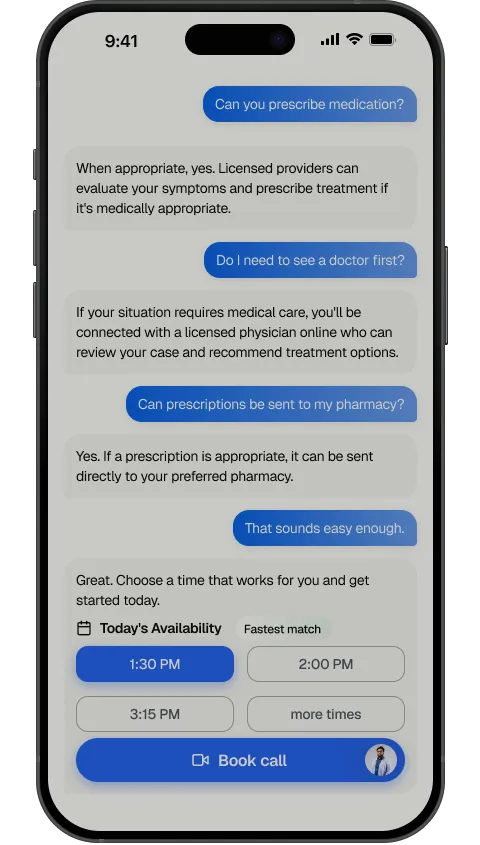
Book a $39 telehealth appointment (or copay) within 30 minutes. Our doctors create personalized treatment plans with prescriptions when needed.

Pick Up Your Prescription
Our doctors prescribe non-controlled medications in all 50 states and send prescriptions to your pharmacy for same-day pickup.
Pricing that won't make you sick
Chat for free, see an online doctor for $39/visit, or refill a prescription online for as low as $0
-
 Available in all 50 states + DC
-
 Insurance accepted

- 24/7 medical care Free
- Specialist referrals Free
- Lifelong health record Free
- Unlimited questions Free
- Prescription refills Starting as low as $0
- Video visit with real doctors $39/visit
These are stories from real users who turned to Doctronic for answers when it mattered most.
- Preparing for a doctor visit
- Finding peace of mind
- Understanding a diagnosis
- Managing chronic illness
- Navigating healthcare
- A second opinion
- Improving health











Frequently asked questions
Chronic pelvic pain can result from several overlapping conditions including endometriosis, interstitial cystitis, pelvic floor muscle dysfunction, irritable bowel syndrome, uterine fibroids, pelvic inflammatory disease, and central sensitization. A thorough evaluation is important because more than one cause may be present at the same time.
Diagnosis typically involves a detailed history of your symptoms, a physical examination, and may include imaging such as pelvic ultrasound or MRI. In some cases, laparoscopy is needed to identify conditions like endometriosis. Lab tests and bladder evaluation may also be performed depending on your symptoms.
Treatment depends on the underlying cause and may include hormonal therapies such as progestins or GnRH agonists for endometriosis, medications targeting nerve pain such as gabapentin or low-dose amitriptyline, pelvic floor physical therapy, anti-inflammatory medications, and psychological support. A multimodal approach often works best.
Yes. For people whose pain is linked to endometriosis or other hormone-sensitive conditions, medications such as progestins or GnRH agonists like leuprolide can significantly reduce pain by suppressing estrogen-driven tissue activity. Your doctor will assess whether hormonal therapy is appropriate based on your diagnosis and medical history.
Endometriosis is one of the most common causes of chronic pelvic pain, affecting an estimated 10% of people assigned female at birth. It occurs when tissue similar to the uterine lining grows outside the uterus, causing inflammation, adhesions, and pain. However, many people with chronic pelvic pain do not have endometriosis, so evaluation is essential.
Yes. When chronic pelvic pain involves central sensitization or neuropathic components, medications such as gabapentin or low-dose tricyclic antidepressants like amitriptyline can help reduce pain signaling. These are often used alongside other treatments as part of a comprehensive management plan.
Doctronic uses an AI-powered evaluation to gather detailed information about your symptoms, history, and health background. A licensed physician then reviews your case, confirms the appropriate diagnosis, and creates a personalized treatment plan that may include prescriptions, referrals, or other recommendations.
Yes. Doctronic works exclusively with licensed physicians who are board-eligible or board-certified. All clinical decisions are doctor-reviewed and regularly audited for quality. The platform is HIPAA-aligned, and your health information is kept secure and private throughout your care.
Top Conditions We Can Help With
People turn to Doctronic and our licensed medical team for support with all types of conditions.