
Get Varubi Online
Varubi (rolapitant) is a prescription antiemetic used to prevent delayed nausea and vomiting caused by chemotherapy. A licensed Doctronic physician can evaluate your symptoms and prescribe the right treatment plan for you.


What Is Varubi?
Varubi (rolapitant) is a prescription medication used to manage chemotherapy-induced nausea and vomiting (CINV), specifically the delayed phase that begins more than 24 hours after chemotherapy. It works by blocking substance P at neurokinin-1 (NK1) receptors in the brain, which are involved in triggering the vomiting reflex. With the right dose and ongoing monitoring, most patients experience meaningful reduction in nausea and can better maintain their quality of life during chemotherapy cycles.
- Targets delayed-phase CINV by blocking NK1 receptors in the brain
- Get personalized guidance from doctor-trained AI
- Explore treatment and prescription options

Is Online Varubi Treatment Right for You?
Varubi (rolapitant) is prescribed to adults who are receiving moderately or highly emetogenic chemotherapy and need prevention of chemotherapy-induced nausea and vomiting, particularly the delayed phase. It is used alongside other antiemetics such as a 5-HT3 receptor antagonist and dexamethasone as part of a combination regimen.
Because rolapitant affects the central nervous system and is metabolized by the liver, your physician will review your full medication list and medical history, including any liver conditions, prior antiemetic use, and current chemotherapy regimen, before prescribing.
- Diagnosed with a condition requiring emetogenic chemotherapy
- Get personalized guidance from AI and clinicians
- Explore treatment and prescription refill options
- Access care from home, often the same day

Medications We Prescribe for Chemotherapy-Induced Nausea

Varubi
Rolapitant
An NK1 receptor antagonist taken before chemotherapy to prevent delayed nausea and vomiting. Used as part of a combination antiemetic regimen.
Zofran ODT
Ondansetron ODT
A 5-HT3 receptor antagonist commonly paired with NK1 blockers to cover both acute and delayed phases of chemotherapy-induced nausea.
Decadron
Dexamethasone
A corticosteroid used in combination antiemetic regimens to enhance prevention of both acute and delayed chemotherapy-induced nausea and vomiting.
Phenergan
Promethazine
An antihistamine and antiemetic used to manage nausea and vomiting, sometimes added for breakthrough or refractory CINV symptoms.
How Chemotherapy-Induced Nausea Treatment Works at Doctronic

Chat With The #1 AI Doctor
Doctronic answers your health questions with personalized medical insights and helps our doctors create a better treatment plan for you.

Meet With a Licensed Doctor For Treatment
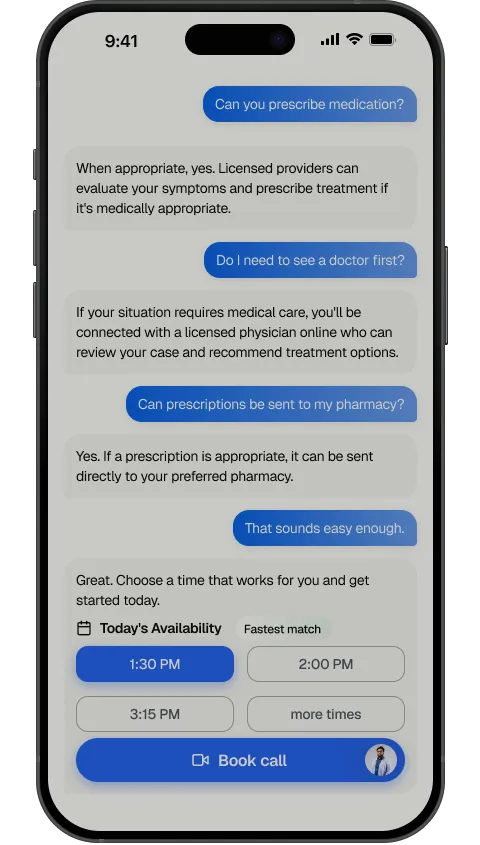
Book a $39 telehealth appointment (or copay) within 30 minutes. Our doctors create personalized treatment plans with prescriptions when needed.

Pick Up Your Prescription
Our doctors prescribe non-controlled medications in all 50 states and send prescriptions to your pharmacy for same-day pickup.
Pricing that won't make you sick
Chat for free, see an online doctor for $39/visit, or refill a prescription online for as low as $0
-
 Available in all 50 states + DC
-
 Insurance accepted

- 24/7 medical care Free
- Specialist referrals Free
- Lifelong health record Free
- Unlimited questions Free
- Prescription refills Starting as low as $0
- Video visit with real doctors $39/visit
These are stories from real users who turned to Doctronic for answers when it mattered most.
- Preparing for a doctor visit
- Finding peace of mind
- Understanding a diagnosis
- Managing chronic illness
- Navigating healthcare
- A second opinion
- Improving health










Frequently asked questions
Varubi (rolapitant) is a prescription antiemetic that blocks neurokinin-1 (NK1) receptors in the brain. Substance P, a neuropeptide that binds NK1 receptors, plays a key role in triggering the delayed vomiting response after chemotherapy. By blocking these receptors, rolapitant helps prevent nausea and vomiting that typically begins more than 24 hours after a chemotherapy dose.
Varubi is taken as a single oral dose approximately 1 to 2 hours before each chemotherapy cycle. It is not taken daily and does not need to be re-dosed within the same chemotherapy cycle. It is always used as part of a broader antiemetic regimen that typically includes a 5-HT3 antagonist and dexamethasone.
Delayed chemotherapy-induced nausea and vomiting (CINV) refers to nausea and vomiting that begins more than 24 hours after chemotherapy administration and can last several days. This is distinct from acute CINV, which occurs within the first 24 hours. Delayed CINV is particularly associated with highly emetogenic agents such as cisplatin and certain moderately emetogenic regimens.
Varubi should not be used in patients who are taking thalidomide, as rolapitant inhibits the CYP2D6 enzyme and can significantly increase levels of certain co-administered drugs. Patients with severe hepatic impairment require caution. Your physician will review all current medications and medical history before prescribing to ensure Varubi is appropriate and safe for you.
The most commonly reported side effects of Varubi in clinical trials include neutropenia (low white blood cell counts), hiccups, decreased appetite, and dizziness. Most side effects were consistent with effects seen in patients undergoing chemotherapy. Contact your physician if you experience unusual symptoms, particularly signs of infection or prolonged dizziness.
Yes. Varubi is designed to be used in combination with other antiemetics. The standard regimen pairs it with a 5-HT3 receptor antagonist such as ondansetron and a corticosteroid such as dexamethasone. This combination approach targets multiple pathways involved in chemotherapy-induced nausea to provide broader protection across both acute and delayed phases.
Doctronic uses an AI-powered evaluation to gather your symptoms, medical history, and relevant information before connecting you with a licensed physician. The physician reviews your case, makes a clinical determination, and if appropriate, creates a personalized treatment plan that may include a prescription. The entire process is designed to be thorough, safe, and convenient.
Yes. Doctronic connects patients with real, licensed physicians who review every case individually. All consultations are HIPAA-aligned, and prescribing decisions are made by qualified doctors, not algorithms. The platform is available to adults 18 and older in any U.S. state.
Top Conditions We Can Help With
People turn to Doctronic and our licensed medical team for support with all types of conditions.