
Get Pterygium Treatment Online
Pterygium is a benign growth of tissue on the conjunctiva that can extend onto the cornea and cause eye irritation, redness, and blurred vision. Doctronic connects you with licensed physicians who can evaluate your symptoms and help you manage this condition from anywhere in the U.S.


What Is Pterygium?
Pterygium is a non-cancerous ocular condition marked by a wedge-shaped growth of fibrovascular tissue that begins on the conjunctiva and may encroach on the cornea. It can cause persistent redness, irritation, foreign-body sensation, and in advanced cases, astigmatism and reduced vision. With the right treatment and support, symptoms can be managed effectively and progression can be monitored to protect your long-term vision.
- Pterygium grows from the conjunctiva onto the cornea and is strongly associated with chronic UV light exposure and dry, dusty environments.
- Get personalized guidance from doctor-trained AI
- Explore treatment and prescription options

Is Online Pterygium Treatment Right for You?
Doctronic can help adults who have been diagnosed with pterygium or who are experiencing symptoms consistent with a conjunctival or corneal surface growth, such as persistent eye redness, irritation, or a visible film growing over the eye. Our physicians can assess your condition, recommend appropriate medical management, and advise on when surgical referral may be needed.
Because pterygium primarily affects the ocular surface, your evaluation will focus on your eye health history, UV exposure habits, prior treatments, and any changes in vision. Adults 18 and older in any U.S. state can complete a visit entirely online.
- Diagnosed with pterygium by an eye care provider
- Get personalized guidance from AI and clinicians
- Explore treatment and prescription refill options
- Access care from home, often the same day
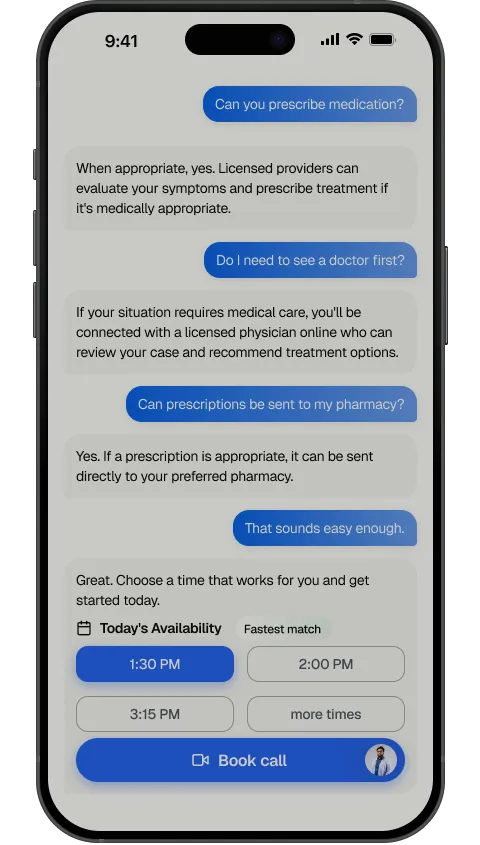

Medications We Prescribe for Pterygium

FML (Fluorometholone Eye)
Fluorometholone ophthalmic suspension
A topical ophthalmic corticosteroid used to reduce inflammation and irritation associated with pterygium and conjunctival surface disease.
Restasis (Cyclosporine Eye)
Cyclosporine ophthalmic emulsion
A topical immunomodulator that reduces ocular surface inflammation and is sometimes used to manage chronic irritation in pterygium.
Systane (Artificial Tears)
Artificial tears / lubricant eye drops
Lubricating eye drops used to relieve dryness, irritation, and foreign-body sensation caused by pterygium affecting the ocular surface.
Lotemax (Loteprednol Eye)
Loteprednol etabonate ophthalmic
A topical ophthalmic corticosteroid with a favorable safety profile used to control inflammation and redness associated with pterygium.
How Pterygium Treatment Works at Doctronic

Chat With The #1 AI Doctor
Doctronic answers your health questions with personalized medical insights and helps our doctors create a better treatment plan for you.

Meet With a Licensed Doctor For Treatment
Book a $39 telehealth appointment (or copay) within 30 minutes. Our doctors create personalized treatment plans with prescriptions when needed.

Pick Up Your Prescription
Our doctors prescribe non-controlled medications in all 50 states and send prescriptions to your pharmacy for same-day pickup.
Pricing that won't make you sick
Chat for free, see an online doctor for $39/visit, or refill a prescription online for as low as $0
-
 Available in all 50 states + DC
-
 Insurance accepted

- 24/7 medical care Free
- Specialist referrals Free
- Lifelong health record Free
- Unlimited questions Free
- Prescription refills Starting as low as $0
- Video visit with real doctors $39/visit
These are stories from real users who turned to Doctronic for answers when it mattered most.
- Preparing for a doctor visit
- Finding peace of mind
- Understanding a diagnosis
- Managing chronic illness
- Navigating healthcare
- A second opinion
- Improving health



Frequently asked questions
A pterygium is a non-cancerous, wedge-shaped growth of fibrovascular tissue that starts on the conjunctiva (the clear membrane covering the white of the eye) and can spread onto the cornea. It is strongly linked to prolonged exposure to UV light, wind, and dust. People who spend significant time outdoors, especially in sunny or dry climates, are at highest risk.
In many cases, a small pterygium causes only mild irritation and does not threaten vision. However, if the growth advances far enough onto the cornea, it can induce astigmatism and distort or reduce vision. Regular monitoring by an eye care provider is important to track any progression.
Medical treatment focuses on controlling inflammation and relieving dryness. Topical corticosteroid eye drops (such as fluorometholone or loteprednol) can reduce redness and irritation during flare-ups. Lubricating artificial tears help with dryness and foreign-body sensation. Cyclosporine eye drops may be used for chronic ocular surface inflammation. Definitive removal of the growth requires surgical excision.
Surgery is recommended when the pterygium grows toward the visual axis and threatens sight, causes significant astigmatism, produces severe chronic irritation unresponsive to medical treatment, or is cosmetically unacceptable to the patient. A Doctronic physician can help assess your situation and refer you to an ophthalmologist when surgical evaluation is appropriate.
Yes, pterygium can recur after surgical removal. Modern surgical techniques that use conjunctival autografting have significantly reduced recurrence rates compared to older methods. Protective measures such as UV-blocking sunglasses and lubricating drops are recommended after surgery to lower the risk of recurrence.
Limiting UV exposure is the most important preventive measure. Wearing wrap-around sunglasses that block 100 percent of UV light, using a brimmed hat outdoors, avoiding dusty or windy environments when possible, and keeping the eyes well lubricated can all help slow progression and reduce symptom flares.
Doctronic uses an AI-guided evaluation to gather detailed information about your symptoms and medical history. A licensed physician then reviews your case, makes a clinical assessment, and creates a personalized treatment plan that may include prescriptions, monitoring recommendations, or specialist referrals.
Yes. Doctronic connects patients with fully licensed U.S. physicians. All consultations are doctor-reviewed, regularly audited for quality, and conducted on a HIPAA-compliant platform to protect your health information. Adults 18 and older in any U.S. state can access care.
Top Conditions We Can Help With
People turn to Doctronic and our licensed medical team for support with all types of conditions.