


The doctor was very thorough and asked…
The doctor was very thorough and asked me alot of questions. Very polite and genuinely concerned about the situation. I am very impressed and thankful for the visit
Vitamin K2 is a fat-soluble vitamin that plays a key role in directing calcium to bones and away from arteries. If you have low Vitamin K2 levels or are at risk for deficiency, Doctronic connects you with a licensed physician who can evaluate your needs and prescribe the right supplement form and dose.
 Private & Secure
 Available 24/7
 Get care in minutes
Vitamin K2
Menaquinone (MK-7 / MK-4)
The primary treatment for Vitamin K2 deficiency. Available in menaquinone-7 (MK-7) and menaquinone-4 (MK-4) forms. Supports bone mineralization and inhibits arterial calcification by activating Gla-proteins.
Cholecalciferol
Vitamin D3
Often used alongside Vitamin K2 because Vitamin D3 increases calcium absorption, while Vitamin K2 directs that calcium appropriately to bones. Synergistic pairing is common in bone health protocols.
Magnesium
Magnesium (various salts)
Magnesium is a cofactor in Vitamin K metabolism and bone mineralization. Frequently co-prescribed with Vitamin K2 to support optimal calcium and bone health outcomes.
Os-Cal
Calcium Carbonate + Vitamin D
Used to address calcium deficiency alongside Vitamin K2 therapy. Vitamin K2 helps ensure supplemental calcium is deposited in bone rather than soft tissue or arterial walls.
Chat for free, see an online doctor for $39/visit, or renew a prescription online for as low as $0
 Available in all 50 states + DC
 Insurance accepted












Start a Free Chat With Doctronic
Doctronic answers your health questions with personalized medical insights and helps our doctors create a better treatment plan for you.
Meet With a Licensed Doctor For Treatment
Book a $39 telehealth appointment (or copay), with an average wait of about 5 minutes. Our doctors create personalized treatment plans with prescriptions when needed.
Pick Up Your Prescription
Our doctors prescribe non-controlled medications in all 50 states and send prescriptions to your pharmacy for same-day pickup.
Vitamin K2 (menaquinone) is a prescription-strength fat-soluble vitamin used to manage Vitamin K2 deficiency and support bone and cardiovascular health. It works by activating proteins such as osteocalcin and matrix Gla-protein (MGP) that regulate calcium metabolism, helping to mineralize bone and reduce arterial calcium deposits. With the right dose and ongoing monitoring, most people see meaningful improvement in their calcium regulation and overall bone health outcomes.

Doctronic can evaluate you for Vitamin K2 deficiency and, where appropriate, prescribe Vitamin K2 supplementation. You may be a good candidate if you have confirmed or suspected low Vitamin K2 levels, poor dietary intake of fermented or animal-source foods, malabsorption conditions, or risk factors for bone loss or vascular calcification.
Because Vitamin K2 interacts with the body's clotting and calcium systems, your physician will review any history of bleeding disorders, anticoagulant use, kidney disease, or hypercalcemia before recommending a regimen. A brief health history helps ensure the safest and most effective dosing plan for you.
Vitamin K1 (phylloquinone) is found mainly in leafy green vegetables and is primarily involved in blood clotting. Vitamin K2 (menaquinone) is found in fermented foods and certain animal products and plays a distinct role in activating proteins that regulate calcium metabolism, supporting both bone density and arterial health.
The two most studied forms are MK-4 and MK-7. MK-7 has a longer half-life in the body, meaning lower daily doses maintain more stable blood levels. MK-4 has been used at higher therapeutic doses in clinical trials for bone health. Your physician will recommend the form and dose best suited to your situation.
People at higher risk include those with fat malabsorption conditions (such as Crohn's disease or cystic fibrosis), individuals on long-term antibiotics that reduce gut bacteria, people with low dietary intake of fermented foods and animal proteins, and those taking certain anticoagulants or cholesterol-lowering medications that interfere with fat-soluble vitamin absorption.
Vitamin K2 can interact with warfarin (Coumadin) and other vitamin K-dependent anticoagulants, potentially affecting INR levels. You should not start Vitamin K2 supplementation without first speaking with your prescribing physician if you are on anticoagulant therapy. Our licensed physicians will review your medication list before prescribing.
Vitamin K2 deficiency can manifest as reduced bone mineral density, increased fracture risk, easy bruising, and in some research contexts, higher levels of arterial calcification. Because many of these findings are subclinical, a physician evaluation and relevant lab work help confirm whether supplementation is appropriate.
Improvements in bone biomarkers such as carboxylated osteocalcin can often be detected within 4 to 8 weeks of consistent supplementation. Meaningful changes in bone density typically require at least 6 to 12 months of treatment. Your physician may recommend periodic follow-up labs to track your response.
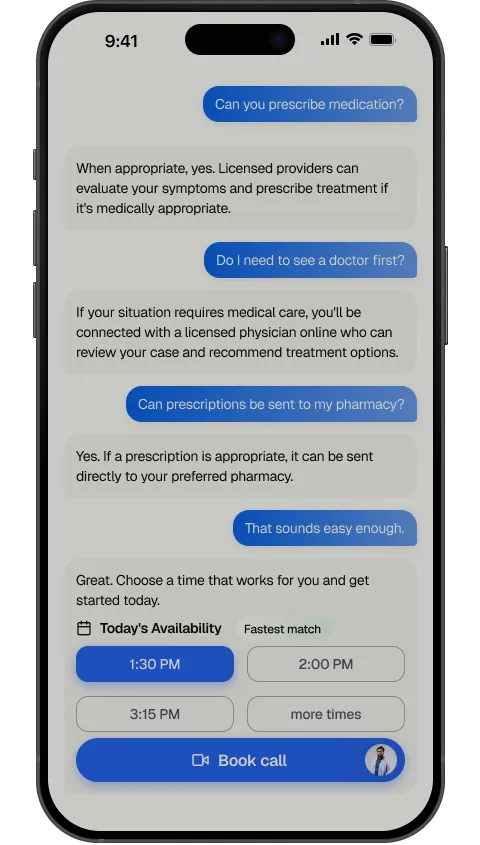
Doctronic uses an AI-powered evaluation to gather your symptoms and health history, which is then reviewed by a licensed physician. If treatment is appropriate, the physician creates a personalized treatment plan, which may include a prescription sent directly to your preferred pharmacy.
Yes. Doctronic works exclusively with licensed physicians who are fully credentialed in the states where they practice. All consultations are HIPAA-aligned, and every treatment plan is doctor-reviewed and audited for safety and clinical accuracy.
People turn to Doctronic and our licensed medical team for support with all types of conditions.