
Get Bone Density Treatment Online
Low bone density and osteoporosis can silently increase your fracture risk for years before you notice symptoms. Doctronic connects you with licensed physicians who can review your bone health history and recommend a treatment plan designed to protect your skeleton long-term.


What Is Bone Density?
Low bone density is a skeletal condition marked by reduced bone mineral content, weakened bone microarchitecture, and an elevated risk of fractures. It can progress silently from osteopenia to osteoporosis without obvious symptoms, leading to serious fractures of the hip, spine, and wrist. With the right treatment and support, bone loss can be slowed, stabilized, or partially reversed, helping you maintain strength and mobility.
- Low bone density affects millions of adults and is a leading cause of fracture-related disability in the United States.
- Get personalized guidance from doctor-trained AI
- Explore treatment and prescription options

Is Online Bone Density Treatment Right for You?
Doctronic can evaluate adults who have been diagnosed with low bone density, osteopenia, or osteoporosis, or who have risk factors such as postmenopausal status, prolonged corticosteroid use, family history of osteoporosis, or prior fragility fractures. Our licensed physicians review your history and help determine whether prescription therapy is appropriate for you.
Because bone health is closely linked to hormonal status, kidney function, calcium and vitamin D levels, and other systemic factors, our physicians will consider your full medical background, including any medications that may affect bone metabolism, before recommending a treatment plan.
- Diagnosed with osteopenia or osteoporosis
- Get personalized guidance from AI and clinicians
- Explore treatment and prescription refill options
- Access care from home, often the same day

Medications We Prescribe for Bone Density

Fosamax
Alendronate
A bisphosphonate taken weekly that slows bone breakdown and is one of the most widely prescribed first-line treatments for osteoporosis.
Prolia
Denosumab
A RANK ligand inhibitor given by injection every 6 months that reduces bone resorption and is used for postmenopausal osteoporosis and other high-risk patients.
Cholecalciferol
Vitamin D3
Essential for calcium absorption and bone mineralization; commonly prescribed alongside other osteoporosis treatments to support skeletal health.
Os-Cal
Calcium Carbonate + Vitamin D
A calcium and vitamin D supplement that supports bone mineral density and is used as a foundational component of bone health management.
How Bone Density Treatment Works at Doctronic

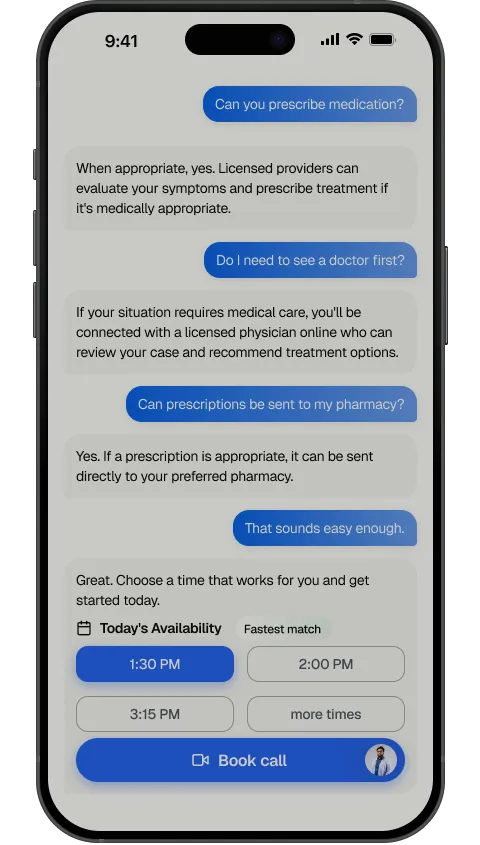
Chat With The #1 AI Doctor
Doctronic answers your health questions with personalized medical insights and helps our doctors create a better treatment plan for you.

Meet With a Licensed Doctor For Treatment
Book a $39 telehealth appointment (or copay) within 30 minutes. Our doctors create personalized treatment plans with prescriptions when needed.

Pick Up Your Prescription
Our doctors prescribe non-controlled medications in all 50 states and send prescriptions to your pharmacy for same-day pickup.
Pricing that won't make you sick
Chat for free, see an online doctor for $39/visit, or refill a prescription online for as low as $0
-
 Available in all 50 states + DC
-
 Insurance accepted

- 24/7 medical care Free
- Specialist referrals Free
- Lifelong health record Free
- Unlimited questions Free
- Prescription refills Starting as low as $0
- Video visit with real doctors $39/visit
These are stories from real users who turned to Doctronic for answers when it mattered most.
- Preparing for a doctor visit
- Finding peace of mind
- Understanding a diagnosis
- Managing chronic illness
- Navigating healthcare
- A second opinion
- Improving health









Frequently asked questions
Osteopenia refers to bone mineral density that is lower than normal but not low enough to be classified as osteoporosis. On a DEXA scan, osteopenia is indicated by a T-score between -1.0 and -2.5, while osteoporosis is diagnosed at a T-score of -2.5 or lower. Both conditions increase fracture risk, but osteoporosis carries a significantly higher risk of serious fractures.
Low bone density can result from aging, hormonal changes such as menopause or low testosterone, long-term use of corticosteroids or certain other medications, low calcium and vitamin D intake, lack of weight-bearing exercise, smoking, excessive alcohol use, and certain medical conditions such as rheumatoid arthritis, thyroid disorders, and malabsorption syndromes.
Low bone density itself usually causes no symptoms. Many people do not know they have it until they break a bone from a minor fall or bump. Gradually developing back pain, loss of height over time, or a stooped posture can signal vertebral compression fractures related to osteoporosis.
The standard test is a dual-energy X-ray absorptiometry (DEXA) scan, which measures bone mineral density at the hip and spine. Results are reported as T-scores. Blood tests may also be ordered to check calcium, vitamin D, and hormone levels, and to rule out secondary causes of bone loss.
Bisphosphonates attach to bone surfaces and inhibit osteoclasts, the cells responsible for breaking down bone tissue. By slowing bone resorption, they allow bone-building cells (osteoblasts) to maintain or gradually improve bone mineral density, reducing fracture risk over time.
Yes. Weight-bearing exercises such as walking, jogging, and resistance training stimulate bone formation. Adequate intake of calcium and vitamin D, quitting smoking, limiting alcohol, and preventing falls all play important roles. Lifestyle changes are most effective when combined with medical treatment in people with significant bone loss.
Doctronic uses AI-powered evaluation to gather a detailed picture of your symptoms, medical history, and risk factors. That information is then reviewed by a licensed physician who creates a personalized treatment plan. If prescription medication is appropriate, it can be sent to your preferred pharmacy.
Yes. Doctronic connects you with licensed physicians who are board-certified and practicing in your state. All consultations are HIPAA-aligned, and every treatment plan is doctor-reviewed. Our platform is designed to meet the same standards of care you would expect from an in-person visit.
Top Conditions We Can Help With
People turn to Doctronic and our licensed medical team for support with all types of conditions.