
Get Subconjunctival Hemorrhage Treatment Online
A bright red patch on the white of your eye can be alarming, but subconjunctival hemorrhage is usually harmless and clears on its own. Doctronic's licensed physicians can evaluate your symptoms, rule out serious causes, and provide a personalized care plan quickly and conveniently online.


What Is Subconjunctival Hemorrhage?
Subconjunctival hemorrhage is a condition marked by a sudden, visible collection of blood beneath the clear conjunctival membrane covering the white of the eye. It can result from minor trauma, straining, coughing, sneezing, high blood pressure, or blood-thinning medications, and often has no identifiable cause. While the appearance can be striking, vision is rarely affected and most cases resolve without treatment within one to three weeks. With the right evaluation and support, patients can feel confident that serious underlying causes have been ruled out and that healing is on track.
- Blood appears under the conjunctiva, the thin clear tissue covering the white of the eye
- Get personalized guidance from doctor-trained AI
- Explore treatment and prescription options

Is Online Subconjunctival Hemorrhage Treatment Right for You?
Doctronic can evaluate patients who have noticed a painless red area on the white of their eye consistent with subconjunctival hemorrhage. Our physicians assess the appearance, onset, associated symptoms, and relevant history to confirm the diagnosis and identify any contributing factors such as elevated blood pressure or medication use.
Because subconjunctival hemorrhage can sometimes signal an underlying cardiovascular or bleeding disorder, our clinicians will also review your blood pressure history, current medications including anticoagulants, and any history of clotting or bleeding conditions before recommending a management approach.
- Diagnosed with subconjunctival hemorrhage by a provider
- Get personalized guidance from AI and clinicians
- Explore treatment and prescription refill options
- Access care from home, often the same day

Medications We Prescribe for Subconjunctival Hemorrhage

Systane
Artificial Tears
Lubricating eye drops are the primary supportive measure for subconjunctival hemorrhage, relieving mild irritation and dryness while the hemorrhage resolves naturally.
Micardis
Telmisartan
An angiotensin receptor blocker used when hypertension is identified as a contributing factor to recurrent subconjunctival hemorrhage, helping control blood pressure to reduce risk of recurrence.
Vitamin K2
Vitamin K2
Vitamin K supports normal blood clotting and may be considered as a supplement when nutritional deficiency or anticoagulation balance is a contributing factor.
Omega-3
Fish Oil
Omega-3 fatty acids have mild effects on vascular health and may be used as a supportive supplement; patients on blood thinners should discuss use with their physician.
How Subconjunctival Hemorrhage Treatment Works at Doctronic

Chat With The #1 AI Doctor
Doctronic answers your health questions with personalized medical insights and helps our doctors create a better treatment plan for you.

Meet With a Licensed Doctor For Treatment
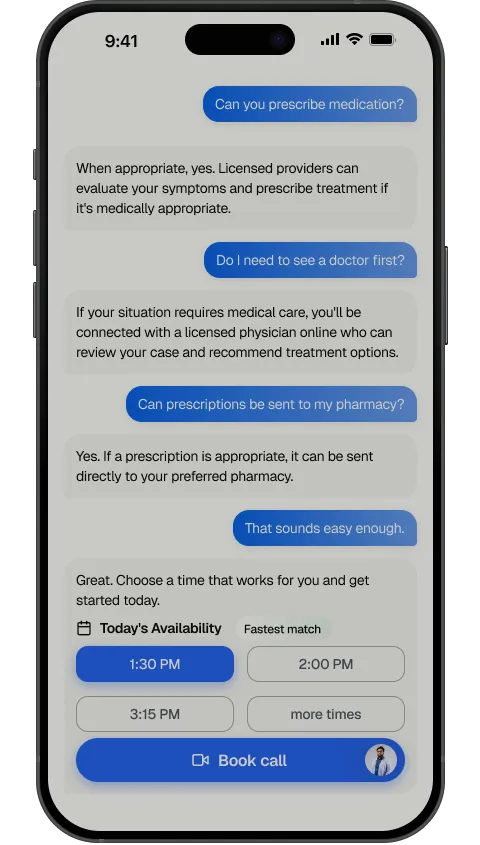
Book a $39 telehealth appointment (or copay) within 30 minutes. Our doctors create personalized treatment plans with prescriptions when needed.

Pick Up Your Prescription
Our doctors prescribe non-controlled medications in all 50 states and send prescriptions to your pharmacy for same-day pickup.
Pricing that won't make you sick
Chat for free, see an online doctor for $39/visit, or refill a prescription online for as low as $0
-
 Available in all 50 states + DC
-
 Insurance accepted

- 24/7 medical care Free
- Specialist referrals Free
- Lifelong health record Free
- Unlimited questions Free
- Prescription refills Starting as low as $0
- Video visit with real doctors $39/visit
These are stories from real users who turned to Doctronic for answers when it mattered most.
- Preparing for a doctor visit
- Finding peace of mind
- Understanding a diagnosis
- Managing chronic illness
- Navigating healthcare
- A second opinion
- Improving health











Frequently asked questions
A subconjunctival hemorrhage occurs when a small blood vessel beneath the conjunctiva breaks and leaks blood into the space between the conjunctiva and the sclera. Common triggers include straining, coughing, sneezing, rubbing the eye, minor trauma, high blood pressure, or use of blood-thinning medications. In many cases no specific cause is found.
In most cases it is not dangerous. The condition is almost always benign and resolves on its own within one to three weeks. However, recurrent episodes or hemorrhage occurring after significant eye trauma or alongside other bleeding symptoms should be evaluated promptly to rule out an underlying clotting disorder or cardiovascular condition.
No. Blood collects on the surface of the eye beneath the conjunctiva and does not enter the eye itself, so vision is not typically affected. If you notice any changes in vision alongside the red patch, you should seek in-person evaluation immediately.
Most subconjunctival hemorrhages resolve completely within seven to fourteen days, though larger bleeds can take up to three weeks. The redness may appear to spread or change color from bright red to orange or yellow as the blood is reabsorbed, which is a normal part of healing.
Most cases require no specific treatment beyond observation and reassurance. Lubricating eye drops can relieve mild irritation. If an underlying cause such as high blood pressure is identified, treating that condition is important to prevent recurrence. Blood-thinning medications should not be stopped without consulting a physician.
It is generally advisable to avoid wearing contact lenses until the hemorrhage has fully resolved and any irritation has subsided. Contacts can increase irritation and may interfere with the healing process. Your physician can advise you on when it is safe to resume lens wear.
You should go to an emergency department or see an ophthalmologist in person immediately if the hemorrhage followed significant eye trauma or injury, if you have pain inside the eye, sudden vision changes, or if the entire white of the eye is involved and associated with a head injury.
Doctronic uses AI-powered evaluation to gather detailed information about your symptoms and health history. A licensed physician then reviews your case, confirms the assessment, and provides a personalized treatment plan. The process is HIPAA-aligned, doctor-reviewed, and designed to deliver expert care conveniently and safely.
Top Conditions We Can Help With
People turn to Doctronic and our licensed medical team for support with all types of conditions.