
Get Vestibular Neuritis Treatment Online
Sudden, severe vertigo and dizziness from vestibular neuritis can be debilitating. Doctronic connects you with licensed physicians who can evaluate your symptoms and recommend proven treatments to help you recover faster.


What Is Vestibular Neuritis?
Vestibular neuritis is an inner ear disorder marked by sudden onset of intense vertigo, nausea, and balance disturbance caused by inflammation of the vestibular nerve. It can make standing, walking, and daily activities extremely difficult for days to weeks. With the right treatment and support, most people recover meaningful vestibular function and return to normal life.
- Vestibular neuritis causes sudden, severe vertigo lasting days to weeks due to inflammation of the vestibular nerve, most often triggered by a viral infection.
- Get personalized guidance from doctor-trained AI
- Explore treatment and prescription options

Is Online Vestibular Neuritis Treatment Right for You?
Doctronic can evaluate adults experiencing vestibular neuritis, including those with acute vertigo, balance problems, nausea, and vomiting consistent with vestibular nerve inflammation. Our physicians can assess your symptom history and determine whether medical treatment is appropriate for you.
Because vestibular neuritis affects the inner ear and nervous system, your provider will review your neurological history, any prior ear or balance conditions, and current medications to ensure a safe and effective treatment plan tailored to your situation.
- Diagnosed with vestibular neuritis or acute vestibular syndrome by a healthcare provider
- Get personalized guidance from AI and clinicians
- Explore treatment and prescription refill options
- Access care from home, often the same day

Medications We Prescribe for Vestibular Neuritis

Dramamine
Dimenhydrinate
An antihistamine commonly used to relieve nausea, vomiting, and dizziness associated with vestibular disorders including vestibular neuritis.
Antivert
Meclizine
An antihistamine that suppresses vestibular stimulation and is widely used to reduce vertigo and dizziness in vestibular neuritis.
Phenergan
Promethazine
A phenothiazine antihistamine used to control nausea, vomiting, and motion-related symptoms during the acute phase of vestibular neuritis.
Decadron
Dexamethasone
A corticosteroid that may be prescribed to reduce vestibular nerve inflammation and support faster recovery of vestibular function in vestibular neuritis.
How Vestibular Neuritis Treatment Works at Doctronic

Chat With The #1 AI Doctor
Doctronic answers your health questions with personalized medical insights and helps our doctors create a better treatment plan for you.

Meet With a Licensed Doctor For Treatment
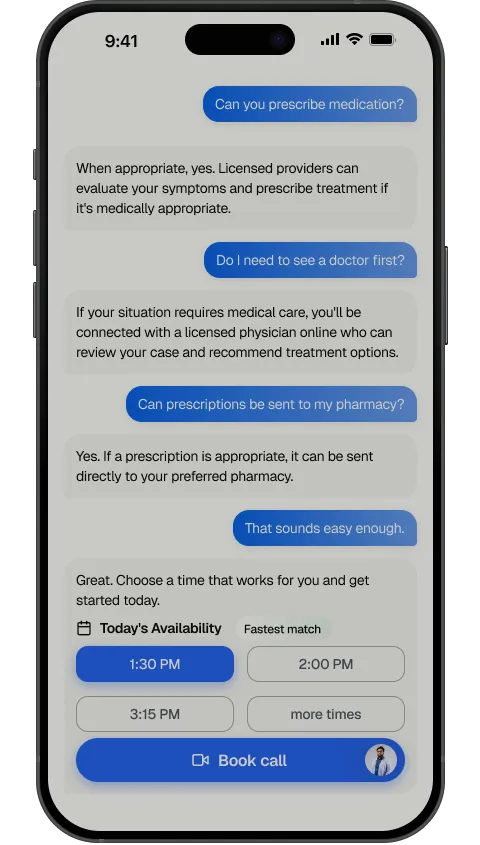
Book a $39 telehealth appointment (or copay) within 30 minutes. Our doctors create personalized treatment plans with prescriptions when needed.

Pick Up Your Prescription
Our doctors prescribe non-controlled medications in all 50 states and send prescriptions to your pharmacy for same-day pickup.
Pricing that won't make you sick
Chat for free, see an online doctor for $39/visit, or refill a prescription online for as low as $0
-
 Available in all 50 states + DC
-
 Insurance accepted

- 24/7 medical care Free
- Specialist referrals Free
- Lifelong health record Free
- Unlimited questions Free
- Prescription refills Starting as low as $0
- Video visit with real doctors $39/visit
These are stories from real users who turned to Doctronic for answers when it mattered most.
- Preparing for a doctor visit
- Finding peace of mind
- Understanding a diagnosis
- Managing chronic illness
- Navigating healthcare
- A second opinion
- Improving health










Frequently asked questions
Vestibular neuritis is most commonly caused by a viral infection, often from a herpes-family virus, that inflames the vestibular nerve. This nerve carries balance signals from the inner ear to the brain. When it becomes inflamed, the brain receives abnormal or absent balance signals, resulting in severe vertigo and instability.
Acute symptoms such as intense vertigo and vomiting typically peak within the first one to two days and then gradually improve over one to two weeks. Some people experience milder imbalance or a sensation of unsteadiness for several weeks to months as the brain compensates for the reduced vestibular input.
They are related but distinct conditions. Vestibular neuritis involves inflammation limited to the vestibular nerve and causes vertigo without hearing loss. Labyrinthitis involves inflammation of the entire labyrinth, which includes both the vestibular and auditory portions of the inner ear, and can cause hearing loss or tinnitus in addition to vertigo.
During the acute phase, physicians may prescribe vestibular suppressants such as meclizine or dimenhydrinate to reduce dizziness, and antiemetics such as promethazine to control nausea and vomiting. Corticosteroids like dexamethasone may be used to reduce vestibular nerve inflammation and promote recovery. These medications are generally used short-term to manage symptoms.
Recurrence is uncommon but possible. Most people who recover fully from one episode do not experience another. However, some individuals may have residual sensitivity to motion or mild imbalance for an extended period. If symptoms return or worsen, it is important to follow up with a physician to rule out other causes.
Vestibular rehabilitation is a specialized form of physical therapy that uses targeted exercises to help the brain adapt to reduced or abnormal inner ear signals. Studies show it can significantly speed up recovery and reduce long-term imbalance in people with vestibular neuritis. Your physician may recommend it alongside medication, especially if symptoms persist beyond the acute phase.
Doctronic uses AI-driven evaluation to gather detailed information about your symptoms and health history. A licensed physician then reviews your case, confirms the assessment, and creates a personalized treatment plan. The entire process happens online, so you can get expert care without leaving home.
Yes. Doctronic connects you with fully licensed physicians whose consultations are doctor-reviewed and audited for quality. The platform is HIPAA-aligned, meaning your health information is kept private and secure. Doctronic is available to adults 18 and older in any U.S. state.
Top Conditions We Can Help With
People turn to Doctronic and our licensed medical team for support with all types of conditions.