
Get Subclinical Hyperthyroidism Treatment Online
Subclinical hyperthyroidism means your TSH is suppressed but your thyroid hormone levels are still in the normal range. Our licensed physicians can evaluate your labs, assess your risk, and guide you toward the right management plan without leaving home.


What Is Subclinical Hyperthyroidism?
Subclinical hyperthyroidism is a thyroid condition marked by a persistently low or undetectable TSH level alongside normal free T4 and free T3 concentrations. It can progress to overt hyperthyroidism and is associated with risks such as atrial fibrillation, bone loss, and cardiovascular complications. With the right treatment and support, many people with subclinical hyperthyroidism can protect their long-term health and keep their thyroid function stable.
- Defined by low TSH with normal free T4 and T3 levels
- Get personalized guidance from doctor-trained AI
- Explore treatment and prescription options

Is Online Subclinical Hyperthyroidism Treatment Right for You?
We can evaluate and treat adults who have been diagnosed with subclinical hyperthyroidism or who have lab results showing suppressed TSH with normal thyroid hormones. Our physicians can recommend antithyroid medications such as Tapazole (methimazole) or beta-blockers such as Inderal (propranolol) when clinically appropriate, and help you decide whether active treatment or watchful waiting is the right approach.
Because subclinical hyperthyroidism can affect the cardiovascular system, bone health, and overall metabolic function, your physician will review any relevant cardiac or bone-health history, as well as prior thyroid conditions, when building your care plan.
- Diagnosed with subclinical hyperthyroidism
- Get personalized guidance from AI and clinicians
- Explore treatment and prescription refill options
- Access care from home, often the same day

Medications We Prescribe for Subclinical Hyperthyroidism

Tapazole
Methimazole
An antithyroid drug that reduces thyroid hormone synthesis; often used when subclinical hyperthyroidism is caused by Graves disease or a toxic nodule.
PTU
Propylthiouracil
An alternative antithyroid agent that blocks thyroid hormone production and peripheral T4-to-T3 conversion; considered when methimazole is not tolerated.
Inderal
Propranolol HCl ER
A non-selective beta-blocker used to manage heart rate and adrenergic symptoms such as palpitations and tremor while definitive thyroid treatment is arranged.
Zebeta
Bisoprolol
A cardioselective beta-blocker that may be used to control heart rate and reduce cardiovascular risk in patients with subclinical hyperthyroidism.
How Subclinical Hyperthyroidism Treatment Works at Doctronic

Chat With The #1 AI Doctor
Doctronic answers your health questions with personalized medical insights and helps our doctors create a better treatment plan for you.

Meet With a Licensed Doctor For Treatment
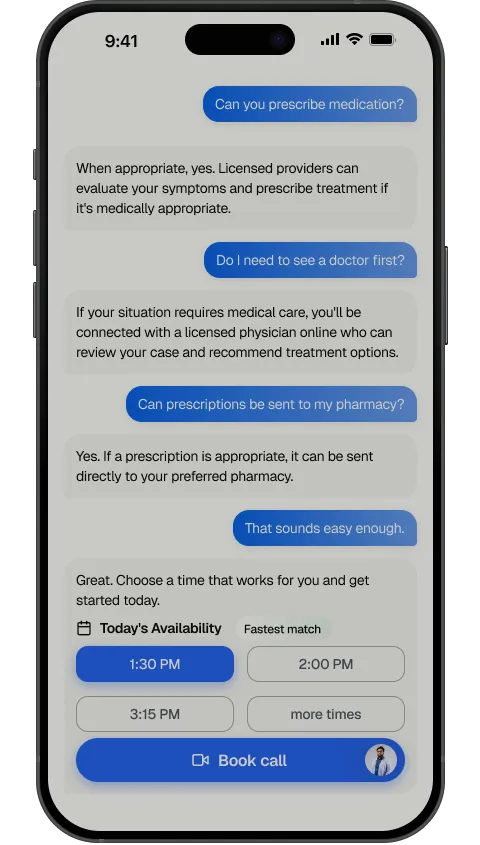
Book a $39 telehealth appointment (or copay) within 30 minutes. Our doctors create personalized treatment plans with prescriptions when needed.

Pick Up Your Prescription
Our doctors prescribe non-controlled medications in all 50 states and send prescriptions to your pharmacy for same-day pickup.
Pricing that won't make you sick
Chat for free, see an online doctor for $39/visit, or refill a prescription online for as low as $0
-
 Available in all 50 states + DC
-
 Insurance accepted

- 24/7 medical care Free
- Specialist referrals Free
- Lifelong health record Free
- Unlimited questions Free
- Prescription refills Starting as low as $0
- Video visit with real doctors $39/visit
These are stories from real users who turned to Doctronic for answers when it mattered most.
- Preparing for a doctor visit
- Finding peace of mind
- Understanding a diagnosis
- Managing chronic illness
- Navigating healthcare
- A second opinion
- Improving health
Frequently asked questions
Subclinical hyperthyroidism means your TSH is suppressed below the normal range but your free T4 and free T3 remain normal. In overt hyperthyroidism, thyroid hormone levels are also elevated and symptoms are usually more pronounced. Subclinical hyperthyroidism may cause mild or no symptoms, but it still carries risks to the heart and bones if left unmanaged.
Common causes include Graves disease in its early stage, one or more autonomously functioning thyroid nodules, multinodular goiter, and excessive thyroid hormone replacement therapy. Identifying the underlying cause helps determine the best treatment approach.
Not always. Current guidelines generally recommend treatment for persistent subclinical hyperthyroidism with a TSH below 0.1 mIU/L, especially in older adults or those with heart disease or osteoporosis risk. For milder TSH suppression, watchful waiting with repeat labs may be appropriate. Your physician will weigh your individual risk factors.
Long-term untreated subclinical hyperthyroidism is associated with an increased risk of atrial fibrillation, reduced bone mineral density (particularly in postmenopausal women), and possible progression to overt hyperthyroidism. These risks are highest when TSH is very low or undetectable.
Many people have no obvious symptoms. When symptoms do occur they can include mild palpitations, slight tremor, heat intolerance, fatigue, anxiety, or increased heart rate. Because these are nonspecific, lab testing is essential for diagnosis.
Antithyroid drugs such as methimazole (Tapazole) or propylthiouracil (PTU) are used when the condition is caused by Graves disease or autonomous thyroid nodules. Beta-blockers like propranolol (Inderal) or bisoprolol (Zebeta) help control heart rate and adrenergic symptoms. Radioactive iodine or surgery are options handled by an endocrinologist for definitive treatment of structural causes.
Doctronic uses AI to guide you through a thorough symptom and health history evaluation. A licensed physician then reviews your information, confirms the appropriate diagnosis, and creates a personalized treatment plan that may include a prescription when clinically indicated. Everything is done online, with no in-person visit required.
Yes. Doctronic connects you with fully licensed physicians who are trained to evaluate and treat thyroid conditions. All consultations are HIPAA-aligned, and physician decisions are subject to regular clinical audits to ensure patient safety and evidence-based care.
Top Conditions We Can Help With
People turn to Doctronic and our licensed medical team for support with all types of conditions.