
Get Peripheral Artery Disease Treatment Online
Peripheral artery disease causes reduced blood flow to your limbs and raises your risk of serious cardiovascular events. Doctronic connects you with licensed physicians who can evaluate your symptoms and guide your treatment plan from the comfort of home.


What Is Peripheral Artery Disease?
Peripheral artery disease (PAD) is a circulatory condition marked by narrowed arteries that reduce blood flow to the legs and feet, causing pain, cramping, and fatigue with activity. It can increase the risk of heart attack, stroke, and critical limb ischemia. With the right treatment and support, many people with PAD are able to reduce symptoms, protect their limb health, and lower their cardiovascular risk.
- PAD affects an estimated 8-12 million Americans and is most common in adults over 50 with risk factors such as smoking, diabetes, and high blood pressure.
- Get personalized guidance from doctor-trained AI
- Explore treatment and prescription options

Is Online Peripheral Artery Disease Treatment Right for You?
We can evaluate patients who have been diagnosed with peripheral artery disease or who are experiencing symptoms suggestive of PAD, such as leg pain or cramping with walking. Medications used in PAD management include antiplatelet agents, cholesterol-lowering drugs, and blood pressure medications, all chosen based on your individual risk profile.
Your cardiovascular history matters. Patients with a history of hypertension, high cholesterol, diabetes, or smoking are at elevated risk for PAD, and our physicians take these factors into account when building your care plan.
- Diagnosed with peripheral artery disease (PAD)
- Get personalized guidance from AI and clinicians
- Explore treatment and prescription refill options
- Access care from home, often the same day

Medications We Prescribe for Peripheral Artery Disease

Plavix
Clopidogrel
An antiplatelet medication commonly used in PAD to reduce the risk of heart attack and stroke by preventing blood clots from forming in narrowed arteries.
Lipitor
Atorvastatin
A statin therapy used to lower LDL cholesterol, slow the progression of arterial plaque, and reduce cardiovascular events in patients with PAD.
Norvasc
Amlodipine
A calcium channel blocker used to manage high blood pressure, a key modifiable risk factor in peripheral artery disease.
Micardis
Telmisartan
An angiotensin receptor blocker (ARB) used to control hypertension and provide cardiovascular protection in patients with PAD and comorbid conditions.
How Peripheral Artery Disease Treatment Works at Doctronic

Chat With The #1 AI Doctor
Doctronic answers your health questions with personalized medical insights and helps our doctors create a better treatment plan for you.

Meet With a Licensed Doctor For Treatment
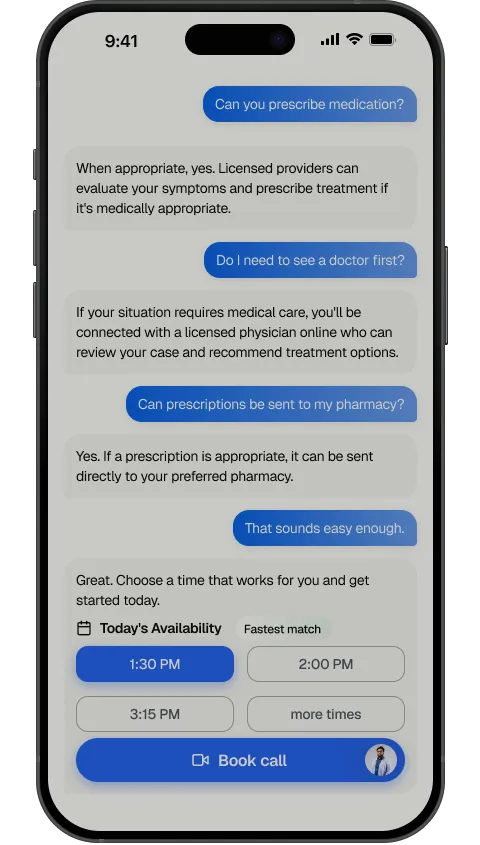
Book a $39 telehealth appointment (or copay) within 30 minutes. Our doctors create personalized treatment plans with prescriptions when needed.

Pick Up Your Prescription
Our doctors prescribe non-controlled medications in all 50 states and send prescriptions to your pharmacy for same-day pickup.
Pricing that won't make you sick
Chat for free, see an online doctor for $39/visit, or refill a prescription online for as low as $0
-
 Available in all 50 states + DC
-
 Insurance accepted

- 24/7 medical care Free
- Specialist referrals Free
- Lifelong health record Free
- Unlimited questions Free
- Prescription refills Starting as low as $0
- Video visit with real doctors $39/visit
These are stories from real users who turned to Doctronic for answers when it mattered most.
- Preparing for a doctor visit
- Finding peace of mind
- Understanding a diagnosis
- Managing chronic illness
- Navigating healthcare
- A second opinion
- Improving health











Frequently asked questions
Peripheral artery disease (PAD) is caused by atherosclerosis, a buildup of fatty plaques in the artery walls that narrows the vessels and restricts blood flow, most often to the legs and feet. Risk factors include smoking, diabetes, high blood pressure, high cholesterol, and older age.
The most recognizable symptom is intermittent claudication, which is pain, aching, cramping, or fatigue in the legs or buttocks that occurs during walking or exercise and goes away with rest. Some people have no symptoms at all, while others may experience cold or numb feet, slow-healing sores, or changes in skin color on the legs.
PAD is most commonly diagnosed using the ankle-brachial index (ABI), a simple test that compares blood pressure readings at the ankle and the arm. An ABI below 0.9 is generally considered abnormal. Additional imaging such as ultrasound or CT angiography may be used to assess severity.
Yes. For many patients, PAD is managed medically and with lifestyle changes. Antiplatelet medications, statins, blood pressure control, smoking cessation, and a supervised exercise program are the cornerstone of non-surgical PAD management. Surgery or procedures are reserved for more severe cases.
Smoking is one of the strongest risk factors for PAD and dramatically worsens its progression. Quitting smoking slows the advancement of arterial disease, reduces the risk of limb loss, and lowers the chance of heart attack and stroke in people with PAD.
PAD is a marker of systemic atherosclerosis. People with PAD have a significantly elevated risk of heart attack and stroke, even if they have no cardiac symptoms. This is why PAD management focuses heavily on cardiovascular risk reduction through medications and lifestyle modification.
When you start a visit, our AI-powered system gathers a detailed picture of your symptoms, medical history, and current medications. A licensed physician then reviews your information, confirms clinical eligibility, and creates a personalized treatment plan that may include prescription medications and lifestyle guidance.
Yes. Doctronic connects you with fully licensed physicians who are board-certified and practicing in your state. All consultations are doctor-reviewed and regularly audited for quality, and your health information is protected under HIPAA-aligned privacy standards.
Top Conditions We Can Help With
People turn to Doctronic and our licensed medical team for support with all types of conditions.