
Get Labyrinthitis Treatment Online
Labyrinthitis can leave you dizzy, nauseated, and unable to function. Doctronic's AI-powered platform evaluates your symptoms and connects you with a licensed physician who can create a personalized treatment plan, fast.


What Is Labyrinthitis?
Labyrinthitis is an inner ear disorder marked by inflammation of the labyrinth, the fluid-filled structures responsible for hearing and balance. It can cause severe vertigo, hearing changes, tinnitus, nausea, and vomiting that disrupt daily life. With the right treatment and support, most people recover fully and regain normal balance and hearing function.
- Inflammation of the inner ear disrupts balance and hearing signals sent to the brain
- Get personalized guidance from doctor-trained AI
- Explore treatment and prescription options

Is Online Labyrinthitis Treatment Right for You?
Doctronic can evaluate and support treatment for adults experiencing labyrinthitis, including sudden-onset vertigo, inner ear inflammation caused by viral or bacterial infections, and associated nausea or hearing changes. A licensed physician reviews every case to determine the most appropriate prescription plan.
Because labyrinthitis affects the vestibular and auditory systems, your physician will consider your history of ear infections, recent illness, hearing loss, and any neurological symptoms to rule out more serious conditions before prescribing.
- Diagnosed with labyrinthitis or sudden-onset vertigo from an inner ear cause
- Get personalized guidance from AI and clinicians
- Explore treatment and prescription refill options
- Access care from home, often the same day

Medications We Prescribe for Labyrinthitis

Dramamine
Dimenhydrinate
An antihistamine and antiemetic commonly used to relieve vertigo and nausea associated with inner ear disorders such as labyrinthitis.
Antivert
Meclizine
A first-line antihistamine vestibular suppressant used to reduce the sensation of spinning and motion-related nausea in labyrinthitis.
Zofran ODT
Ondansetron ODT
A 5-HT3 antagonist antiemetic used to manage the nausea and vomiting that frequently accompany acute labyrinthitis episodes.
Vibramycin
Doxycycline 100mg
A broad-spectrum antibiotic considered when bacterial labyrinthitis or an underlying bacterial ear infection is suspected as the cause.
How Labyrinthitis Treatment Works at Doctronic

Chat With The #1 AI Doctor
Doctronic answers your health questions with personalized medical insights and helps our doctors create a better treatment plan for you.

Meet With a Licensed Doctor For Treatment
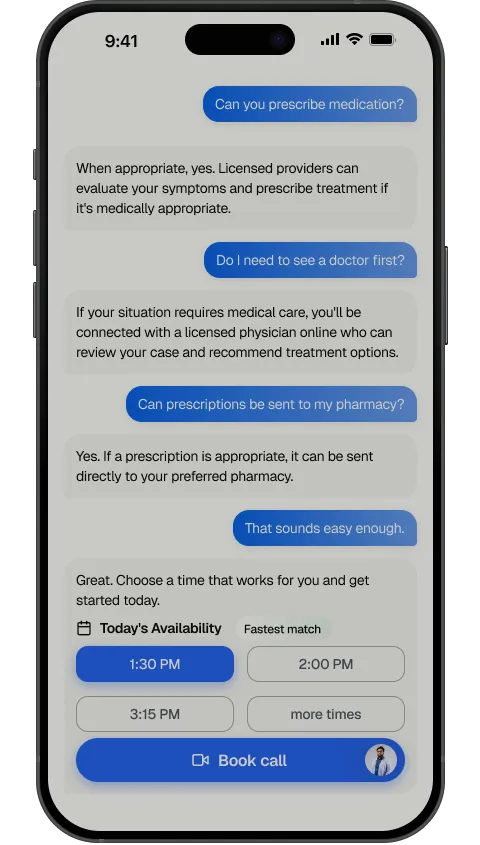
Book a $39 telehealth appointment (or copay) within 30 minutes. Our doctors create personalized treatment plans with prescriptions when needed.

Pick Up Your Prescription
Our doctors prescribe non-controlled medications in all 50 states and send prescriptions to your pharmacy for same-day pickup.
Pricing that won't make you sick
Chat for free, see an online doctor for $39/visit, or refill a prescription online for as low as $0
-
 Available in all 50 states + DC
-
 Insurance accepted

- 24/7 medical care Free
- Specialist referrals Free
- Lifelong health record Free
- Unlimited questions Free
- Prescription refills Starting as low as $0
- Video visit with real doctors $39/visit
These are stories from real users who turned to Doctronic for answers when it mattered most.
- Preparing for a doctor visit
- Finding peace of mind
- Understanding a diagnosis
- Managing chronic illness
- Navigating healthcare
- A second opinion
- Improving health











Frequently asked questions
Labyrinthitis is inflammation of the labyrinth, the inner ear structure that controls balance and hearing. It is most often triggered by a viral infection, such as a cold or flu virus, but can also be caused by bacterial infections, autoimmune responses, or rarely, head injury. The inflammation disrupts the normal nerve signals sent from the ear to the brain, causing vertigo, nausea, and sometimes hearing changes.
Acute labyrinthitis symptoms are most intense in the first few days and usually begin to improve within one to two weeks. Most people recover fully within four to six weeks, though some individuals experience mild residual balance difficulties for several months. Rarely, symptoms such as tinnitus or mild hearing changes can persist longer.
The hallmark symptom is sudden, severe vertigo, a sensation that you or your surroundings are spinning or moving. This is often accompanied by nausea, vomiting, difficulty walking, and a feeling of being off balance. Some people also experience tinnitus (ringing in the ear), a feeling of fullness in the ear, or temporary hearing loss on the affected side.
Both conditions involve inflammation of inner ear structures and cause vertigo. The key difference is hearing: labyrinthitis affects both the hearing and balance branches of the inner ear nerve, so it commonly causes hearing loss or tinnitus along with vertigo. Vestibular neuritis affects only the balance branch, so hearing is typically preserved.
Treatment focuses on relieving symptoms while the inflammation resolves. Antihistamines such as meclizine or dimenhydrinate are commonly used to reduce vertigo. Antiemetics such as ondansetron help control nausea and vomiting. If a bacterial infection is suspected, antibiotics such as doxycycline may be prescribed. A physician will choose the most appropriate medication based on your specific symptoms and history.
Labyrinthitis itself is not contagious, but the viral or bacterial infections that trigger it can be. If a cold or flu virus caused your labyrinthitis, that underlying illness could potentially spread to others through respiratory droplets. Standard hygiene practices such as handwashing and avoiding close contact with others when sick can reduce transmission of the triggering infection.
You should seek emergency care immediately if you experience sudden severe headache, double vision, difficulty speaking or swallowing, weakness or numbness in any limb, or inability to walk. These symptoms could indicate a stroke or other serious neurological condition that requires in-person evaluation. Online care is appropriate when vertigo and nausea are the primary concerns and serious neurological causes have been ruled out.
Doctronic uses an AI-powered evaluation to gather detailed information about your symptoms, medical history, and current medications. That information is then reviewed by a licensed physician who creates a personalized treatment plan. If a prescription is appropriate, the physician can send it directly to your preferred pharmacy, all without you needing to leave home.
Top Conditions We Can Help With
People turn to Doctronic and our licensed medical team for support with all types of conditions.