
Get Functional Dyspepsia Treatment Online
Persistent stomach pain, early fullness, and nausea without a clear structural cause can make everyday life difficult. Doctronic connects you with licensed physicians who can evaluate your functional dyspepsia symptoms and recommend an evidence-based treatment plan, quickly and from anywhere in the U.S.


What Is Functional Dyspepsia?
Functional dyspepsia is a chronic gastrointestinal disorder marked by recurring upper abdominal pain, bloating, early satiety, and nausea in the absence of any structural or biochemical abnormality to explain the symptoms. It can interfere significantly with diet, daily activity, and quality of life. With the right treatment and support, most people with functional dyspepsia can achieve meaningful symptom relief and improved well-being.
- Affects up to 20% of the global population and is one of the most common reasons for gastroenterology referral
- Get personalized guidance from doctor-trained AI
- Explore treatment and prescription options

Is Online Functional Dyspepsia Treatment Right for You?
Doctronic can evaluate and treat adults experiencing functional dyspepsia, including those with postprandial distress syndrome (bothersome fullness or early satiety after meals) or epigastric pain syndrome (burning or pain in the upper abdomen). Our physicians assess your symptom pattern, duration, and history to confirm the diagnosis and rule out alarm features.
Because functional dyspepsia involves the upper gastrointestinal tract and can be linked to factors such as gut motility, gastric acid sensitivity, Helicobacter pylori history, and psychological contributors, our licensed physicians review your full gastrointestinal and mental health history before prescribing any treatment.
- Diagnosed with functional dyspepsia or recurring unexplained upper GI symptoms
- Get personalized guidance from AI and clinicians
- Explore treatment and prescription refill options
- Access care from home, often the same day

Medications We Prescribe for Functional Dyspepsia

Nexium
Esomeprazole
A proton pump inhibitor commonly used as first-line therapy for functional dyspepsia, particularly in patients with epigastric pain syndrome. Reduces gastric acid secretion to relieve burning and pain.
Reglan
Metoclopramide
A prokinetic agent that accelerates gastric emptying and reduces nausea. Often used in functional dyspepsia patients with predominant postprandial distress, bloating, and early satiety.
Elavil
Amitriptyline
A tricyclic antidepressant used at low doses as a second-line treatment for functional dyspepsia. Modulates visceral hypersensitivity and central pain processing in the gut-brain axis.
Bentyl
Dicyclomine
An anticholinergic antispasmodic that reduces gastrointestinal smooth muscle spasm. May help relieve cramping and pain associated with functional dyspepsia.
How Functional Dyspepsia Treatment Works at Doctronic

Chat With The #1 AI Doctor
Doctronic answers your health questions with personalized medical insights and helps our doctors create a better treatment plan for you.

Meet With a Licensed Doctor For Treatment
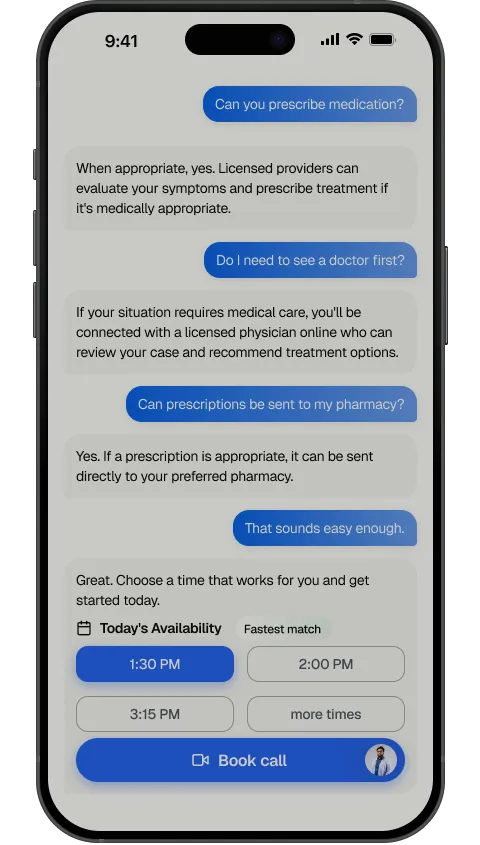
Book a $39 telehealth appointment (or copay) within 30 minutes. Our doctors create personalized treatment plans with prescriptions when needed.

Pick Up Your Prescription
Our doctors prescribe non-controlled medications in all 50 states and send prescriptions to your pharmacy for same-day pickup.
Pricing that won't make you sick
Chat for free, see an online doctor for $39/visit, or refill a prescription online for as low as $0
-
 Available in all 50 states + DC
-
 Insurance accepted

- 24/7 medical care Free
- Specialist referrals Free
- Lifelong health record Free
- Unlimited questions Free
- Prescription refills Starting as low as $0
- Video visit with real doctors $39/visit
These are stories from real users who turned to Doctronic for answers when it mattered most.
- Preparing for a doctor visit
- Finding peace of mind
- Understanding a diagnosis
- Managing chronic illness
- Navigating healthcare
- A second opinion
- Improving health











Frequently asked questions
Functional dyspepsia is a chronic disorder causing recurring upper abdominal pain, early fullness, bloating, and nausea without any structural cause such as an ulcer or tumor. Unlike gastroesophageal reflux disease (GERD) or irritable bowel syndrome (IBS), functional dyspepsia symptoms are centered in the upper abdomen and occur even when imaging and endoscopy show no abnormality.
The exact cause is not fully understood, but functional dyspepsia is believed to involve a combination of factors including impaired gastric motility, heightened sensitivity of the stomach lining to acid or distension, low-grade inflammation, prior gastrointestinal infections such as H. pylori, and dysregulation of the gut-brain axis. Stress and anxiety can also worsen symptoms.
Functional dyspepsia is classified into two subtypes: postprandial distress syndrome (PDS), characterized by bothersome fullness or early satiety after a normal-sized meal, and epigastric pain syndrome (EPS), characterized by burning or pain in the upper abdomen that may occur independently of meals. Some patients have features of both subtypes.
H. pylori infection is associated with a subset of functional dyspepsia cases. Testing for and eradicating H. pylori is generally recommended in patients with dyspepsia, as successful eradication leads to sustained symptom relief in a meaningful proportion of patients. A physician can order appropriate testing and prescribe eradication therapy if indicated.
Eating smaller, more frequent meals, avoiding high-fat or spicy foods, limiting caffeine and alcohol, eating slowly, and reducing stress through techniques such as cognitive behavioral therapy or relaxation exercises can all help reduce symptom burden. Keeping a food and symptom diary may help identify personal triggers.
You should seek prompt medical attention if you experience unintended weight loss, progressive difficulty swallowing, persistent vomiting, blood in your stool or vomit, a palpable abdominal mass, or symptoms that begin after age 60. These are alarm features that require further investigation to rule out serious underlying conditions.
Doctronic uses an AI-powered evaluation to gather a detailed picture of your symptoms, medical history, and any prior diagnoses or treatments. A licensed physician then reviews your case, confirms the clinical picture, and develops a personalized treatment plan that may include prescription medications, dietary guidance, and follow-up support, all without an in-person visit.
Yes. Doctronic's platform is staffed by licensed physicians whose work is doctor-reviewed and regularly audited for quality and safety. All patient information is handled in full compliance with HIPAA privacy standards. Our physicians practice evidence-based medicine and will only prescribe treatments that are appropriate for your specific clinical situation.
Top Conditions We Can Help With
People turn to Doctronic and our licensed medical team for support with all types of conditions.