
Get Frozen Shoulder Treatment Online
Frozen shoulder causes deep, aching pain and severe stiffness that can make everyday movements nearly impossible. Doctronic connects you with licensed physicians who can evaluate your symptoms and create a personalized treatment plan, all without leaving home.


What Is Frozen Shoulder?
Frozen shoulder, also called adhesive capsulitis, is a musculoskeletal condition marked by progressive pain, stiffness, and a significant loss of range of motion in the shoulder joint. It develops when the capsule surrounding the shoulder joint becomes inflamed and thickens, forming tight scar tissue bands called adhesions. It can interfere with sleep, work, and basic daily tasks such as reaching overhead or dressing. With the right treatment and support, most people recover meaningful shoulder function over time.
- Frozen shoulder progresses through three stages: freezing (worsening pain), frozen (persistent stiffness), and thawing (gradual recovery).
- Get personalized guidance from doctor-trained AI
- Explore treatment and prescription options

Is Online Frozen Shoulder Treatment Right for You?
Frozen shoulder affects adults of all ages but is most common between ages 40 and 60, and is more prevalent in people with diabetes, thyroid disorders, or a history of shoulder injury or surgery. A physician evaluation is the right starting point to confirm the diagnosis and rule out other causes of shoulder pain such as rotator cuff tears or arthritis.
Because frozen shoulder involves the joint capsule and surrounding soft tissue, your medical history including any prior shoulder conditions, autoimmune disorders, or hormonal health issues is important context for determining the safest and most effective treatment approach.
- Diagnosed with frozen shoulder or adhesive capsulitis
- Get personalized guidance from AI and clinicians
- Explore treatment and prescription refill options
- Access care from home, often the same day

Medications We Prescribe for Frozen Shoulder

Medrol
Methylprednisolone
An oral corticosteroid often prescribed short-term to reduce the inflammation and pain associated with the freezing stage of adhesive capsulitis.
Mobic
Meloxicam
A nonsteroidal anti-inflammatory drug (NSAID) used to manage ongoing shoulder pain and inflammation throughout the stages of frozen shoulder.
Voltaren Gel
Diclofenac Topical
A topical NSAID applied directly to the shoulder area to provide localized pain relief with lower systemic exposure than oral NSAIDs.
Lidoderm
Lidocaine Patch 5%
A topical analgesic patch that can be applied over the shoulder to provide localized, around-the-clock pain relief during the frozen stage.
How Frozen Shoulder Treatment Works at Doctronic

Chat With The #1 AI Doctor
Doctronic answers your health questions with personalized medical insights and helps our doctors create a better treatment plan for you.

Meet With a Licensed Doctor For Treatment
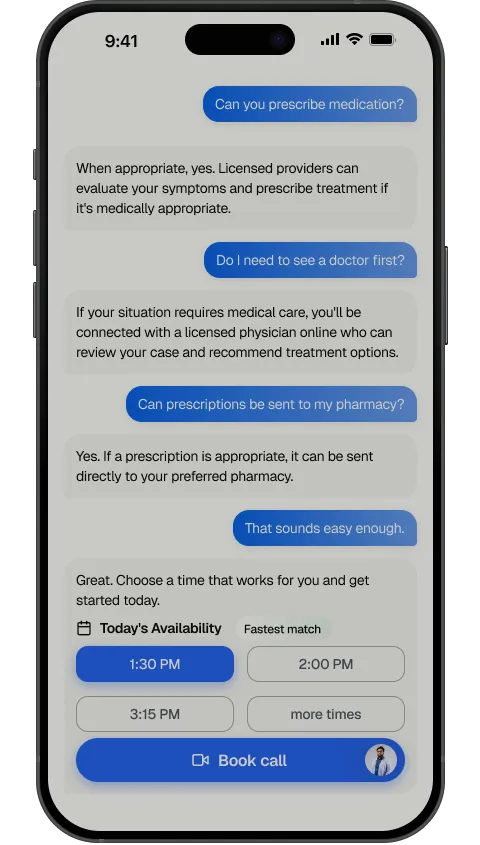
Book a $39 telehealth appointment (or copay) within 30 minutes. Our doctors create personalized treatment plans with prescriptions when needed.

Pick Up Your Prescription
Our doctors prescribe non-controlled medications in all 50 states and send prescriptions to your pharmacy for same-day pickup.
Pricing that won't make you sick
Chat for free, see an online doctor for $39/visit, or refill a prescription online for as low as $0
-
 Available in all 50 states + DC
-
 Insurance accepted

- 24/7 medical care Free
- Specialist referrals Free
- Lifelong health record Free
- Unlimited questions Free
- Prescription refills Starting as low as $0
- Video visit with real doctors $39/visit
These are stories from real users who turned to Doctronic for answers when it mattered most.
- Preparing for a doctor visit
- Finding peace of mind
- Understanding a diagnosis
- Managing chronic illness
- Navigating healthcare
- A second opinion
- Improving health











Frequently asked questions
Frozen shoulder, or adhesive capsulitis, occurs when the connective tissue capsule surrounding the shoulder joint becomes inflamed and contracts, forming scar-like adhesions. The exact cause is not always clear, but it is strongly associated with diabetes, thyroid disease, prolonged shoulder immobility, and prior shoulder injury or surgery.
Frozen shoulder typically progresses through three stages. The freezing stage involves worsening pain and the gradual onset of stiffness, lasting weeks to months. The frozen stage is characterized by reduced pain but severe stiffness and loss of motion. The thawing stage involves a slow, gradual return of shoulder movement and can last a year or more.
Diagnosis is primarily clinical, based on a physical examination of shoulder range of motion and your symptom history. A physician may also order imaging such as X-rays or an MRI to rule out other conditions like a rotator cuff tear, arthritis, or calcific tendinitis that can cause similar symptoms.
Oral anti-inflammatory medications such as NSAIDs and short-course corticosteroids can help reduce pain and swelling, particularly in the freezing stage. Topical agents like diclofenac gel or a lidocaine patch may also provide localized relief. Corticosteroid injections into the joint are another common option, though those require in-person administration.
Yes, physical therapy is a cornerstone of frozen shoulder treatment. Guided stretching and range-of-motion exercises help prevent further capsule tightening and, during the thawing stage, work to restore full shoulder movement. Consistency with a home exercise program is especially important for a good outcome.
Recovery is slow and highly variable. The full cycle from onset to recovery typically ranges from one to three years, though some individuals take longer. Most people regain most or all of their shoulder function with appropriate treatment, but early intervention tends to improve outcomes.
Doctronic uses an AI-guided evaluation to gather detailed information about your symptoms and health history. A licensed physician then reviews your case, confirms whether treatment is appropriate, and creates a personalized treatment plan. The entire process is doctor-reviewed and HIPAA-aligned.
Doctronic is available to adults 18 and older in any U.S. state. You can complete your evaluation and connect with a licensed physician entirely online, without needing to travel to a clinic.
Top Conditions We Can Help With
People turn to Doctronic and our licensed medical team for support with all types of conditions.