
Get Contact Dermatitis Treatment Online
Dealing with a red, itchy, or blistering skin rash? Contact dermatitis is one of the most common skin conditions, but the right treatment can bring fast relief. Doctronic connects you with licensed physicians who can evaluate your symptoms and prescribe effective options, no office visit required.


What Is Contact Dermatitis?
Contact dermatitis is an inflammatory skin condition marked by redness, itching, swelling, and sometimes blistering or oozing, triggered by direct contact with an irritant or allergen. It can disrupt sleep, work, and daily comfort, and may worsen without proper treatment. With the right treatment and support, most people see significant improvement within days to weeks and can avoid future flare-ups by identifying and avoiding their triggers.
- Caused by allergens (allergic contact dermatitis) or direct irritants (irritant contact dermatitis) such as soaps, metals, plants, or cosmetics
- Get personalized guidance from doctor-trained AI
- Explore treatment and prescription options

Is Online Contact Dermatitis Treatment Right for You?
You may be a good candidate for online treatment if you are experiencing a skin rash consistent with contact dermatitis, including redness, itching, swelling, or blistering, following exposure to a known or suspected irritant or allergen. Many cases can be effectively evaluated and treated without an in-person visit.
Because contact dermatitis involves the immune and skin systems, your provider will review your skin and allergy history, any history of eczema or atopic conditions, and any prior reactions to help determine the safest and most effective treatment plan for you.
- Diagnosed with contact dermatitis or allergic skin reaction
- Get personalized guidance from AI and clinicians
- Explore treatment and prescription refill options
- Access care from home, often the same day
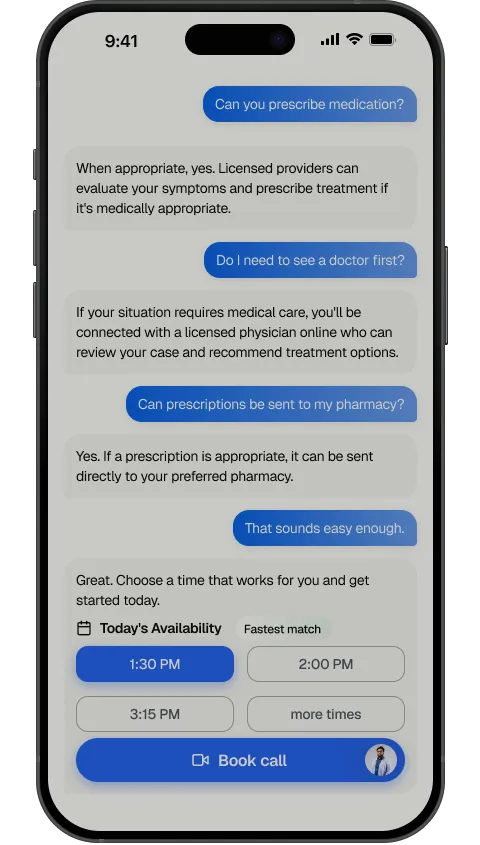

Medications We Prescribe for Contact Dermatitis

Westcort
Hydrocortisone Valerate
A mid-potency topical corticosteroid that reduces skin inflammation, redness, and itching associated with contact dermatitis.
Atarax
Hydroxyzine Pamoate
An antihistamine that relieves itching and allergic reactions caused by contact dermatitis, and can also help with sleep disruption from discomfort.
Deltasone
Prednisone
An oral corticosteroid used for moderate to severe contact dermatitis flares to quickly reduce widespread inflammation and allergic response.
Eucrisa
Crisaborole
A non-steroidal topical anti-inflammatory ointment that helps reduce itching and redness in mild to moderate inflammatory skin conditions including contact dermatitis.
How Contact Dermatitis Treatment Works at Doctronic

Chat With The #1 AI Doctor
Doctronic answers your health questions with personalized medical insights and helps our doctors create a better treatment plan for you.

Meet With a Licensed Doctor For Treatment
Book a $39 telehealth appointment (or copay) within 30 minutes. Our doctors create personalized treatment plans with prescriptions when needed.

Pick Up Your Prescription
Our doctors prescribe non-controlled medications in all 50 states and send prescriptions to your pharmacy for same-day pickup.
Pricing that won't make you sick
Chat for free, see an online doctor for $39/visit, or refill a prescription online for as low as $0
-
 Available in all 50 states + DC
-
 Insurance accepted

- 24/7 medical care Free
- Specialist referrals Free
- Lifelong health record Free
- Unlimited questions Free
- Prescription refills Starting as low as $0
- Video visit with real doctors $39/visit
These are stories from real users who turned to Doctronic for answers when it mattered most.
- Preparing for a doctor visit
- Finding peace of mind
- Understanding a diagnosis
- Managing chronic illness
- Navigating healthcare
- A second opinion
- Improving health







Frequently asked questions
Irritant contact dermatitis occurs when a substance directly damages the skin, such as harsh soaps, detergents, or chemicals. Allergic contact dermatitis is an immune-mediated reaction that develops after repeated exposure to an allergen, such as nickel, poison ivy, or certain preservatives. Both cause redness and itching but have different underlying mechanisms and may require slightly different management strategies.
With avoidance of the trigger and appropriate treatment, most contact dermatitis rashes improve within 2 to 4 weeks. Severe reactions or continued exposure to the offending substance can prolong symptoms. Identifying and removing the cause is the most important step in recovery.
Contact dermatitis itself is not contagious and does not truly spread from person to person. However, if you scratch an itchy rash and then touch other skin areas, or if the triggering substance is spread during washing or grooming, new areas of irritation can develop. Systemic allergic reactions from widespread exposure can also cause rash in multiple locations.
Common triggers include nickel (found in jewelry and belt buckles), latex, poison ivy and poison oak, fragrances, preservatives in cosmetics and personal care products, hair dyes, topical antibiotics like neomycin, and rubber. Identifying your specific allergen through a patch test performed by a dermatologist or allergist can help you avoid future reactions.
Mild contact dermatitis can sometimes be managed with over-the-counter hydrocortisone 1% cream, gentle moisturizers, and antihistamines. However, moderate to severe rashes, rashes near the eyes or genitals, or rashes that are not improving often require prescription-strength topical corticosteroids or a short course of oral steroids. A physician can evaluate your situation and recommend the most appropriate strength of treatment.
Contact dermatitis and atopic dermatitis (eczema) are both inflammatory skin conditions with similar symptoms, but they have different causes. Atopic dermatitis is a chronic condition related to a genetic skin-barrier dysfunction and immune system overactivity, while contact dermatitis is triggered by a specific external substance. People with atopic dermatitis may also be more susceptible to developing contact dermatitis.
Doctronic uses AI-assisted evaluation to gather detailed information about your symptoms and medical history. A licensed physician then reviews your case, makes a clinical determination, and develops a personalized treatment plan. The entire process is designed to be convenient, thorough, and medically sound.
Yes. Doctronic connects you with fully licensed physicians who review and are accountable for every treatment decision. All consultations are HIPAA-aligned to protect your privacy, and our clinical processes are doctor-reviewed and regularly audited to ensure the highest standards of care.
Top Conditions We Can Help With
People turn to Doctronic and our licensed medical team for support with all types of conditions.