
Get Grief Counseling Treatment Online
Grief can feel overwhelming and isolating. Doctronic's licensed physicians can evaluate your emotional and physical symptoms, discuss medication options when appropriate, and help you build a path toward healing from the comfort of home.


What Is Grief Counseling?
Grief is a natural but deeply painful emotional response marked by sadness, longing, difficulty concentrating, sleep disturbances, and changes in appetite following a significant loss. It can affect daily functioning, physical health, and overall quality of life. With the right treatment and support, many people find meaningful relief and are able to move forward while still honoring their loss.
- Grief can cause both emotional and physical symptoms that interfere with daily life
- Get personalized guidance from doctor-trained AI
- Explore treatment and prescription options

Is Online Grief Counseling Treatment Right for You?
Doctronic can support adults experiencing grief, including prolonged grief disorder or grief complicated by depression and anxiety. Our licensed physicians assess your full symptom picture to determine whether counseling referral, lifestyle support, or medication management is appropriate for you.
Because grief frequently affects sleep, mood, and anxiety levels, our physicians also review your mental health history and any co-occurring conditions that may influence the best course of care.
- Diagnosed with prolonged grief disorder or complicated grief
- Get personalized guidance from AI and clinicians
- Explore treatment and prescription refill options
- Access care from home, often the same day

Medications We Prescribe for Grief Counseling

Zoloft
Sertraline
An SSRI commonly used to treat depression and anxiety that frequently co-occur with grief and prolonged grief disorder.
Lexapro
Escitalopram
An SSRI that may help reduce depressive symptoms and anxiety associated with grief-related mood disturbances.
Remeron
Mirtazapine
An antidepressant that can also improve sleep and appetite disruptions commonly seen in grief.
Buspar
Buspirone
An anti-anxiety medication sometimes used to manage anxiety and agitation that can accompany grief.
How Grief Counseling Treatment Works at Doctronic

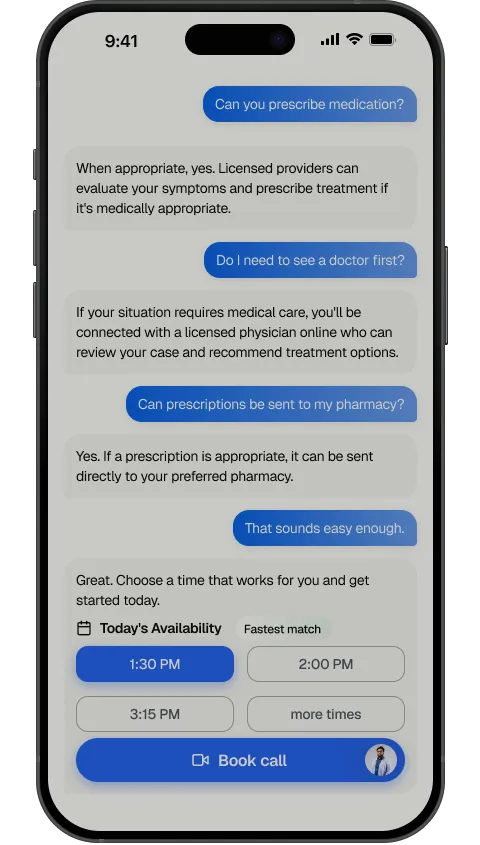
Chat With The #1 AI Doctor
Doctronic answers your health questions with personalized medical insights and helps our doctors create a better treatment plan for you.

Meet With a Licensed Doctor For Treatment
Book a $39 telehealth appointment (or copay) within 30 minutes. Our doctors create personalized treatment plans with prescriptions when needed.

Pick Up Your Prescription
Our doctors prescribe non-controlled medications in all 50 states and send prescriptions to your pharmacy for same-day pickup.
Pricing that won't make you sick
Chat for free, see an online doctor for $39/visit, or refill a prescription online for as low as $0
-
 Available in all 50 states + DC
-
 Insurance accepted

- 24/7 medical care Free
- Specialist referrals Free
- Lifelong health record Free
- Unlimited questions Free
- Prescription refills Starting as low as $0
- Video visit with real doctors $39/visit
These are stories from real users who turned to Doctronic for answers when it mattered most.
- Preparing for a doctor visit
- Finding peace of mind
- Understanding a diagnosis
- Managing chronic illness
- Navigating healthcare
- A second opinion
- Improving health










Frequently asked questions
Prolonged grief disorder, formerly called complicated grief, is diagnosed when intense grief symptoms such as persistent yearning, difficulty accepting the loss, and functional impairment last for more than 12 months after a loss in adults. It is distinct from typical grief and may benefit from professional treatment.
Yes. Grief can cause sleep disturbances, changes in appetite, fatigue, headaches, and a weakened immune response. These physical symptoms are recognized as part of the grief response and should be discussed with a physician if they are significantly affecting your health.
You should consider speaking with a physician if grief is interfering with your ability to work, maintain relationships, or care for yourself; if you are experiencing persistent depression or anxiety; if you are having thoughts of self-harm; or if your symptoms have not improved after several months.
Medications are not a first-line treatment for typical grief, but they may be appropriate when grief is complicated by clinical depression, anxiety disorder, or severe sleep disruption. SSRIs and other antidepressants have evidence supporting their use in these situations.
Grief typically involves waves of sadness tied to thoughts of the loss, preserved capacity for positive feelings at times, and gradual improvement over months. Clinical depression involves more persistent low mood, loss of pleasure in nearly all activities, and often requires treatment. The two can co-occur, and a physician can help distinguish between them.
Grief commonly disrupts sleep through intrusive thoughts, nightmares, or changes in routine. Sleep hygiene strategies are recommended first. If sleep problems are severe, a physician may discuss medications such as low-dose antidepressants that have sedating properties or other appropriate options based on your health history.
Cognitive behavioral therapy adapted for grief, complicated grief treatment (CGT), and supportive counseling are all evidence-based approaches. A physician can evaluate your needs and provide referrals to qualified mental health professionals as part of a comprehensive care plan.
Doctronic uses an AI-guided evaluation to gather your symptom history and health information. A licensed physician then reviews your case, makes clinical decisions, and creates a personalized treatment plan that may include prescriptions, referrals, or other recommendations.
Top Conditions We Can Help With
People turn to Doctronic and our licensed medical team for support with all types of conditions.