
Get POTS Treatment Online
Postural orthostatic tachycardia syndrome can make everyday activities exhausting. Doctronic connects you with licensed physicians who understand POTS and can build a treatment plan around your specific symptoms and needs.


What Is POTS?
POTS (postural orthostatic tachycardia syndrome) is an autonomic nervous system disorder marked by an abnormal increase in heart rate upon standing, typically 30 beats per minute or more within ten minutes of upright posture. It can cause debilitating fatigue, brain fog, lightheadedness, and fainting that significantly impair quality of life and daily function. With the right treatment and support, many people with POTS are able to manage their symptoms and return to meaningful activity.
- Characterized by a heart rate increase of 30+ bpm upon standing
- Get personalized guidance from doctor-trained AI
- Explore treatment and prescription options

Is Online POTS Treatment Right for You?
Doctronic evaluates adults who have been diagnosed with or are experiencing symptoms consistent with POTS, including heart racing upon standing, chronic lightheadedness, fatigue, and brain fog. Our platform supports ongoing management as well as initial evaluation for those who suspect they may have this condition.
Because POTS involves the autonomic nervous system and cardiovascular regulation, our physicians review your full symptom history, any prior cardiac or neurological workup, and current medications to ensure your care plan is safe and appropriate.
- Diagnosed with POTS or experiencing symptoms upon standing
- Get personalized guidance from AI and clinicians
- Explore treatment and prescription refill options
- Access care from home, often the same day

Medications We Prescribe for POTS

Mestinon
Pyridostigmine
An acetylcholinesterase inhibitor that enhances autonomic nerve signaling, helping reduce the excessive heart rate response on standing in POTS patients.
Midamor
Amiloride
A potassium-sparing diuretic used in POTS to help expand blood volume and reduce sodium loss, supporting better orthostatic tolerance.
Corlanor
Ivabradine
A heart rate-lowering agent that selectively inhibits the sinus node, reducing the tachycardia experienced upon standing without lowering blood pressure.
Inderal
Propranolol HCl ER
A non-selective beta-blocker used at low doses in POTS to blunt the exaggerated heart rate rise triggered by postural changes.
How POTS Treatment Works at Doctronic

Chat With The #1 AI Doctor
Doctronic answers your health questions with personalized medical insights and helps our doctors create a better treatment plan for you.

Meet With a Licensed Doctor For Treatment
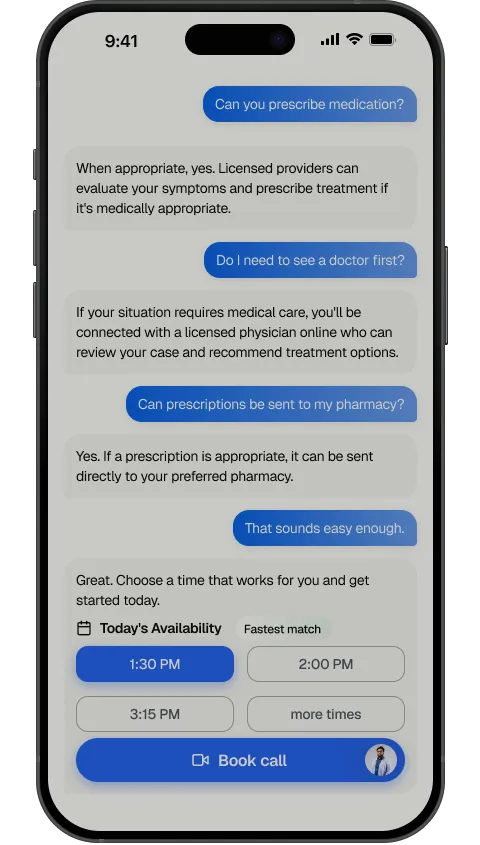
Book a $39 telehealth appointment (or copay) within 30 minutes. Our doctors create personalized treatment plans with prescriptions when needed.

Pick Up Your Prescription
Our doctors prescribe non-controlled medications in all 50 states and send prescriptions to your pharmacy for same-day pickup.
Pricing that won't make you sick
Chat for free, see an online doctor for $39/visit, or refill a prescription online for as low as $0
-
 Available in all 50 states + DC
-
 Insurance accepted

- 24/7 medical care Free
- Specialist referrals Free
- Lifelong health record Free
- Unlimited questions Free
- Prescription refills Starting as low as $0
- Video visit with real doctors $39/visit
These are stories from real users who turned to Doctronic for answers when it mattered most.
- Preparing for a doctor visit
- Finding peace of mind
- Understanding a diagnosis
- Managing chronic illness
- Navigating healthcare
- A second opinion
- Improving health











Frequently asked questions
POTS stands for postural orthostatic tachycardia syndrome. It is a form of dysautonomia in which the autonomic nervous system fails to properly regulate heart rate and blood flow when a person stands up. Diagnosis typically requires documenting a sustained heart rate increase of at least 30 beats per minute within ten minutes of standing (or a rate above 120 bpm), in the absence of other causes. A tilt table test or an active stand test performed by a clinician is the standard diagnostic method.
Common symptoms include a rapid or pounding heartbeat when standing, lightheadedness or dizziness, near-fainting or fainting, severe fatigue, brain fog or difficulty concentrating, headaches, nausea, tremors, and in some cases exercise intolerance. Symptoms typically improve when lying down and worsen with prolonged standing or physical exertion.
Yes. Increased fluid intake (2 to 3 liters of water per day), higher dietary sodium intake (under physician guidance), compression garments for the legs and abdomen, elevating the head of the bed, and a graduated recumbent exercise program are all evidence-supported strategies. These measures are often used alongside medications and can meaningfully reduce symptom burden.
When blood pools in the lower extremities upon standing, less blood returns to the heart and reaches the brain. The resulting reduction in cerebral blood flow contributes to cognitive difficulties, mental fatigue, and difficulty concentrating. The compensatory tachycardia itself is also physically demanding and can contribute to overall exhaustion over the course of a day.
The course of POTS varies widely. Some people, particularly adolescents and young adults, experience significant improvement or remission over time. Others have a chronic, fluctuating course that requires ongoing management. Triggers such as dehydration, heat, illness, hormonal changes, and prolonged inactivity can cause temporary worsening. With consistent treatment and lifestyle management, many patients achieve functional improvement.
Treatment is individualized based on the patient's POTS subtype and predominant symptoms. Commonly used agents include low-dose beta-blockers such as propranolol to control heart rate, ivabradine for rate control without blood pressure effects, pyridostigmine to enhance autonomic tone, and agents that help expand blood volume such as amiloride. A physician will review your history to determine the safest and most appropriate option for you.
Doctronic uses an AI-powered evaluation to gather detailed information about your symptoms, medical history, and current medications. That information is reviewed by a licensed physician who then develops a personalized treatment plan. If a prescription is appropriate, it can be sent to your preferred pharmacy. The entire process is designed to be convenient, thorough, and medically sound.
Yes. Doctronic connects patients with fully licensed physicians who review every case individually. All consultations are HIPAA-aligned, and the platform is designed with physician oversight and quality auditing built in. Care is available to adults 18 and older in any U.S. state.
Top Conditions We Can Help With
People turn to Doctronic and our licensed medical team for support with all types of conditions.