
Get Mast Cell Activation Treatment Online
Mast cell activation syndrome can cause unpredictable, wide-ranging symptoms that affect your daily life. Doctronic connects you with licensed physicians who understand MCAS and can build a personalized treatment plan without the long wait for a specialist appointment.


What Is Mast Cell Activation?
Mast cell activation syndrome (MCAS) is a chronic immune disorder marked by episodes of systemic symptoms caused by inappropriate mast cell activation and mediator release. It can affect nearly every organ system, leading to allergic-like reactions, gastrointestinal distress, skin changes, and cardiovascular instability triggered by foods, medications, stress, temperature changes, or other environmental factors. With the right treatment and support, most people with MCAS can achieve meaningful symptom control and improved quality of life.
- MCAS is caused by mast cells releasing excessive amounts of chemical mediators such as histamine, leukotrienes, and prostaglandins, triggering multi-system inflammatory episodes.
- Get personalized guidance from doctor-trained AI
- Explore treatment and prescription options

Is Online Mast Cell Activation Treatment Right for You?
Doctronic evaluates adults who experience recurrent, multi-system symptoms consistent with mast cell activation syndrome, including allergic-type reactions without a clear cause, chronic urticaria or flushing, gastrointestinal symptoms, or documented mast cell mediator elevations. Our physicians can assess your symptom history, review prior workup, and prescribe appropriate mediator-blocking therapies where clinically indicated.
Because MCAS can overlap with other immune, gastrointestinal, and connective tissue conditions, our licensed physicians carefully review your medical history and current medications to ensure safe, coordinated care for your immune system health.
- Diagnosed with mast cell activation syndrome or suspected MCAS symptoms
- Get personalized guidance from AI and clinicians
- Explore treatment and prescription refill options
- Access care from home, often the same day

Medications We Prescribe for Mast Cell Activation

Allegra
Fexofenadine
A non-sedating second-generation H1 antihistamine commonly used as a first-line agent to block histamine-driven symptoms in MCAS, including hives, flushing, and itching.
Pepcid
Famotidine
An H2 receptor blocker that complements H1 antihistamines by targeting histamine receptors in the gut and skin, helping to reduce gastrointestinal symptoms and flushing in MCAS.
Singulair
Montelukast
A leukotriene receptor antagonist that blocks leukotriene-mediated inflammation, useful for MCAS patients with respiratory symptoms, gastrointestinal cramping, or reactions not fully controlled by antihistamines alone.
Nasalcrom
Cromolyn Nasal
A mast cell stabilizer that helps prevent mast cell degranulation. Cromolyn formulations (nasal and oral) are used in MCAS to reduce mediator release and associated symptoms.
How Mast Cell Activation Treatment Works at Doctronic

Chat With The #1 AI Doctor
Doctronic answers your health questions with personalized medical insights and helps our doctors create a better treatment plan for you.

Meet With a Licensed Doctor For Treatment
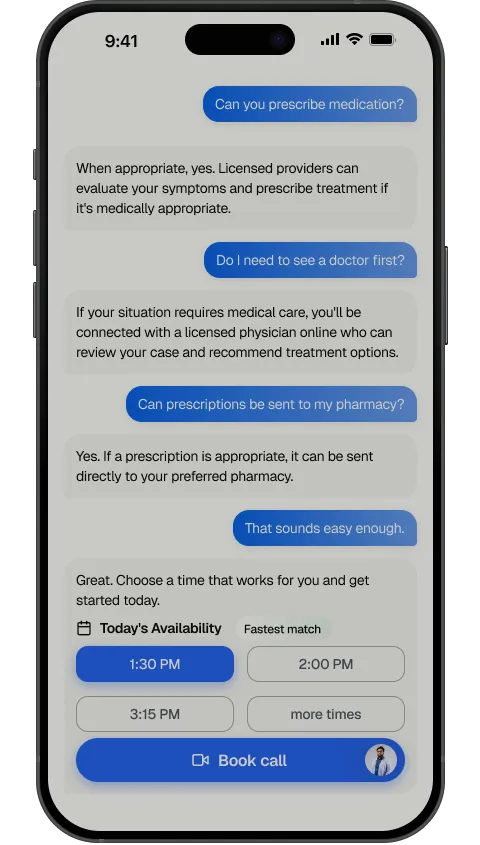
Book a $39 telehealth appointment (or copay) within 30 minutes. Our doctors create personalized treatment plans with prescriptions when needed.

Pick Up Your Prescription
Our doctors prescribe non-controlled medications in all 50 states and send prescriptions to your pharmacy for same-day pickup.
Pricing that won't make you sick
Chat for free, see an online doctor for $39/visit, or refill a prescription online for as low as $0
-
 Available in all 50 states + DC
-
 Insurance accepted

- 24/7 medical care Free
- Specialist referrals Free
- Lifelong health record Free
- Unlimited questions Free
- Prescription refills Starting as low as $0
- Video visit with real doctors $39/visit
These are stories from real users who turned to Doctronic for answers when it mattered most.
- Preparing for a doctor visit
- Finding peace of mind
- Understanding a diagnosis
- Managing chronic illness
- Navigating healthcare
- A second opinion
- Improving health











Frequently asked questions
MCAS is a chronic condition in which mast cells, a type of immune cell, release excessive amounts of chemical mediators such as histamine, leukotrienes, and prostaglandins. This causes recurrent, multi-system symptoms including hives, flushing, gastrointestinal distress, brain fog, and sometimes anaphylaxis-like reactions, often triggered by foods, medications, stress, heat, or other environmental factors.
Diagnosis is based on a combination of characteristic recurrent symptoms affecting two or more organ systems, a positive response to mast cell mediator-blocking treatments, and laboratory evidence of elevated mast cell mediators such as serum tryptase, plasma histamine, or urinary prostaglandin D2 during symptomatic episodes. A physician review of your full symptom history is an essential part of the evaluation.
Treatment typically involves a layered approach. H1 antihistamines (such as fexofenadine) and H2 antihistamines (such as famotidine) are first-line agents. Leukotriene receptor antagonists like montelukast address additional inflammatory pathways. Mast cell stabilizers such as cromolyn help prevent mediator release. Your physician will tailor the combination to your specific symptom pattern.
Common triggers include high-histamine or histamine-releasing foods (fermented foods, alcohol, aged cheeses, certain fruits), nonsteroidal anti-inflammatory drugs, opiates, extreme temperatures, physical exertion, stress, strong odors, and certain dyes or preservatives. Identifying and avoiding personal triggers is an important part of managing MCAS alongside medications.
Yes. Some people with MCAS experience anaphylaxis or severe anaphylaxis-like episodes. Patients at risk for severe reactions should have an emergency epinephrine auto-injector (such as an EpiPen) available and a written emergency action plan. Discuss this with your physician during your evaluation.
No. MCAS, food allergy, and mastocytosis are distinct conditions. Food allergies involve IgE-mediated reactions to specific proteins. Mastocytosis involves an abnormal accumulation of mast cells in tissues. MCAS involves normal mast cell numbers that activate inappropriately. However, these conditions can overlap, and a thorough evaluation helps distinguish them.
When you start with Doctronic, our AI gathers a detailed picture of your symptoms, triggers, medical history, and current medications. A licensed physician then reviews your full evaluation, confirms clinical appropriateness, and creates a personalized treatment plan that may include prescriptions, follow-up guidance, and trigger management recommendations.
Yes. Doctronic's platform is staffed by licensed physicians, and all treatment plans are doctor-reviewed and subject to ongoing clinical audit. Our service is HIPAA-aligned, protecting your health information. We provide care to adults 18 and older in any U.S. state.
Top Conditions We Can Help With
People turn to Doctronic and our licensed medical team for support with all types of conditions.