
Get Vitamin B1 Thiamine Online
Thiamine deficiency can cause serious neurological and cardiovascular complications, but getting treatment is simple. Answer a few questions, get evaluated by a licensed physician, and receive a personalized treatment plan from the comfort of home.


What Is Vitamin B1 Thiamine?
Vitamin B1 Thiamine is a prescription-strength thiamine supplement used to manage thiamine deficiency and its associated conditions, including Wernicke encephalopathy and peripheral neuropathy. It works by replenishing thiamine, a water-soluble B vitamin essential for carbohydrate metabolism, ATP production, and proper neurological function. With the right dose and ongoing monitoring, most patients see meaningful improvement in neurological and metabolic symptoms.
- Replenishes thiamine to support nerve function, energy metabolism, and cardiovascular health
- Get personalized guidance from doctor-trained AI
- Explore treatment and prescription options

Is Online Vitamin B1 Thiamine Treatment Right for You?
Vitamin B1 Thiamine therapy is appropriate for adults with confirmed or suspected thiamine deficiency, including those with chronic alcohol use disorder, malabsorption syndromes, prolonged poor nutrition, or conditions such as Wernicke encephalopathy and beriberi. Your physician will review your symptoms, dietary history, and any relevant lab results to determine the right dose and form of supplementation.
Because thiamine plays a critical role in the nervous system and cardiovascular function, your provider will also ask about any neurological symptoms such as confusion, weakness, or peripheral neuropathy, as well as any history of gastrointestinal conditions that may impair nutrient absorption.
- Diagnosed with thiamine (Vitamin B1) deficiency
- Get personalized guidance from AI and clinicians
- Explore treatment and prescription refill options
- Access care from home, often the same day

Medications We Prescribe for Thiamine Deficiency

Vitamin B1 Thiamine
Thiamine HCl
The primary treatment for thiamine deficiency. Available in oral and injectable forms; dose is tailored to deficiency severity and underlying cause.
Vitamin B Complex
Vitamin B Complex
A comprehensive B-vitamin supplement that supports overall B-vitamin repletion, often used alongside thiamine in patients with broad nutritional deficiencies.
Vitamin B12 Methylcobalamin
Methylcobalamin
Supports neurological health and is frequently co-deficient in patients with malnutrition or malabsorption who also require thiamine replacement.
Folic Acid
Folic Acid
Often deficient alongside thiamine, particularly in patients with alcohol use disorder or poor dietary intake, and used as part of comprehensive nutritional repletion.
How Thiamine Deficiency Treatment Works at Doctronic

Chat With The #1 AI Doctor
Doctronic answers your health questions with personalized medical insights and helps our doctors create a better treatment plan for you.

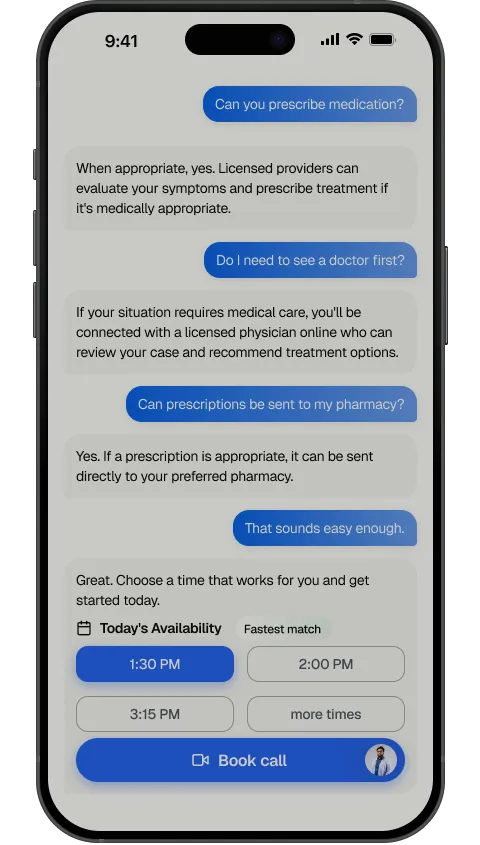
Meet With a Licensed Doctor For Treatment
Book a $39 telehealth appointment (or copay) within 30 minutes. Our doctors create personalized treatment plans with prescriptions when needed.

Pick Up Your Prescription
Our doctors prescribe non-controlled medications in all 50 states and send prescriptions to your pharmacy for same-day pickup.
Pricing that won't make you sick
Chat for free, see an online doctor for $39/visit, or refill a prescription online for as low as $0
-
 Available in all 50 states + DC
-
 Insurance accepted

- 24/7 medical care Free
- Specialist referrals Free
- Lifelong health record Free
- Unlimited questions Free
- Prescription refills Starting as low as $0
- Video visit with real doctors $39/visit
These are stories from real users who turned to Doctronic for answers when it mattered most.
- Preparing for a doctor visit
- Finding peace of mind
- Understanding a diagnosis
- Managing chronic illness
- Navigating healthcare
- A second opinion
- Improving health











Frequently asked questions
Thiamine is used to treat and prevent thiamine deficiency and its complications, including beriberi (affecting the nervous system and heart), Wernicke encephalopathy (a serious brain disorder), and Wernicke-Korsakoff syndrome. It is also used supportively in patients with chronic alcohol use disorder, malabsorption conditions, prolonged poor nutrition, or after bariatric surgery.
Symptoms can range from mild to severe and include fatigue, irritability, poor appetite, nausea, and abdominal discomfort. More serious deficiency can cause peripheral neuropathy (numbness, tingling, or weakness in the hands and feet), confusion, difficulty walking, rapid heart rate, and in severe cases, heart failure or encephalopathy. Symptoms may develop gradually over weeks to months.
Dosing depends on the severity of the deficiency and the underlying cause. Mild deficiency may be managed with standard oral doses of 50 to 100 mg daily, while serious conditions such as Wernicke encephalopathy typically require higher doses, sometimes given intravenously in a hospital setting. Your physician will recommend the appropriate dose and form based on your individual situation.
Thiamine is a water-soluble vitamin and is generally considered safe for long-term use at recommended doses. Because the body does not store large amounts of thiamine, ongoing supplementation may be necessary for people with chronic conditions that impair absorption or increase thiamine needs, such as alcohol use disorder or certain gastrointestinal diseases. Your provider can advise on the appropriate duration of treatment.
Many people meet their thiamine needs through diet. Good dietary sources include whole grains, legumes, nuts, pork, and fortified cereals. However, people with alcohol use disorder, malabsorption syndromes, very restrictive diets, or certain chronic illnesses may not absorb or retain enough thiamine from food alone and may need supplementation.
Thiamine supplements have a favorable safety profile and few significant drug interactions. However, alcohol consumption can substantially reduce thiamine absorption and accelerate its breakdown, which is why deficiency is common in people with heavy alcohol use. Some diuretics may also increase urinary thiamine loss. Always inform your provider about all medications, supplements, and alcohol use when being evaluated.
Doctronic uses an AI-powered evaluation to gather detailed information about your symptoms, medical history, and health goals. That information is then reviewed by a licensed physician who determines the most appropriate treatment plan for you. If a prescription is appropriate, it is sent to a pharmacy of your choice.
Yes. Doctronic connects you with fully licensed physicians who follow established clinical guidelines. All consultations are HIPAA-aligned, and every treatment decision is doctor-reviewed and audited to ensure your safety. Doctronic is available to adults 18 and older in any U.S. state.
Top Conditions We Can Help With
People turn to Doctronic and our licensed medical team for support with all types of conditions.