
Get Dacryocystitis Treatment Online
Dacryocystitis is a bacterial infection of the lacrimal sac that causes painful swelling, redness, and discharge near the inner corner of the eye. Doctronic connects you with licensed physicians who can evaluate your symptoms and prescribe appropriate antibiotic therapy - without a long wait for an in-person appointment.


What Is Dacryocystitis?
Dacryocystitis is a condition marked by infection and inflammation of the lacrimal sac, the small pouch that collects tears before they drain into the nasal cavity. It typically results from obstruction of the nasolacrimal duct, which allows bacteria to accumulate and proliferate in the blocked sac. Common bacterial causes include Staphylococcus aureus and Streptococcus pneumoniae. It can present as acute dacryocystitis with sudden pain and swelling, or as a chronic low-grade infection with persistent tearing and discharge. With the right antibiotic treatment and follow-up care, most cases resolve fully and recurrence can be prevented.
- Caused by bacterial infection of the lacrimal sac, most often due to nasolacrimal duct obstruction
- Get personalized guidance from doctor-trained AI
- Explore treatment and prescription options

Is Online Dacryocystitis Treatment Right for You?
You may be a candidate for online dacryocystitis treatment if you are an adult experiencing symptoms consistent with lacrimal sac infection, such as redness, swelling, and discharge at the inner corner of the eye, and you have not recently had eye surgery or a known abscess requiring drainage. Mild to moderate acute dacryocystitis can often be managed with oral antibiotics prescribed through telehealth.
Because dacryocystitis involves the lacrimal drainage system and surrounding periorbital tissue, your physician will review your eye health history, any prior episodes of nasolacrimal duct obstruction, and signs of possible orbital spread before recommending a treatment plan.
- Diagnosed with dacryocystitis or lacrimal sac infection
- Get personalized guidance from AI and clinicians
- Explore treatment and prescription refill options
- Access care from home, often the same day

Medications We Prescribe for Dacryocystitis

Augmentin
Amoxicillin + Potassium Clavulanate
A broad-spectrum penicillin-based antibiotic that covers common dacryocystitis pathogens including Staphylococcus and Streptococcus species. Often used as a first-line oral antibiotic for acute dacryocystitis.
Ceftin
Cefuroxime
A second-generation cephalosporin antibiotic with activity against gram-positive and gram-negative organisms commonly involved in lacrimal sac infections. A suitable alternative for patients who cannot take amoxicillin-clavulanate.
Bactrim
Trimethoprim-Sulfamethoxazole
A sulfonamide combination antibiotic used when coverage for MRSA or resistant organisms is warranted. May be considered based on local resistance patterns or patient history.
Vibramycin
Doxycycline 100mg
A tetracycline-class antibiotic with broad-spectrum antibacterial activity. An option for patients with penicillin or cephalosporin allergies who require oral antibiotic therapy for dacryocystitis.
How Dacryocystitis Treatment Works at Doctronic

Chat With The #1 AI Doctor
Doctronic answers your health questions with personalized medical insights and helps our doctors create a better treatment plan for you.

Meet With a Licensed Doctor For Treatment
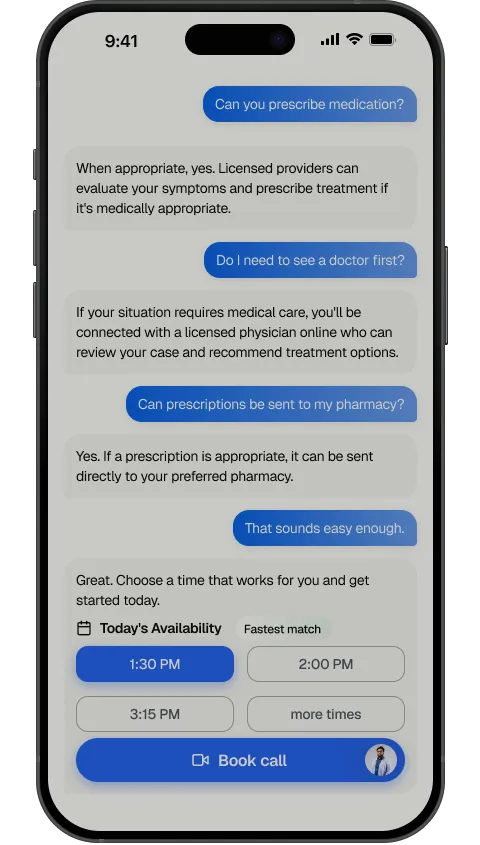
Book a $39 telehealth appointment (or copay) within 30 minutes. Our doctors create personalized treatment plans with prescriptions when needed.

Pick Up Your Prescription
Our doctors prescribe non-controlled medications in all 50 states and send prescriptions to your pharmacy for same-day pickup.
Pricing that won't make you sick
Chat for free, see an online doctor for $39/visit, or refill a prescription online for as low as $0
-
 Available in all 50 states + DC
-
 Insurance accepted

- 24/7 medical care Free
- Specialist referrals Free
- Lifelong health record Free
- Unlimited questions Free
- Prescription refills Starting as low as $0
- Video visit with real doctors $39/visit
These are stories from real users who turned to Doctronic for answers when it mattered most.
- Preparing for a doctor visit
- Finding peace of mind
- Understanding a diagnosis
- Managing chronic illness
- Navigating healthcare
- A second opinion
- Improving health











Frequently asked questions
Dacryocystitis is an infection of the lacrimal sac, which sits at the inner corner of the eye and is part of the tear drainage system. It is most often caused by a blockage in the nasolacrimal duct that allows bacteria such as Staphylococcus aureus or Streptococcus pneumoniae to multiply in the stagnant fluid. It can be acute or chronic.
The most common symptoms include redness, swelling, and tenderness at the inner corner of the eye near the nose. Many patients also experience a discharge of pus or mucus, excessive tearing, and pain in the affected area. In some cases, a visible lump or abscess may develop.
Dacryocystitis requires urgent in-person care if symptoms spread to the eyelid, cheek, or orbit, if you develop fever, if vision changes occur, or if there is fluctuant swelling suggesting an abscess that may need drainage. Orbital cellulitis is a serious complication that requires hospital evaluation.
Mild to moderate acute dacryocystitis in adults can often be managed with a course of oral antibiotics targeting the most likely bacteria. Warm compresses and gentle massage of the lacrimal sac area may also help. Severe cases, abscesses, or those with orbital involvement typically require intravenous antibiotics and surgical drainage.
Most patients with mild to moderate dacryocystitis begin to see improvement within 48 to 72 hours of starting an appropriate oral antibiotic. A full course of antibiotics, typically 7 to 14 days, should be completed even if symptoms improve earlier.
Yes. If the underlying nasolacrimal duct obstruction is not addressed, dacryocystitis can recur. Patients with recurrent episodes may be referred to an ophthalmologist for a procedure called dacryocystorhinostomy, which creates a new drainage pathway for tears.
Doctronic uses an AI-guided evaluation to gather detailed information about your symptoms and medical history. A licensed physician then reviews your case, confirms the assessment, and creates a personalized treatment plan, which may include a prescription sent to your pharmacy.
Yes. Doctronic connects you with fully licensed physicians whose care is doctor-reviewed and regularly audited for quality. The platform is HIPAA-aligned, keeping your health information private and secure. It is available to adults 18 and older in any U.S. state.
Top Conditions We Can Help With
People turn to Doctronic and our licensed medical team for support with all types of conditions.