
Get Aortic Valve Disease Treatment Online
Aortic valve disease can cause symptoms ranging from chest discomfort and fatigue to shortness of breath and dizziness. Doctronic connects you with licensed physicians who can review your history, evaluate your symptoms, and help you find a management plan that fits your life.


What Is Aortic Valve Disease?
Aortic valve disease is a cardiac condition marked by improper opening or closing of the aortic valve, leading to impaired blood flow between the heart and the aorta. It can reduce exercise tolerance, cause breathlessness, and increase the risk of serious cardiovascular events. With the right treatment and support, many people with aortic valve disease can manage their symptoms and maintain a good quality of life.
- Affects blood flow from the heart's main pumping chamber into the aorta and the rest of the body
- Get personalized guidance from doctor-trained AI
- Explore treatment and prescription options

Is Online Aortic Valve Disease Treatment Right for You?
Doctronic provides online evaluation and support for adults living with aortic valve disease, including aortic stenosis and aortic regurgitation. Our licensed physicians can review your current symptoms, medications, and cardiac history to help coordinate appropriate care.
Because aortic valve disease directly involves the cardiovascular system, our team also considers related factors such as blood pressure, heart rhythm, heart failure symptoms, and prior cardiac procedures when evaluating your case.
- Diagnosed with aortic stenosis or aortic regurgitation
- Get personalized guidance from AI and clinicians
- Explore treatment and prescription refill options
- Access care from home, often the same day
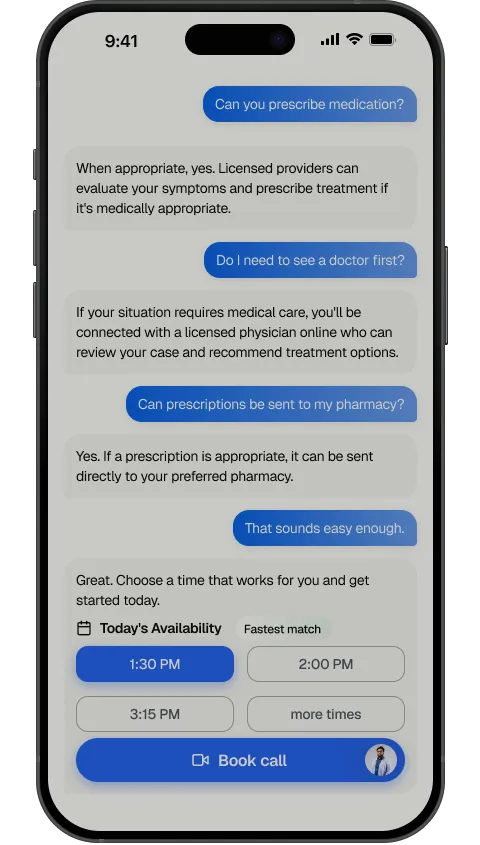

Medications We Prescribe for Aortic Valve Disease

Entresto
Sacubitril-Valsartan
An angiotensin receptor-neprilysin inhibitor combination used to reduce cardiovascular strain and support heart function in patients with heart failure related to valvular disease.
Lasix
Furosemide
A loop diuretic commonly prescribed to relieve fluid retention and reduce the symptoms of congestion that can accompany aortic valve disease.
Coreg
Carvedilol
A beta-blocker used to help control heart rate and blood pressure, which can ease the workload on the heart in patients with aortic valve disease.
Aldactone
Spironolactone
A potassium-sparing diuretic and aldosterone antagonist that may be used to manage fluid overload and support heart function in the setting of valvular heart disease.
How Aortic Valve Disease Treatment Works at Doctronic

Chat With The #1 AI Doctor
Doctronic answers your health questions with personalized medical insights and helps our doctors create a better treatment plan for you.

Meet With a Licensed Doctor For Treatment
Book a $39 telehealth appointment (or copay) within 30 minutes. Our doctors create personalized treatment plans with prescriptions when needed.

Pick Up Your Prescription
Our doctors prescribe non-controlled medications in all 50 states and send prescriptions to your pharmacy for same-day pickup.
Pricing that won't make you sick
Chat for free, see an online doctor for $39/visit, or refill a prescription online for as low as $0
-
 Available in all 50 states + DC
-
 Insurance accepted

- 24/7 medical care Free
- Specialist referrals Free
- Lifelong health record Free
- Unlimited questions Free
- Prescription refills Starting as low as $0
- Video visit with real doctors $39/visit
These are stories from real users who turned to Doctronic for answers when it mattered most.
- Preparing for a doctor visit
- Finding peace of mind
- Understanding a diagnosis
- Managing chronic illness
- Navigating healthcare
- A second opinion
- Improving health










Frequently asked questions
Aortic valve disease occurs when the aortic valve does not open or close properly. Aortic stenosis means the valve is narrowed and restricts blood flow out of the heart. Aortic regurgitation means the valve leaks, allowing blood to flow backward into the heart. Both forms increase the heart's workload over time.
Common symptoms include shortness of breath during activity or at rest, chest pain or tightness, heart palpitations, dizziness or lightheadedness, fatigue, and in some cases fainting. Symptoms may appear gradually as the condition progresses.
Causes include age-related calcium buildup on the valve, a congenital bicuspid aortic valve, prior rheumatic fever, infective endocarditis, and connective tissue disorders. High blood pressure and atherosclerosis can also contribute to valve deterioration over time.
Diagnosis typically involves a physical exam to detect a heart murmur, followed by an echocardiogram to assess valve structure and function. Additional testing may include an electrocardiogram, chest X-ray, or cardiac CT scan depending on the clinical picture.
Medications cannot reverse structural valve damage, but they can help manage symptoms such as fluid retention, elevated blood pressure, and rapid heart rate. Medications like diuretics, beta-blockers, and ACE inhibitors or ARBs are often used to reduce the strain on the heart and improve quality of life until definitive intervention is considered.
Surgical valve repair or replacement, or a minimally invasive procedure called TAVR (transcatheter aortic valve replacement), is recommended when symptoms develop or when imaging shows severe valve dysfunction. Timing depends on the severity of disease, symptoms, and overall heart function as assessed by a cardiologist.
Doctronic uses an AI-guided evaluation to collect your symptoms, medical history, and current medications. A licensed physician then reviews your case and, where appropriate, creates a personalized treatment plan. The entire process is designed to be straightforward and accessible from home.
Yes. Doctronic's evaluations are conducted by licensed physicians and are doctor-reviewed and audited for quality. The platform is HIPAA-aligned, protecting your health information. Doctronic is available to adults 18 and older in any U.S. state.
Top Conditions We Can Help With
People turn to Doctronic and our licensed medical team for support with all types of conditions.