
Get Thyroid Cancer Treatment Online
Thyroid cancer is one of the most common endocrine malignancies, yet with the right medical team and treatment plan, most people achieve excellent long-term outcomes. Doctronic connects you with licensed physicians who can support your ongoing care, medication management, and monitoring needs from the comfort of home.


What Is Thyroid Cancer?
Thyroid cancer is a malignancy marked by abnormal cell growth in the thyroid gland, most often presenting as a painless neck nodule, hoarseness, or difficulty swallowing. It can range from slow-growing papillary tumors to more aggressive anaplastic forms, and may affect hormone production and overall metabolic health. With the right treatment and support, the majority of patients with well-differentiated thyroid cancer achieve remission and maintain a good quality of life.
- Most thyroid cancers are highly treatable, especially when caught early
- Get personalized guidance from doctor-trained AI
- Explore treatment and prescription options

Telehealth may not be appropriate for every medication or condition. Doctronic can help you understand your options and determine the appropriate next step.
Is Online Thyroid Cancer Treatment Right for You?
Doctronic can support adults managing a thyroid cancer diagnosis, including those who have undergone thyroidectomy and require ongoing thyroid hormone replacement or suppression therapy, as well as those seeking assistance with symptom monitoring and follow-up care. Our licensed physicians can coordinate medication management and help guide next steps in your care plan.
Because thyroid cancer directly affects the endocrine system, a thorough review of your thyroid function history, surgical history, pathology results, and any prior radioiodine therapy is essential. Our physicians will review your full medical and cancer history to ensure safe, personalized recommendations.
- Diagnosed with thyroid cancer (papillary, follicular, medullary, or anaplastic)
- Get personalized guidance from AI and clinicians
- Explore treatment and prescription refill options
- Access care from home, often the same day
Medications We Prescribe for Thyroid Cancer

Synthroid
Levothyroxine
The cornerstone of post-thyroidectomy care, used for thyroid hormone replacement and TSH suppression to reduce the risk of cancer recurrence in differentiated thyroid cancer.
Cytomel
Liothyronine
A T3 thyroid hormone supplement sometimes used in preparation for radioiodine scanning or as an adjunct when T4 alone is insufficient for symptom control.
Keytruda
Pembrolizumab
An immune checkpoint inhibitor approved for certain advanced or refractory thyroid cancers, used when standard therapies have not provided adequate disease control.
Decadron
Dexamethasone
A corticosteroid used in thyroid cancer management to reduce inflammation, manage symptoms of locally advanced disease, or support patients during certain oncologic treatments.
How Thyroid Cancer Treatment Works at Doctronic

Chat With The #1 AI Doctor
Doctronic answers your health questions with personalized medical insights and helps our doctors create a better treatment plan for you.

Meet With a Licensed Doctor For Treatment
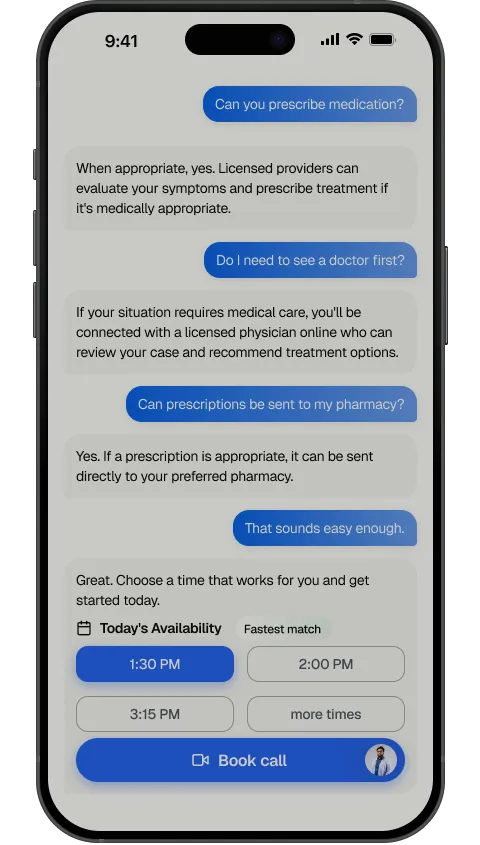
Book a $39 telehealth appointment (or copay) within 30 minutes. Our doctors create personalized treatment plans with prescriptions when needed.

Pick Up Your Prescription
Our doctors prescribe non-controlled medications in all 50 states and send prescriptions to your pharmacy for same-day pickup.
Pricing that won't make you sick
Chat for free, see an online doctor for $39/visit, or refill a prescription online for as low as $0
-
 Available in all 50 states + DC
-
 Insurance accepted

- 24/7 medical care Free
- Specialist referrals Free
- Lifelong health record Free
- Unlimited questions Free
- Prescription refills Starting as low as $0
- Video visit with real doctors $39/visit
These are stories from real users who turned to Doctronic for answers when it mattered most.
- Preparing for a doctor visit
- Finding peace of mind
- Understanding a diagnosis
- Managing chronic illness
- Navigating healthcare
- A second opinion
- Improving health
Frequently asked questions
The four main types are papillary, follicular, medullary, and anaplastic thyroid cancer. Papillary is by far the most common, accounting for roughly 80 percent of all cases, and generally carries an excellent prognosis. Medullary and anaplastic forms are less common but can be more aggressive and require different treatment approaches.
When the thyroid gland is surgically removed, the body can no longer produce its own thyroid hormones. Levothyroxine replaces these hormones and, in higher doses, suppresses TSH to reduce the stimulus for any remaining cancer cells to grow. Regular blood tests are needed to keep levels in the right therapeutic range.
TSH suppression therapy involves taking a higher-than-normal dose of levothyroxine to keep thyroid-stimulating hormone (TSH) levels very low. Because TSH can drive the growth of differentiated thyroid cancer cells, suppressing it helps reduce the risk of recurrence. The target TSH level is individualized based on the cancer's stage and risk category.
Key symptoms to monitor include a new or returning lump in the neck, persistent hoarseness or voice changes, difficulty swallowing, shortness of breath, and bone pain. Additionally, symptoms of over- or under-replacement with thyroid hormone, such as heart palpitations, fatigue, or unexplained weight changes, should be reported to your physician promptly.
Radioiodine (I-131) therapy uses radioactive iodine to destroy any remaining thyroid tissue or cancer cells after surgery. It is most commonly used for papillary and follicular thyroid cancers. Not all patients require it; the decision depends on the cancer's stage, size, and risk of recurrence. Before treatment, patients typically stop levothyroxine or receive thyrogen injections to raise TSH levels.
Yes. Surgery to remove the thyroid can inadvertently affect the parathyroid glands, which sit nearby and regulate calcium. Damage or removal of these glands can cause hypoparathyroidism, leading to low calcium levels (hypocalcemia). Symptoms include muscle cramps, tingling, and in severe cases, seizures. Calcium and vitamin D supplementation are often required after thyroidectomy.
When you start with Doctronic, our AI performs a thorough evaluation of your symptoms, medical history, and current medications. A licensed physician then reviews your case, confirms or refines the assessment, and creates a personalized treatment or monitoring plan. You receive expert medical guidance without needing to travel to a clinic.
Yes. Doctronic only works with licensed, board-eligible or board-certified physicians. All care is doctor-reviewed and subject to ongoing quality audits. The platform is HIPAA-aligned, so your health information is kept private and secure. Doctronic is available to adults 18 and older in any U.S. state.
Top Conditions We Can Help With
People turn to Doctronic and our licensed medical team for support with all types of conditions.