


The doctor was very thorough and asked…
The doctor was very thorough and asked me alot of questions. Very polite and genuinely concerned about the situation. I am very impressed and thankful for the visit
Kidney stones can cause sudden, severe pain and serious urinary complications. Doctronic connects you with licensed physicians who can evaluate your symptoms, review your history, and create a treatment plan to help you pass the stone and prevent future ones.
 Private & Secure
 Available 24/7
 Get care in minutes
Flomax
Tamsulosin
An alpha-blocker commonly prescribed as medical expulsive therapy to relax the ureter and help smaller stones pass more easily.
Topamax
Topiramate
Used off-label in select cases; note: primary use here flagged for physician review. Listed as a formulary option with uricosuric considerations.
Magnesium Citrate
Magnesium Citrate
Magnesium citrate supplementation may help reduce calcium oxalate stone formation by binding oxalate in the gastrointestinal tract.
Baking Soda
Sodium Bicarbonate
Sodium bicarbonate can alkalinize the urine, which may help dissolve uric acid stones and prevent their recurrence.
Chat for free, see an online doctor for $39/visit, or refill a prescription online for as low as $0
 Available in all 50 states + DC
 Insurance accepted







Chat With The #1 AI Doctor
Doctronic answers your health questions with personalized medical insights and helps our doctors create a better treatment plan for you.
Meet With a Licensed Doctor For Treatment
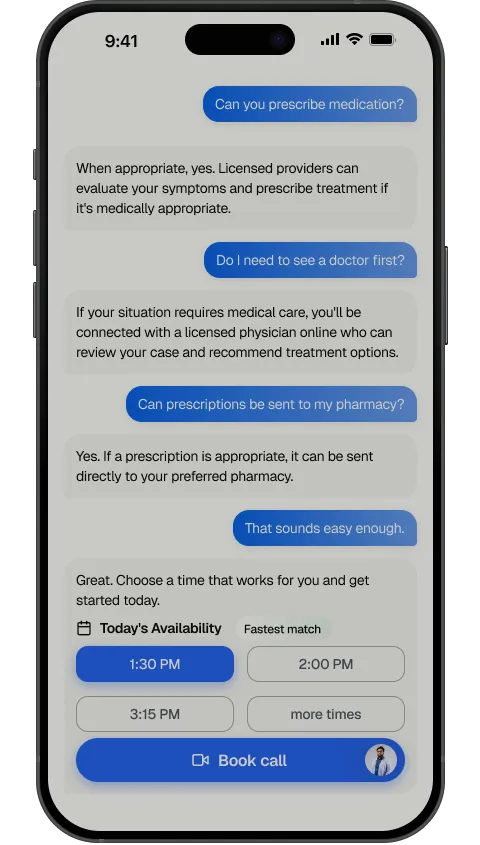
Book a $39 telehealth appointment (or copay) within 30 minutes. Our doctors create personalized treatment plans with prescriptions when needed.
Pick Up Your Prescription
Our doctors prescribe non-controlled medications in all 50 states and send prescriptions to your pharmacy for same-day pickup.
Kidney stones are a urological condition marked by hard mineral and salt deposits that form inside the kidneys. They can cause intense flank pain, blood in the urine, nausea, and difficulty urinating, and may block urine flow if left unmanaged. With the right treatment and support, most stones can be passed or managed, and recurrence can be significantly reduced through medication and lifestyle changes.

Doctronic can support adults who have been diagnosed with kidney stones or who are experiencing symptoms consistent with a kidney stone, such as flank pain, blood in the urine, or urinary urgency. Our physicians can also help patients who have had prior stones and are seeking preventive medical management.
Because kidney stone treatment depends on stone type, size, and your urinary and metabolic history, our licensed physicians will review relevant lab work, imaging, and prior kidney or urinary tract conditions before prescribing any medication.
Kidney stones form when the urine becomes concentrated with minerals such as calcium, oxalate, uric acid, or struvite. When these substances exceed what the fluid in urine can dissolve, crystals begin to form and can grow into stones over time. Dehydration, diet, certain medications, and underlying metabolic conditions can all increase risk.
Common signs include sudden and severe pain in the side or back below the ribs, pain that radiates to the lower abdomen or groin, blood in the urine (which may appear pink, red, or brown), nausea, vomiting, and a persistent urge to urinate. A physician can confirm a stone with imaging such as a CT scan or ultrasound.
Many small kidney stones, typically less than 5 mm in diameter, can pass on their own with adequate hydration and pain management. Larger stones or those causing significant obstruction may require medical procedures such as shock wave lithotripsy, ureteroscopy, or surgery. A physician can assess the size and location of your stone to recommend the best course of action.
Treatment depends on the type of stone. Alpha-blockers like tamsulosin are often prescribed to help stones pass by relaxing the ureter. Sodium bicarbonate or potassium citrate can alkalinize urine to dissolve uric acid stones. Magnesium citrate supplementation may reduce calcium oxalate stone formation. Thiazide diuretics and other agents may be used for prevention in recurrent stone formers.
Prevention strategies depend on the type of stone but generally include drinking enough water to produce at least 2 to 2.5 liters of urine per day, limiting sodium and animal protein intake, and moderating oxalate-rich foods if you form calcium oxalate stones. Your physician may also prescribe specific medications based on a 24-hour urine analysis to target your individual stone-forming risk factors.
You should seek emergency care if you have severe uncontrolled pain, fever or chills with flank pain (which may indicate an infected obstructed kidney), inability to urinate, or persistent vomiting preventing you from staying hydrated. An infected obstructed kidney is a serious condition requiring prompt treatment. Doctronic can assist with evaluation and follow-up care but is not a substitute for emergency services.
When you start a visit on Doctronic, an AI evaluation gathers your symptoms, medical history, and relevant details about your condition. A licensed physician then reviews everything, makes a clinical determination, and creates a personalized treatment plan that may include prescriptions, lifestyle guidance, and follow-up recommendations, all without you having to leave home.
Yes. Doctronic connects you with fully licensed physicians who are board-certified and practice in your state. All visits are doctor-reviewed and subject to clinical audit, and the platform is fully HIPAA-aligned to protect your health information. Care is available to adults 18 and older in any U.S. state.
People turn to Doctronic and our licensed medical team for support with all types of conditions.