
What Do Hives Look Like? A Visual Guide to Common Hive Patterns

Medically reviewed by Oghenefejiro Okifo | MD, Harvard Medical School | Henry Ford Hospital - Detroit, MI on April 19th, 2026.
Published on April 17th, 2026. Updated on July 23rd, 2026.
Key takeaways
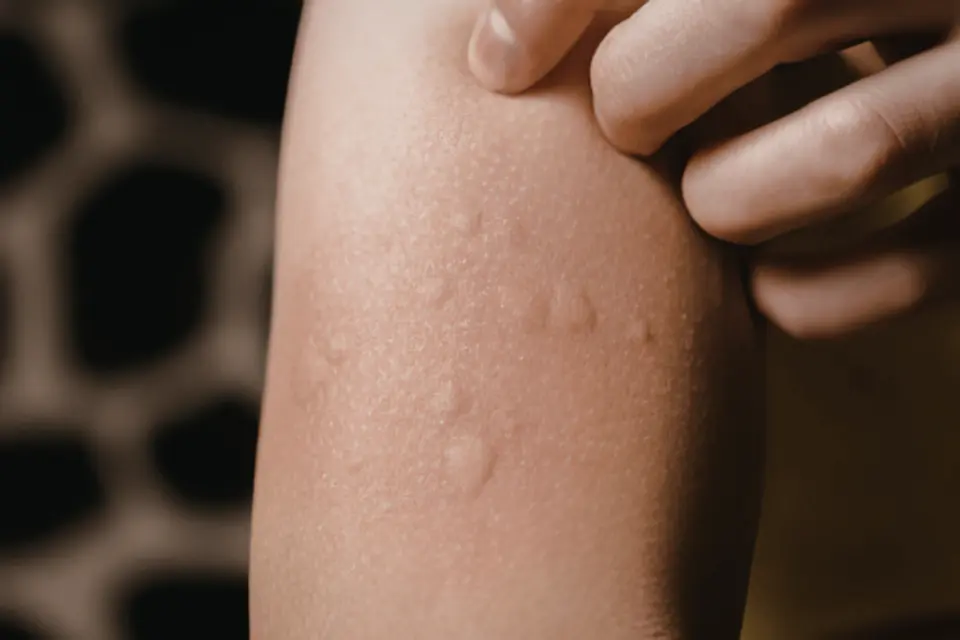
Hives appear as raised, itchy welts that can range from small spots to large patches and vary in color depending on skin tone
The blanching test helps identify true hives: pressing on the welt causes it to turn white temporarily
Common hive patterns include ring-shaped formations, linear marks from skin scratching, and merged patches from multiple welts joining together
Acute hives last less than six weeks, while chronic hives persist longer and affect approximately 1% of Americans
Hives accompanied by throat swelling, difficulty breathing, or facial swelling require immediate emergency care
For quick symptom evaluation and guidance on when to seek care, visit Doctronic.ai
Understanding Hives and Why They Appear
That sudden, itchy bump on the arm that seems to appear out of nowhere can be alarming. About 15% to 25% of people develop hives at some point in their lives, making this skin reaction one of the most common conditions. Hives, medically called urticaria, create raised welts on the skin that can look dramatically different from person to person. The appearance depends on skin tone, trigger type, and how the body responds to the trigger. Learning what hives look like helps people recognize them quickly and decide whether home care is enough or medical attention is needed. Doctronic offers free AI doctor visits where users can describe their symptoms and receive guidance on whether a skin reaction requires professional evaluation.
Defining the Appearance and Characteristics of Hives
The Anatomy of a Wheal
Each individual hive is called a wheal. A wheal looks like a raised, swollen bump with clearly defined edges. The center often appears slightly elevated compared to the surrounding skin. Wheals range in size from tiny dots smaller than a pencil eraser to large patches several inches across. The surface typically looks smooth rather than scaly or rough. Most wheals feel firm to the touch and cause intense itching.
Color Variations Across Different Skin Tones
On lighter skin, hives usually appear pink or red with a pale center. People with medium skin tones may notice hives that look red, pink, or slightly darker than their normal skin color. On darker skin, hives often appear as raised bumps that match the surrounding skin or are slightly darker. The welts may look grayish or have a subtle purple tint. This variation means hives can be harder to spot visually on darker skin, but the raised texture and itching remain consistent across all skin tones.
The Blanching Test: How to Identify Urticaria
A simple test helps confirm whether a skin reaction is truly hives. Press firmly on the center of the welt for a few seconds, then release. True hives will turn white or pale where pressure was applied, then return to their original color within seconds. This blanching response happens because pressing temporarily pushes blood away from the area. Rashes that do not blanch may indicate a different condition requiring separate evaluation.
Common Visual Patterns and Shapes
Annular and Polycyclic Formations
Some hives form ring shapes called annular patterns. These look like circles with clearer skin in the center, like a target or bullseye. When multiple rings overlap or connect, they create polycyclic formations that resemble chains or figure-eight shapes. These patterns occur when the center of a hive begins to heal while the edges continue to spread outward. Annular hives are completely normal and do not indicate a more serious reaction.
Linear Hives and Dermatographism
Linear hives appear in straight lines or streaks across the skin. One cause is dermatographism, a condition where light scratching or pressure creates raised lines. People with dermatographism can literally write on their skin and watch words appear as welts. This happens because their skin cells release histamine in response to friction. Linear patterns also occur when hives develop along areas where clothing rubbed or pressed against the body.
Coalescing Welts: When Small Spots Merge
Individual hives sometimes spread and merge together into larger patches. This process, called coalescence, creates irregularly shaped welts that can cover significant areas of skin. A person might start with several small bumps on the arm that expand and join into one large patch within hours. Coalescing hives often look like maps with irregular borders. While this appearance can seem alarming, merged hives are not more dangerous than individual welts.
Identifying Hives by Duration and Trigger
Acute vs. Chronic Spontaneous Urticaria
Acute hives last less than six weeks and usually have an identifiable trigger, such as food, medication, or illness. Chronic hives affect approximately 1% of the U.S. population and persist for six weeks or longer, often without a clear cause. Chronic spontaneous urticaria can be frustrating because welts appear randomly without obvious triggers. Both types look similar visually, but chronic cases require different management approaches. For a deeper look at what sets off breakouts, see our guide to hives on your skin: common triggers and when to seek medical help.
Physical Hives: Heat, Cold, and Pressure Welts
Physical urticaria develops in response to environmental factors. Hives can be caused by food, pollen, temperature changes, exercise, or tight-fitting fabrics. Cold urticaria creates hives on skin exposed to cold air or water. Cholinergic urticaria produces tiny pinpoint bumps when body temperature rises during exercise or hot showers. Pressure urticaria causes welts to develop hours after sustained pressure from sitting, tight waistbands, or carrying heavy bags.
Stress-Induced Hives and Small Papular Rashes
Emotional stress triggers hive outbreaks in many people. Stress hives often appear as small, clustered papules rather than large, individual welts. They commonly develop on the chest, neck, and face during periods of anxiety or tension. The connection between stress and hives involves cortisol and histamine release. Managing stress through relaxation techniques can help reduce the frequency of outbreaks.
Distinguishing Hives from Similar Skin Conditions
Hives vs. Eczema and Contact Dermatitis
Hives and eczema both cause itchy skin, but they look quite different. Eczema creates dry, scaly, rough patches that persist for weeks or months in the same locations. Hives produce smooth, raised welts that move around the body and typically resolve within 24 hours. Contact dermatitis causes redness and sometimes blisters in areas that have been touched by an irritant. Unlike hives, contact dermatitis remains localized and does not migrate.
Insect Bites and Stings
Insect bites can resemble hives but have key differences. Bites usually have a visible puncture point in the center and remain in one spot. Hives lack puncture marks and can appear anywhere on the body, including areas that were covered by clothing. Multiple bites tend to cluster in exposed areas while hives spread randomly. Bite reactions also typically last longer than individual hives.
Pityriasis Rosea and Fungal Infections
Pityriasis rosea creates oval-shaped patches with scaly borders that can be mistaken for hives. The key difference is texture: pityriasis rosea patches feel rough and scaly while hives feel smooth. Fungal infections like ringworm also create ring-shaped marks, with scaling at the edges, and clear slowly over weeks. Hives resolve within hours and do not have scaly surfaces.
When Hive Patterns Signal a Medical Emergency
Recognizing Angioedema (Deep Tissue Swelling)
Angioedema involves swelling in the deeper layers of the skin, often affecting the lips, eyelids, hands, or feet. Unlike surface hives, angioedema causes puffy, distorted features without the typical raised-welt appearance. The swelling may feel warm and slightly painful rather than itchy. Angioedema around the mouth or throat requires immediate medical attention because it can restrict breathing.
Signs of Anaphylaxis to Watch For
Hives appearing alongside certain symptoms indicate a life-threatening allergic reaction. Warning signs include throat tightness, difficulty swallowing, wheezing, rapid heartbeat, dizziness, and nausea. Facial swelling combined with breathing difficulty demands emergency care immediately. Anyone experiencing these symptoms should call emergency services rather than waiting to see if symptoms improve.
Managing and Documenting Your Symptoms
Keeping a symptom diary helps identify hive triggers. Record what foods were eaten, activities performed, and products used before each outbreak. Take clear photos of hives in good lighting to show healthcare providers. Note the time hives appeared, how long they lasted, and what helped them resolve. This documentation proves invaluable for diagnosis. Doctronic allows users to share symptom history during AI consultations, making it easier to track patterns over time.
Frequently Asked Questions
Individual hives usually fade within 24 hours, but new ones may appear as old ones disappear. Acute hive outbreaks resolve completely within six weeks. Chronic hives persist for more than 6 weeks and may come and go for months or years.
Hives are not contagious. They result from an individual's immune response and cannot be transmitted through touch or close contact. The underlying trigger, such as a viral illness, might be contagious, but the hives themselves are not.
Loose, breathable clothing works best. Tight fabrics can irritate hives and trigger additional welts through pressure. Cool compresses applied to affected areas help reduce itching without restricting airflow.
Medical evaluation is recommended when hives last longer than six weeks, occur frequently, do not respond to antihistamines, or appear alongside breathing difficulties or facial swelling.
The Bottom Line
Recognizing hive patterns helps people respond appropriately to these common skin reactions. Whether dealing with acute welts or chronic outbreaks, understanding what hives look like compared with other conditions guides better care decisions. For quick symptom evaluation and personalized guidance, visit Doctronic.ai for free AI doctor consultations or affordable telehealth visits with licensed physicians available 24/7.
Related articles
Get allergy care advice
Chat Now