Diseases and Conditions
Omeprazole Side Effects Timeline: Week by Week Guide
May 17, 2026
5 min read

Medically reviewed by Lauren Okafor | MD, The Frank H Netter MD School of Medicine, Loyola University Medical Center on March 27th, 2026.
Published on February 17th, 2026. Updated on July 23rd, 2026.
Curcumin, the active compound in turmeric, has anti-inflammatory effects and may help reduce pain
Turmeric powder contains relatively small amounts of curcumin, so concentrated supplements are often used for therapeutic effects
Black pepper extract (piperine) can significantly improve curcumin absorption in the body
Turmeric may help with chronic back pain over time, but short-term benefits are less consistent in studies
It is most effective when used alongside other treatments, not as a standalone solution
People taking blood thinners or certain medications should consult a healthcare provider before using turmeric supplements
Key Takeaways
Back pain affects millions of people every day. Many are tired of relying on pills that come with long lists of side effects. This has led many to ask: Does turmeric actually work for back pain relief? The short answer is yes, but with some important conditions. The bright yellow spice found in curry dishes contains a powerful compound called curcumin. This compound has scientific evidence supporting its anti-inflammatory effects. Turmeric-Boswellia combinations can improve back pain symptoms within several weeks; there is no credible evidence showing pain reduction within 76 minutes compared to a placebo. That's a meaningful difference. But here's what most articles won't tell you: simply adding turmeric to your food probably won't give you the relief you're looking for. The way you take it matters just as much as taking it at all. Doctronic.ai can help you determine whether turmeric supplementation is appropriate for your specific type of back pain.
Turmeric gets its pain-fighting power from curcumin. This compound gives the spice its yellow color and its medical benefits. Curcumin, the active ingredient in turmeric, is known for its anti-inflammatory and antioxidant properties. It works by inhibiting the production of proteins that cause pain.
The problem? Turmeric powder only contains about 2-6% curcumin, limiting its anti-inflammatory effect. This means eating curry once a week won't do much for your aching back. You need concentrated forms to see real results.
Curcumin targets multiple inflammation pathways in the body. It blocks enzymes called COX-2 and LOX. These are the same pathways that drugs like ibuprofen target. Curcumin also reduces cytokines, which are proteins that signal pain and swelling. The difference is that curcumin does this without the stomach damage that long-term NSAID use can cause.
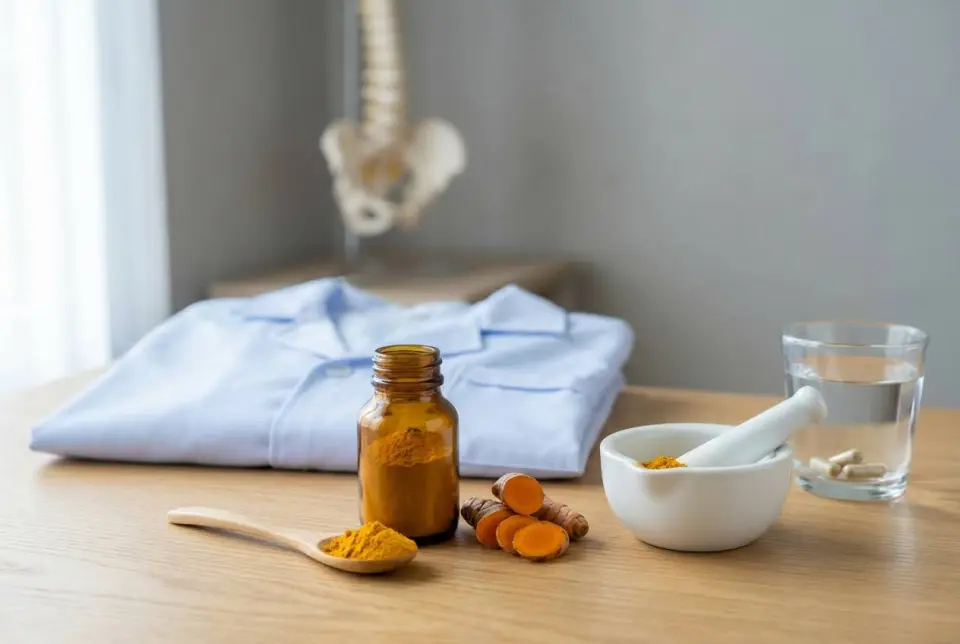 Specific Benefits for Different Types of Back Pain
Chronic lower back strain often comes from muscle tension and ongoing low-grade inflammation. Curcumin helps reduce inflammatory compounds that cause muscle tightness and soreness. People with desk jobs or those who do repetitive lifting often see improvement after several weeks of consistent use. The keyword is consistent. Taking turmeric once when your back hurts won't help much.
Sciatica involves nerve compression and inflammation along the sciatic nerve. Curcumin can help reduce the swelling around the nerve root. This may ease the shooting pain that travels down the leg. Turmeric won't fix a herniated disc, but it can help manage pain while other treatments take effect. Doctronic.ai offers consultations to help determine if your sciatica needs additional medical attention beyond natural remedies.
Spinal arthritis involves the breakdown of cartilage between vertebrae. This leads to bone-on-bone contact and chronic inflammation. Curcumin has shown promise in slowing cartilage breakdown while reducing joint pain. For older adults with degenerative disc disease or facet joint arthritis, turmeric supplements can be a valuable addition to their pain management routine.
Here's the biggest mistake people make with turmeric: they take it alone. Curcumin has poor bioavailability on its own. Your body absorbs very little of it. Piperine, found in black pepper, increases curcumin absorption by up to 2,000%. Any quality turmeric supplement should include black pepper extract. If yours doesn't, you're wasting your money.
Curcumin is fat-soluble. This means it absorbs better when taken with fats. Taking your supplement with a meal containing olive oil, avocado, or nuts helps your body absorb more curcumin. Some people mix turmeric powder into warm milk with a bit of coconut oil. This traditional preparation actually makes scientific sense.
Cooking with turmeric adds flavor and provides small amounts of curcumin. But for back pain relief, supplements are more practical. Most studies showing benefits used doses of 500-2,000 mg of curcumin daily. Getting this amount from food alone would require eating impractical quantities of the spice. Standardized supplements guarantee you're getting a consistent dose of the active compound.
While some preliminary research suggests curcumin-based creams may help reduce localized inflammation, there is limited clinical evidence supporting topical turmeric as an effective treatment for back pain. They are most effective for surface-level muscle pain rather than deep spinal issues. Be warned: turmeric stains everything it touches. Use these products carefully, as they may leave some yellow residue on the skin and clothing.
Curcumin has natural blood-thinning properties. People taking warfarin, aspirin, or other anticoagulants should be careful. Combining these with high-dose turmeric supplements can increase bleeding risk. Always talk to a doctor before starting turmeric if you take blood thinners. Doctronic.ai offers quick telehealth consultations to discuss whether turmeric is safe with your current medications.
High doses of curcumin can cause stomach upset in some people. Symptoms include nausea, diarrhea, and acid reflux. Starting with a lower dose and increasing gradually helps your body adjust. Taking supplements with food also reduces stomach irritation. People with gallbladder obstruction or bile duct disease should use turmeric supplements cautiously, as curcumin can increase bile flow and may worsen symptoms.
Turmeric is not a miracle cure. It won't replace surgery for a severely herniated disc. It won't fix structural problems in your spine. What it can do is reduce inflammation and provide modest pain relief as part of a broader approach. Most people need four to eight weeks of consistent use before noticing significant changes. Combining turmeric with proper posture, regular movement, and professional medical guidance gives the best results.
Most people need four to eight weeks of daily use before seeing noticeable improvement. Some studies show faster results when turmeric is combined with other anti-inflammatory compounds like Boswellia.
Eating curry provides some curcumin, but not enough to relieve pain. Turmeric powder contains only 2-6% curcumin. Supplements provide concentrated doses that actually make a difference.
For most healthy adults, daily turmeric supplementation is safe. People on blood thinners, those with gallbladder issues, or pregnant women should consult a healthcare provider first.
Standardized curcumin supplements with added piperine (black pepper extract) offer the best absorption and results. Look for products that list the curcumin content, not just turmeric content.
Turmeric should not replace prescribed pain medication without a doctor's approval. It works best as a complementary approach alongside other treatments.
Turmeric offers real benefits for back pain when taken correctly, but it requires the right form, proper absorption enhancers, and realistic expectations. Talk to a healthcare provider through Doctronic.ai to determine if turmeric supplementation fits your specific situation.
Hewlings SJ, Kalman DS. Curcumin: A review of its effects on human health. Foods. 2017. https://pubmed.ncbi.nlm.nih.gov/29065496/
Get pain relief advice
Chat Now
Join 50,000+ readers using Doctronic to understand symptoms, medications,
and next steps.
Add your phone number below to get health updates and exclusive VIP offers.
By providing your phone number, you agree to receive SMS updates from Company. Message and data rates may apply. Reply “STOP” to opt-out anytime. Read our Privacy Policy and Terms of Service for more details.
Save your consults. Talk with licensed doctors and manage your health history.