Understanding Skin Picking Disorder: Causes, Symptoms, and Treatment
February 2, 2026
2 min read

Medically reviewed by Alan Lucks | MD, Alan Lucks MDPC Private Practice - New York on March 6th, 2026.
Published on February 2nd, 2026. Updated on September 11th, 2026.
Skin picking scars result from compulsive tissue damage that disrupts the skin's natural healing processes.
Professional treatments like laser therapy can significantly improve scar texture and appearance.
Behavioral interventions, including cognitive-behavioral therapy, are crucial for preventing future scarring.
Comprehensive care involves both physical scar treatment and psychological support for the underlying picking behavior.
Questions about skin picking?
Free. Anonymous. Built by doctors.
This article covers general information. Ask Doctronic about your symptoms, medications, side effects, or treatment options.
Skin picking scars form when compulsive skin picking disrupts the skin's natural healing process, leaving behind discoloration, pitting, or raised tissue. They affect millions of people with dermatillomania and can be both physically and emotionally difficult to live with. The good news: a range of professional treatments and behavioral strategies can meaningfully reduce their appearance and help prevent new ones from forming.
When individuals engage in repetitive skin picking, they create significant disruption to the skin's natural healing processes. The damage can vary widely, depending on factors like picking depth, frequency, and individual skin characteristics. Some individuals may develop acne scars naturally in similar patterns, though skin picking creates more unpredictable scarring.
Tissue damage occurs across multiple skin layers, triggering complex inflammatory responses. The body's natural healing mechanisms become compromised, leading to abnormal scar formation. Repeated picking prevents proper wound closure, introducing additional complications like bacterial infections and chronic inflammation.
Dermatological treatments offer promising solutions for existing skin picking scars. Some treatment options include subcision, fillers, steroid injections, platelet-rich plasma, dermabrasion, botox, and surgery. Laser therapy stands out as a particularly effective approach, with fractional CO2 and erbium lasers demonstrating significant improvements in scar texture and appearance. Acne scars share some treatment similarities, though skin picking scars often require more specialized interventions.
Dermatillomania is the clinical term for excoriation disorder, a body-focused repetitive behavior (BFRB) in which a person compulsively picks at their skin. Scars that result from dermatillomania are often more severe and more varied than ordinary scars from minor wounds or even acne, because the picking is repetitive, deep, and ongoing.
When someone picks the same area multiple times before it heals, the wound never fully closes. Each new episode of picking reopens the injury, introduces bacteria, and restarts the inflammatory response. Over time, this creates a cycle that leads to several distinct scar types.
People with dermatillomania may develop any combination of the following:
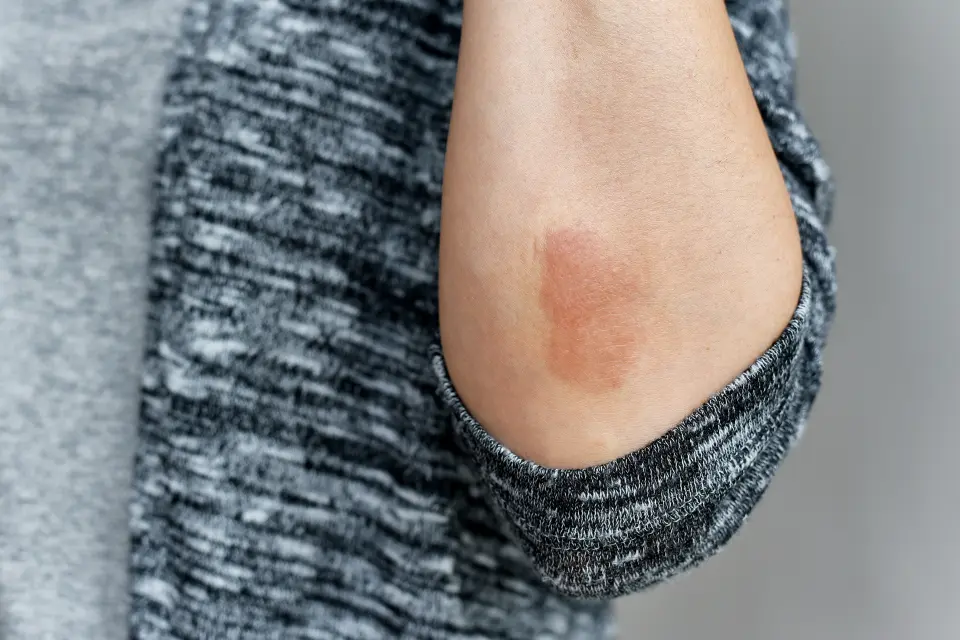
Atrophic scars: These are sunken or pitted scars caused by a loss of collagen during repeated wounding. They are among the most common types seen in skin pickers.
Hypertrophic scars: Raised, firm scars that form when the body produces excess collagen during healing. More common in people with certain skin types or those who pick at deeper layers.
Post-inflammatory hyperpigmentation (PIH): Flat dark spots left behind after inflammation. Not technically a scar but often mistaken for one. PIH can fade over months with proper skin care and sun protection.
Keloid scars: An overgrowth of scar tissue that extends beyond the original wound site. Less common but more difficult to treat.
Standard scar treatments work best when the underlying cause has stopped. For dermatillomania scars, treating the behavior alongside the scar is essential. Starting laser therapy or microneedling while active picking continues will limit results and may even worsen inflammation.
A dermatologist and a mental health professional ideally work together in these cases. The dermatologist addresses existing scar tissue, while a therapist trained in BFRBs helps reduce or stop the picking behavior. This combined approach gives treatments the best chance to succeed and lowers the likelihood of new scars forming.
If you suspect your picking has crossed into compulsive territory, that recognition is a meaningful first step. Dermatillomania is a recognized condition, and effective support is available.
Addressing skin picking requires more than physical treatment. Cognitive-behavioral therapy (CBT) has shown strong results in helping people understand and manage picking behaviors. Common strategies include identifying triggers, building alternative coping habits, and creating physical barriers that interrupt the urge to pick.
Stress management plays a critical role in prevention. Itchy skin and related sensations often trigger picking episodes, making relaxation techniques and emotional regulation crucial components of treatment.
Successful recovery involves a comprehensive approach combining medical treatment, psychological support, and personal coping strategies. Support groups and specialized mental health professionals can provide ongoing guidance and help individuals develop sustainable healing practices.
Some mild skin picking scars, especially flat discoloration from post-inflammatory hyperpigmentation, can fade over several months with consistent sun protection and gentle skin care. Deeper atrophic or hypertrophic scars are unlikely to fully resolve without professional treatment. The sooner picking stops, the better the skin's ability to heal with minimal lasting marks.
The best treatment depends on the scar type. Atrophic (pitted) scars often respond well to fractional laser therapy, microneedling, or fillers. Raised scars may benefit from steroid injections or laser resurfacing. A dermatologist can assess your specific scars and recommend the most appropriate combination of treatments.
Cognitive-behavioral therapy (CBT) and habit reversal training are the most evidence-supported approaches for reducing compulsive skin picking. Practical barriers like wearing bandages, keeping nails short, or using fidget tools can also help interrupt the urge. Working with a therapist who specializes in body-focused repetitive behaviors (BFRBs) gives the best long-term results.
They share some similarities but are not the same. Both can cause atrophic or hyperpigmented marks, and some treatments overlap. However, skin picking scars are often more unpredictable in shape and depth because the damage is repeated and self-inflicted rather than caused by a single inflammatory event. They also tend to appear in more varied locations across the body.
See a doctor if your scars are causing significant emotional distress, if you notice signs of infection such as increased redness, swelling, or discharge, or if the picking itself feels uncontrollable. A primary care doctor can refer you to a dermatologist for scar treatment and a mental health professional for support with the picking behavior.
Healing from skin picking scars is a journey of patience, compassion, and comprehensive care. Ready to meet your AI doctor? Get started with Doctronic today.
Get skin care advice
Chat Now