Mental Health
How to Calm an Anxiety Attack: Techniques That Work in the Moment
April 17, 2026
6 min read

Medically reviewed by Lauren Okafor | MD, The Frank H Netter MD School of Medicine, Loyola University Medical Center on April 14th, 2026.
Published on April 9th, 2026. Updated on July 24th, 2026.
Anxiety activates the body's fight-or-flight response, but specific physical and mental techniques can interrupt that cycle within minutes by engaging the parasympathetic nervous system.
Box breathing (inhale 4, hold 4, exhale 4, hold 4) is one of the fastest ways to directly influence heart rate and nervous system state using only your breath.
The 5-4-3-2-1 grounding method works by pulling attention away from anxious thoughts and anchoring it to concrete sensory experience in the present moment.
Cold water on the wrists or face activates the dive reflex, a physiological response that rapidly slows heart rate and calms the autonomic nervous system.
Movement, including a short walk or simply shaking out your arms and legs, helps metabolize stress hormones faster than sitting still through intense anxiety.
If anxiety is frequent, avoidant, or interfering with daily life, these techniques manage symptoms but do not treat the underlying condition; evaluation is the appropriate next step.
When anxiety is disrupting your life, and you are not sure where to start, Doctronic.ai connects you with licensed providers who can assess what you are experiencing and discuss treatment options from home.
When the brain perceives a threat, whether real or anticipated, it activates the sympathetic nervous system. Adrenaline surges, heart rate climbs, breathing shallows, and muscles tense. The discomfort of anxiety comes from this mismatch: the body is in full alert, with nowhere to direct that energy.
The seven techniques below work by directly targeting that physiological response. They engage specific biological pathways to shift the nervous system from sympathetic (fight-or-flight) to parasympathetic (rest-and-restore) activation.
Controlled breathing has the most direct physiological impact of any immediate technique. Breath is the only autonomic function also under voluntary control, making it a direct line into the nervous system.
During anxiety, fast, shallow breathing depletes carbon dioxide, worsening dizziness, tingling, and feelings of unreality. Slowing the breath reverses this.
Inhale slowly through the nose for 4 counts
Hold at the top for 4 counts
Exhale slowly through the mouth for 4 counts
Hold at the bottom for 4 counts
Repeat for 4 to 6 cycles
The deliberate counting gives the mind something to do besides spiral. Start with 3 counts if 4 feels too long. A longer exhale activates the vagus nerve and more strongly triggers a parasympathetic response.
Anxiety lives in the mind's narrative about what might happen. Grounding interrupts that narrative by redirecting attention to what is physically, concretely happening right now.
The 5-4-3-2-1 method systematically engages all five senses:
5 things you can see. Name them, even silently. A window. A coffee mug. The texture of the wall.
4 things you can physically feel. The chair pressing into your back. Your feet on the floor. The fabric of your sleeve.
3 things you can hear. A fan. Traffic. Your own breathing.
2 things you can smell. Even subtle ones, such as the air in the room, the fabric nearby.
1 thing you can taste.
The goal is not relaxation but orientation: sensory information processed by the prefrontal cortex competes with the amygdala's fear signal, and the present-moment anchor wins.
This one works faster than most people expect. Running cold water over the wrists, splashing cold water on the face, or pressing an ice pack against the cheeks and forehead activates what physiologists call the dive reflex.
The dive reflex is a mammalian survival mechanism triggered by cold water on the face, particularly around the forehead and nose. When activated, it rapidly slows heart rate, lowers blood pressure, and triggers a parasympathetic shift. The body interprets cold water on the face as submersion and responds by calming itself to conserve oxygen.
This technique is especially useful when anxiety is running too fast for breathing or grounding exercises to get a foothold. The cold sensation is a powerful physical interrupt: abrupt, impossible to ignore, and physiologically direct.
Hold ice in your hand for 30 to 60 seconds. Splash cold water repeatedly across the forehead and nose. Even placing a cold, damp cloth on the back of the neck works. The response happens within seconds.
Anxiety stores in the body as muscle tension. Many people carrying significant anxiety are not aware of how tightly they are holding their jaw, shoulders, or stomach until they consciously release the tension.
Progressive muscle relaxation works by deliberately tensing and releasing muscle groups in sequence:
Start with the feet. Curl the toes and tense the foot muscles for 5 to 10 seconds, then release completely.
Move upward: calves, thighs, stomach, hands (make a fist), forearms, biceps, shoulders (shrug up to ears), face (scrunch everything).
With each release, pause for a few seconds and notice the contrast between tension and relaxation.
The release phase is what matters most. The parasympathetic response is partially triggered by the sensation of letting go after sustained contraction. Over a full sequence, most people notice a measurable drop in overall physical tension within five to ten minutes.
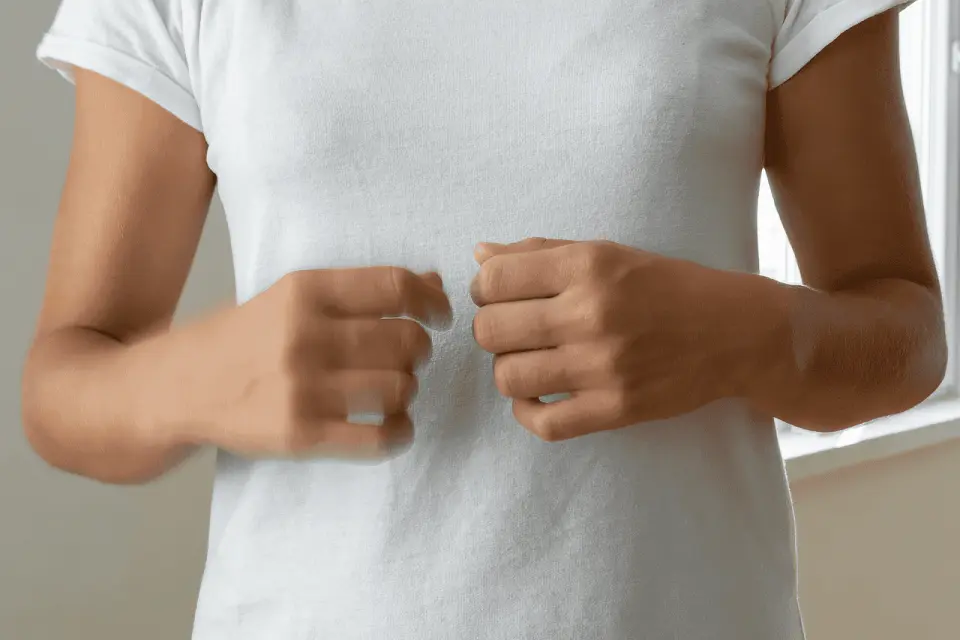
Bilateral tapping involves alternating rhythmic stimulation of both sides of the body, adapted from trauma therapy for acute anxiety. It engages bilateral brain processing and reduces the emotional intensity of anxious thoughts.
Cross your arms over your chest so your hands rest on opposite shoulders.
Alternately tap each hand in a slow, rhythmic pattern, like a heartbeat.
Breathe slowly and focus on a neutral image while tapping.
You can also alternate tapping your knees. The bilateral rhythm is the active ingredient, not the location. Most people find it settling within two to three minutes.
Putting words to an emotion is counterintuitive as an anxiety technique, but fMRI research shows that labeling a feeling, saying or writing "I feel anxious" or "I feel overwhelmed," reduces activity in the amygdala, the brain's threat-detection center. This process, called affect labeling, shifts processing toward the prefrontal cortex.
Pause and ask: What am I actually feeling right now?
Be specific: "dread" or "fear I am going to fail" works better than "bad."
Name it aloud if possible; speaking it adds an additional layer of processing.
The goal is not to solve the problem causing the feeling. Naming it alone shifts brain state. If persistent worry is hard to name, Could Your Worry Be Anxiety? Here's How to Tell explains how anxiety differs from ordinary stress.
Anxiety prepares the body to act. It floods muscles with tension and dumps adrenaline into the bloodstream. If nothing happens, all that physiological preparation sits unused, keeping the system in a state of alert. Movement helps the body complete the stress response cycle.
Even brief, vigorous movement helps:
A 5- to 10-minute walk, especially outside, activates both movement and vagal tone from changed visual scenery and breathing patterns.
Shaking the arms, legs, and torso loosely for one to two minutes mimics the way animals discharge stress after a threat passes. It helps metabolize adrenaline and release the held tension.
Jumping jacks, a quick jog in place, or dancing for a few minutes all work.
Any vigorous movement accelerates the clearance of adrenaline and cortisol. After movement, the nervous system resets more easily than it does when sitting still.
These seven techniques are designed for acute anxiety moments. They are not a treatment for anxiety as a condition.
Anxiety disorders are among the most common mental health conditions and involve persistent, excessive worry or fear that is disproportionate to circumstances and difficult to control. They often include avoidance patterns that gradually shrink a person's world, such as avoiding social situations, certain places, driving, or activities that might trigger symptoms.
In-the-moment techniques do not address avoidance. They provide relief, but they do not retrain the nervous system's threat assessment or change the behavioral patterns that maintain anxiety over time. That requires a more sustained approach, typically cognitive behavioral therapy, sometimes in combination with medication.
Consider evaluation by a provider if:
Anxiety is occurring most days, not just during situational stress
You are avoiding people, places, or activities because of anxiety
Physical symptoms of anxiety include affecting sleep, concentration, or daily functioning
You are using alcohol or other substances to manage anxious feelings
In-the-moment techniques help temporarily, but anxiety returns quickly or intensifies

Most techniques begin shifting nervous system state within 1 to 3 minutes. Cold water on the face activates the dive reflex within seconds. Box breathing typically produces a noticeable effect after 4 to 6 full cycles. The full benefit of progressive muscle relaxation builds over a complete sequence of about 5 to 10 minutes.
Yes, though panic attacks can make it harder to follow structured steps. Cold water is often the easiest entry point during intense panic because it is a strong physical interrupt. Box breathing and grounding become more accessible once the initial peak begins to ease.
Slow, controlled breathing, especially with a longer exhale, directly stimulates the vagus nerve, which signals the body to reduce heart rate and shift from sympathetic to parasympathetic activation. It also raises carbon dioxide levels in the blood, which reduces the dizziness and tingling caused by hyperventilation during anxious breathing.
Bilateral stimulation is used in EMDR (Eye Movement Desensitization and Reprocessing), which has strong evidence for trauma treatment. The butterfly hug adapts that principle for self-use. While the research base for the self-administered version specifically is smaller, the underlying mechanism of bilateral stimulation has solid theoretical and clinical support.
Persistent anxiety that does not respond to in-the-moment techniques is a signal that the condition itself needs evaluation and treatment. These techniques address acute symptoms, not the underlying patterns that maintain chronic anxiety. CBT, medication, and other evidence-based treatments work at a different level and have strong track records.
Most of these techniques adapt well to children with age-appropriate modifications. The 5-4-3-2-1 grounding method and progressive muscle relaxation are frequently used in pediatric anxiety treatment. The butterfly hug is often taught to children in trauma-informed settings. Introduce them during calm moments rather than trying to teach new skills during acute distress.
When anxiety spikes, the body is running an automatic physiological response rather than a purely cognitive process. Heart rate increases, breathing changes, and the nervous system shifts into a heightened state of alert. Because of this, the most effective tools target the body directly.
Techniques such as controlled breathing, vagal stimulation, bilateral movement, cold exposure, sensory grounding, affect labeling, and physical movement work by engaging the nervous system at a biological level. These methods help regulate autonomic activity, reduce sympathetic overdrive, and promote a return to a more balanced state.
The key distinction is that these strategies do not rely on reasoning or trying to think your way out of anxiety. They act through physical and sensory pathways that influence the brain more rapidly than cognitive processing alone. With consistent use, they can improve resilience and make it easier to manage future anxiety spikes.
If anxiety is a recurring pattern rather than an occasional spike, those techniques manage the moments but do not resolve the underlying condition. Doctronic.ai connects you with licensed providers who can evaluate what you are experiencing, clarify what type of anxiety it might be, and discuss evidence-based treatment options through a telehealth visit from home.
Get mental health advice
Chat Now
Join 50,000+ readers using Doctronic to understand symptoms, medications,
and next steps.
Add your phone number below to get health updates and exclusive VIP offers.
By providing your phone number, you agree to receive SMS updates from Company. Message and data rates may apply. Reply “STOP” to opt-out anytime. Read our Privacy Policy and Terms of Service for more details.
Save your consults. Talk with licensed doctors and manage your health history.