
How Do You Know If a Mole is Cancerous?

Medically reviewed by Faith Coleman, University of New Mexico School of Medicine on August 23rd, 2026.
Cancerous moles typically exhibit changes in size, shape, color, or texture that healthy moles don't show. The ABCDE method helps identify warning signs: Asymmetry (one half differs from the other), Border irregularity, Color variation within the same mole, Diameter larger than 6mm, and Evolving characteristics. Additional red flags include bleeding, itching, crusting, or rapid growth. According to dermatologists, any mole that changes appearance over weeks or months warrants immediate medical evaluation. Early detection is crucial since melanoma has a 99% five-year survival rate when caught early, but this drops significantly if it spreads to lymph nodes or other organs. The only way to know with certainty if a mole is cancerous is to biopsy or remove it and examine a tissue specimen under a microscope.
Still have questions about this?
Ask your AI Doctor
Keep exploring
Related Questions
From the blog
More from Doctronic
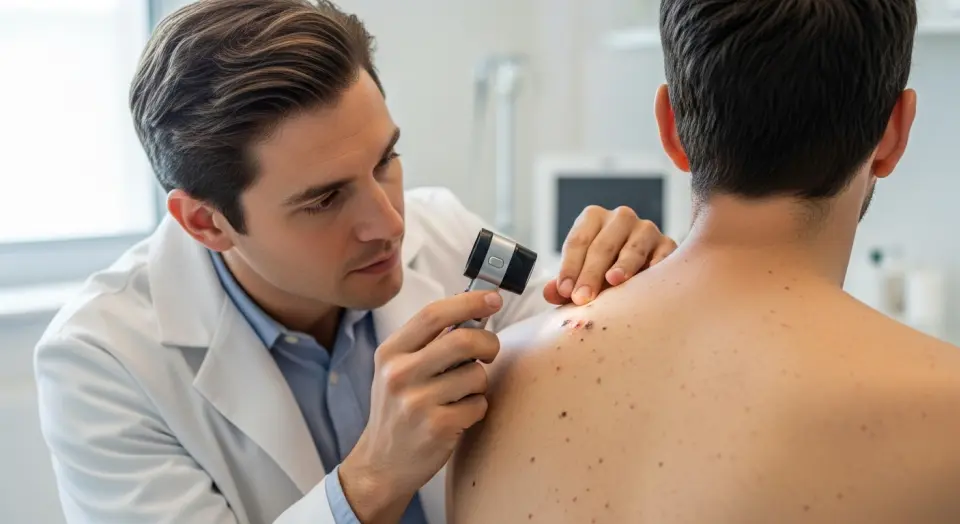
Are Atypical Moles Cancerous? Understanding Your Risk
Understanding Atypical Moles and Cancer Risk Finding an unusual-looking mole can trigger immediate worry. The question of whether atypical moles are…

Cancerous Moles vs. Normal Moles: A Visual Guide to Melanoma Warning Signs
Understanding Normal Moles Normal moles (benign nevi) are clusters of melanocytes, the pigment-producing cells in skin, that have grouped together…
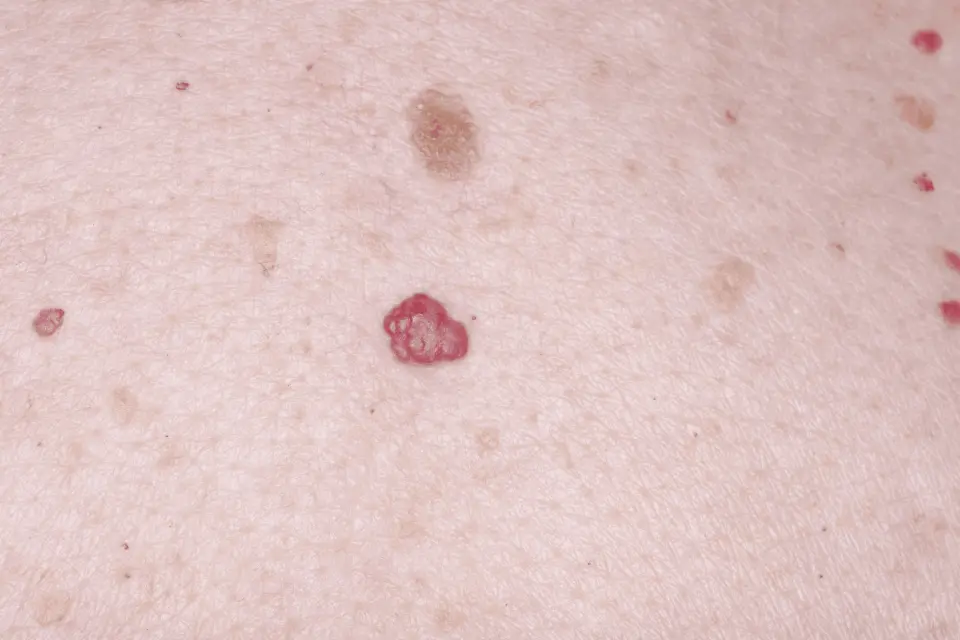
Red Moles on Skin: Cherry Angiomas and When to Be Concerned
What Are Cherry Angiomas? If you have noticed a small, bright red dot on your skin that seems to have appeared out of nowhere, there is a good chance…