
Get Pelvic Organ Prolapse Treatment Online
Pelvic organ prolapse can cause discomfort, pressure, and urinary symptoms that affect daily life. Doctronic connects you with licensed physicians who can evaluate your situation and guide you toward effective, personalized treatment options from anywhere in the U.S.


What Is Pelvic Organ Prolapse?
Pelvic organ prolapse is a pelvic floor disorder marked by the descent of one or more pelvic organs, including the bladder, uterus, or rectum, into or beyond the vaginal canal. It can cause pelvic pressure, urinary or bowel dysfunction, and significant impacts on quality of life and sexual function. With the right treatment and support, symptoms can be meaningfully reduced and pelvic floor function can be restored or improved.
- Occurs when pelvic floor muscles and connective tissue weaken, allowing organs to shift downward
- Get personalized guidance from doctor-trained AI
- Explore treatment and prescription options

Is Online Pelvic Organ Prolapse Treatment Right for You?
Doctronic evaluates adults who are experiencing symptoms of pelvic organ prolapse, including pelvic pressure, a sensation of bulging, or associated urinary and bowel difficulties. Our platform is designed to help patients explore nonsurgical management options and supportive therapies appropriate for their stage of prolapse.
Because pelvic organ prolapse often involves the genitourinary and gastrointestinal systems, our physicians review your gynecologic and pelvic health history, including prior pregnancies, surgeries, menopausal status, and any coexisting bladder or bowel conditions, to build a treatment plan tailored to you.
- Diagnosed with pelvic organ prolapse (cystocele, rectocele, uterine prolapse, or vault prolapse)
- Get personalized guidance from AI and clinicians
- Explore treatment and prescription refill options
- Access care from home, often the same day

Medications We Prescribe for Pelvic Organ Prolapse

Cenestin
Synthetic Conjugated Estrogens
Topical or systemic estrogen therapy can help improve the strength and elasticity of pelvic floor and vaginal tissues, which may reduce prolapse-related symptoms, particularly in postmenopausal women.
Vivelle-Dot
Estradiol Transdermal Gel
A transdermal estradiol option that supports pelvic tissue health in postmenopausal patients, often used as part of hormone replacement therapy to address estrogen-deficiency contributions to prolapse.
Ditropan
Oxybutynin
An anticholinergic agent used to manage overactive bladder symptoms, including urinary urgency and frequency, which frequently coexist with pelvic organ prolapse.
Myrbetriq
Mirabegron
A beta-3 adrenergic agonist that relaxes the bladder muscle to reduce urinary urgency and frequency, offering an alternative to anticholinergics for bladder symptoms associated with prolapse.
How Pelvic Organ Prolapse Treatment Works at Doctronic

Chat With The #1 AI Doctor
Doctronic answers your health questions with personalized medical insights and helps our doctors create a better treatment plan for you.

Meet With a Licensed Doctor For Treatment
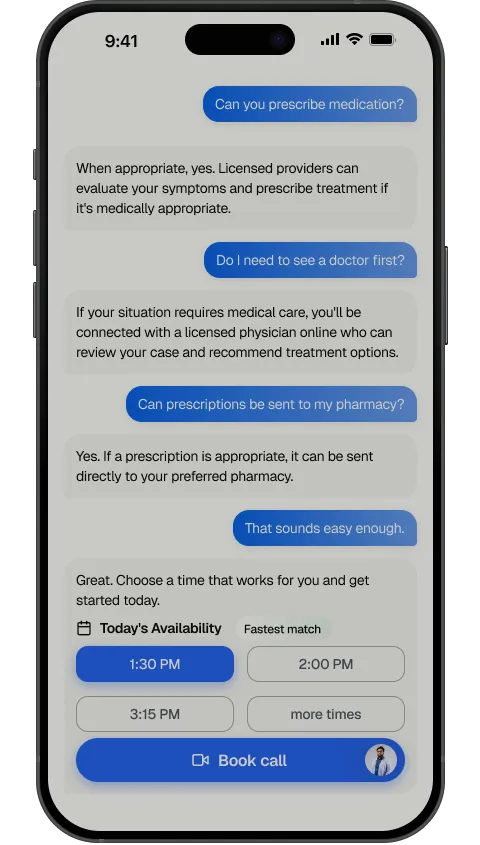
Book a $39 telehealth appointment (or copay) within 30 minutes. Our doctors create personalized treatment plans with prescriptions when needed.

Pick Up Your Prescription
Our doctors prescribe non-controlled medications in all 50 states and send prescriptions to your pharmacy for same-day pickup.
Pricing that won't make you sick
Chat for free, see an online doctor for $39/visit, or refill a prescription online for as low as $0
-
 Available in all 50 states + DC
-
 Insurance accepted

- 24/7 medical care Free
- Specialist referrals Free
- Lifelong health record Free
- Unlimited questions Free
- Prescription refills Starting as low as $0
- Video visit with real doctors $39/visit
These are stories from real users who turned to Doctronic for answers when it mattered most.
- Preparing for a doctor visit
- Finding peace of mind
- Understanding a diagnosis
- Managing chronic illness
- Navigating healthcare
- A second opinion
- Improving health











Frequently asked questions
Pelvic organ prolapse occurs when the muscles and connective tissue supporting pelvic organs weaken, allowing structures such as the bladder, uterus, or rectum to descend into or beyond the vaginal canal. Common causes include vaginal childbirth, chronic straining, menopause-related estrogen loss, aging, obesity, and prior pelvic surgery.
Common symptoms include a feeling of pelvic heaviness or pressure, a visible or palpable bulge at the vaginal opening, urinary leakage or difficulty fully emptying the bladder, constipation or difficulty with bowel movements, and discomfort during sexual activity. Symptoms are often worse after prolonged standing or physical activity.
Yes. Many patients manage prolapse effectively without surgery. Nonsurgical options include pelvic floor muscle training (Kegel exercises), vaginal pessaries, lifestyle changes such as weight management and avoiding heavy lifting, and hormonal therapies to improve tissue quality in postmenopausal women. Surgery is typically considered when conservative measures do not provide adequate relief.
Estrogen plays an important role in maintaining the strength and elasticity of pelvic floor and vaginal tissues. In postmenopausal women, declining estrogen levels can contribute to tissue thinning and weakening. Local or systemic estrogen therapy may improve tissue quality and reduce symptoms such as vaginal dryness and discomfort, and can complement other prolapse treatments.
The bladder sits close to the anterior vaginal wall, and when that wall weakens, the bladder can shift position (a condition called cystocele). This can cause urinary leakage, urgency, or difficulty fully emptying the bladder. Medications that calm an overactive bladder may be recommended to address these coexisting symptoms while prolapse is managed.
Yes. Maintaining a healthy body weight reduces intra-abdominal pressure on the pelvic floor. Treating chronic constipation with adequate fiber, fluids, and stool softeners minimizes straining. Avoiding heavy lifting or high-impact activities can also help. Regular pelvic floor exercises, ideally guided by a pelvic floor physical therapist, are one of the most effective nonsurgical approaches.
When you start with Doctronic, our AI gathers a detailed picture of your symptoms, medical history, and current medications. A licensed physician then reviews that information, conducts an evaluation, and develops a personalized treatment plan. This process is fully online, so you can get care without leaving home.
Yes. Doctronic uses only licensed, practicing physicians to review cases and issue treatment plans. All evaluations are doctor-reviewed and audited for clinical accuracy. The platform is HIPAA-aligned, meaning your health information is protected at every step. Doctronic is available to adults 18 and older in any U.S. state.
Top Conditions We Can Help With
People turn to Doctronic and our licensed medical team for support with all types of conditions.