
Get Meibomian Gland Dysfunction Treatment Online
Chronic eyelid irritation and dry, gritty eyes may be signs of meibomian gland dysfunction. Doctronic connects you with a licensed physician who can evaluate your symptoms and recommend a treatment plan, all without leaving home.


What Is Meibomian Gland Dysfunction?
Meibomian gland dysfunction is a chronic eyelid condition marked by blockage or abnormal secretion of the oil-producing meibomian glands along the eyelid margins. It can disrupt the tear film's lipid layer, leading to tear evaporation, dryness, irritation, and inflammation of the ocular surface. With the right treatment and support, most people experience meaningful relief from symptoms and improved eye comfort.
- Most common cause of evaporative dry eye disease
- Get personalized guidance from doctor-trained AI
- Explore treatment and prescription options

Is Online Meibomian Gland Dysfunction Treatment Right for You?
We can evaluate adults who have symptoms consistent with meibomian gland dysfunction, including eyelid margin changes, chronic eye dryness, or persistent irritation. Our physicians assess your history and symptoms to determine whether an online treatment plan is appropriate for you.
Because meibomian gland dysfunction involves the ocular surface and eyelid glands, your evaluation will also consider any history of rosacea, blepharitis, contact lens use, or other conditions that affect the eye or skin, as these can influence both diagnosis and treatment selection.
- Diagnosed with meibomian gland dysfunction or blepharitis
- Get personalized guidance from AI and clinicians
- Explore treatment and prescription refill options
- Access care from home, often the same day

Medications We Prescribe for Meibomian Gland Dysfunction

Vibramycin (Doxycycline Hyclate)
Doxycycline Hyclate
Oral tetracycline-class antibiotic with anti-inflammatory properties; commonly prescribed for MGD to reduce meibomian gland inflammation and improve lipid secretion quality.
Oracea (Doxycycline Hyclate)
Doxycycline Hyclate (low-dose)
Low-dose doxycycline formulation used for its anti-inflammatory effect on the eyelid glands, with a reduced side effect profile compared to full antibiotic doses.
Restasis (Cyclosporine Eye)
Cyclosporine Ophthalmic Emulsion
Topical immunomodulator applied to the eye that helps reduce ocular surface inflammation associated with chronic dry eye and MGD.
Xiidra (Lifitegrast)
Lifitegrast Ophthalmic Solution
Topical lymphocyte function-associated antigen-1 antagonist eye drop that targets ocular surface inflammation to relieve signs and symptoms of dry eye disease related to MGD.
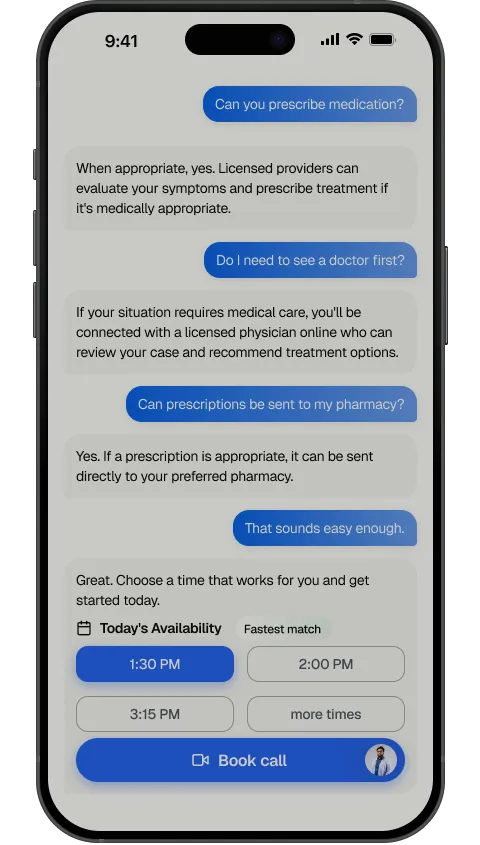
How Meibomian Gland Dysfunction Treatment Works at Doctronic

Chat With The #1 AI Doctor
Doctronic answers your health questions with personalized medical insights and helps our doctors create a better treatment plan for you.

Meet With a Licensed Doctor For Treatment
Book a $39 telehealth appointment (or copay) within 30 minutes. Our doctors create personalized treatment plans with prescriptions when needed.

Pick Up Your Prescription
Our doctors prescribe non-controlled medications in all 50 states and send prescriptions to your pharmacy for same-day pickup.
Pricing that won't make you sick
Chat for free, see an online doctor for $39/visit, or refill a prescription online for as low as $0
-
 Available in all 50 states + DC
-
 Insurance accepted

- 24/7 medical care Free
- Specialist referrals Free
- Lifelong health record Free
- Unlimited questions Free
- Prescription refills Starting as low as $0
- Video visit with real doctors $39/visit
These are stories from real users who turned to Doctronic for answers when it mattered most.
- Preparing for a doctor visit
- Finding peace of mind
- Understanding a diagnosis
- Managing chronic illness
- Navigating healthcare
- A second opinion
- Improving health








Frequently asked questions
Meibomian gland dysfunction (MGD) occurs when the small oil glands along the eyelid margins become blocked or produce poor-quality secretions. This disrupts the lipid layer of the tear film, causing tears to evaporate too quickly. Common contributing factors include age, rosacea, blepharitis, contact lens use, low blinking rates associated with screen time, and certain systemic medications.
People with MGD often experience chronic dry, gritty, or burning eyes, eyelid margin redness or thickening, crusting or foamy discharge along the lashes, blurred vision that clears with blinking, and sensitivity to light. Symptoms are frequently worse in dry or windy environments and after prolonged screen use.
Diagnosis is typically based on symptoms and a clinical examination of the eyelid margins, looking for signs such as plugged gland openings, thickened secretions, and eyelid margin inflammation. Tear film evaluation and assessment of tear breakup time may also be used to gauge severity.
Prescription options include oral doxycycline for its anti-inflammatory effect on meibomian glands, topical cyclosporine (Restasis) or lifitegrast (Xiidra) eye drops to reduce ocular surface inflammation, and short-term topical corticosteroids in some cases. These are often combined with at-home warm compresses and eyelid hygiene.
Yes. Warm compresses applied to the closed eyelids for at least 10 minutes help soften inspissated (thickened) meibum so it can flow more freely. Gentle eyelid massage after warming can further improve gland secretion. This is a foundational part of MGD management regardless of whether prescription treatment is also used.
MGD is generally a chronic condition that requires ongoing management rather than a one-time cure. However, with consistent treatment including eyelid hygiene, warm compresses, and appropriate prescription therapy, most patients experience significant symptom relief and can maintain comfortable, stable eye health over the long term.
Doctronic uses an AI-guided evaluation to gather your symptom history and relevant medical information. A licensed physician then reviews your case, confirms whether MGD treatment is appropriate, and creates a personalized treatment plan. The entire process is designed to be thorough, convenient, and clinically sound.
Yes. Doctronic works only with licensed physicians who review every case individually. The platform is HIPAA-compliant, and all treatment decisions are doctor-reviewed and audited for safety. Doctronic is available to adults 18 and older in any U.S. state.
Top Conditions We Can Help With
People turn to Doctronic and our licensed medical team for support with all types of conditions.