
Warts on Hands: Causes, Treatment, and When They Need Medical Attention

Medically reviewed by Alan Lucks | MD, Alan Lucks MDPC Private Practice - New York on May 24th, 2026.
Published on April 17th, 2026. Updated on July 23rd, 2026.
Key takeaways
Hand warts are caused by human papillomavirus (HPV) strains that enter through small cuts, abrasions, or softened skin, making any break in the skin a potential entry point
Common warts appear as rough, dome-shaped growths on the backs of fingers and knuckles; periungual warts cluster around nail edges and can disrupt nail growth over time
Over-the-counter salicylic acid is the most evidence-supported at-home treatment and requires consistent daily application over weeks to months
Professional treatments including cryotherapy, laser therapy, and prescription-strength chemical agents offer faster clearance than home remedies for persistent or widespread warts
Most hand warts in otherwise healthy people resolve on their own within two years, but addressing the skin conditions that allowed entry reduces recurrence
Doctronic.ai offers free AI consultations and affordable telehealth visits to evaluate hand warts and guide treatment decisions
What Causes Hand Warts and Why Do They Develop
Hand warts rank among the most common dermatological conditions affecting people of all ages, yet most people do not realize how straightforward the mechanism of infection is or how effectively simple interventions can interrupt it. Warts on the skin are caused by HPV infecting the outer layer of the skin, where it triggers abnormal cell proliferation that forms the visible growth. The virus is extraordinarily common, highly contagious through direct contact, and exploits any disruption to the skin's protective barrier to establish infection.
Understanding what warts are, how they spread, and when they warrant medical attention shifts the response from frustration to informed management. Most hand warts respond to available treatments. Those that do not generally have straightforward explanations, and professional intervention closes the gap.
Understanding Warts and Their Causes
The Role of Human Papillomavirus (HPV)
More than 100 strains of HPV exist, and the strains responsible for common hand warts are distinct from the strains associated with genital or cervical lesions. HPV types 1, 2, 4, and 7 cause the majority of hand and finger warts. Once the virus enters the skin through a break in the surface, it integrates into keratinocyte cells in the epidermis and triggers accelerated cell turnover. The resulting rough, elevated growth is the visible product of this disrupted cellular growth pattern.
HPV does not penetrate intact skin reliably. The virus requires a pathway in, which is why warts cluster in areas prone to cuts, hangnails, bitten skin around nails, or excessive moisture softening the barrier. A person with a habit of picking at hangnails or biting fingernails creates repeated entry points that dramatically increase their susceptibility to wart development relative to someone with intact skin.
How Warts Spread on Hands and Fingers
HPV transmission from warts requires direct contact with the virus, either from an infected person's skin, a shared surface the virus has contaminated, or a person's own existing wart spreading to adjacent skin. The virus can survive for brief periods on surfaces, making gym equipment, towels, and shared tools potential vectors when skin-to-skin contact is unavoidable. Autoinoculation, spreading from one location on your own body to another through touch, is the most common mechanism behind multiple warts appearing on the same hand.
Children and young adults develop warts more frequently than older adults, likely reflecting a combination of less-developed immune memory to the specific HPV strains and greater exposure through communal activities. People who work in environments requiring repeated hand washing or prolonged water exposure have chronically disrupted skin barriers that raise infection risk even with normal hygiene habits.
Common vs. Periungual Warts
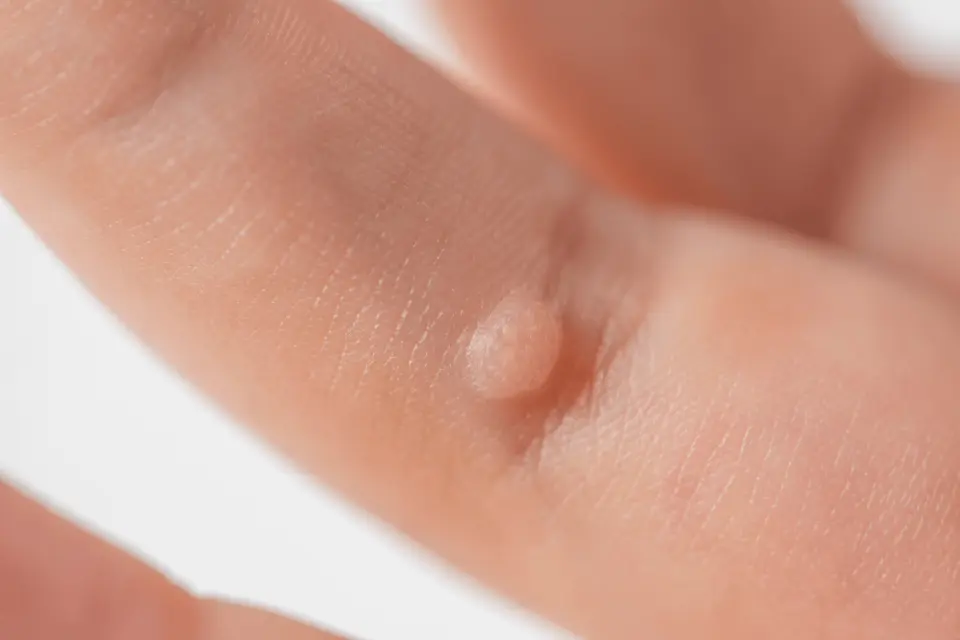
Common warts form on the backs of the hands, knuckles, and fingers. They present as firm, rough growths with a cauliflower-like surface texture, ranging from a few millimeters to over a centimeter in diameter. Multiple warts often cluster in the same region because the virus spreads readily between adjacent skin areas during routine hand contact.
Periungual warts develop around or under the nail plate and are notably more difficult to treat than common hand warts. Their location beneath the nail edge limits penetration of topical treatments and provides mechanical protection for the wart tissue. Periungual warts can lift the nail plate, disrupt normal nail growth, and cause persistent discomfort during tasks requiring finger pressure. These features make professional evaluation and treatment more appropriate than home management for periungual warts that persist beyond a few months.
Identifying Symptoms and Appearance
Physical Characteristics of Hand Warts
Hand warts typically appear as elevated, firm growths with a rough, irregular surface that interrupts the normal skin line pattern. Unlike smooth, flat moles or skin tags, warts have a distinct textural quality from the disrupted keratinocyte architecture. The color ranges from flesh-toned to grayish-white, and the edges are generally well-defined without blending gradually into surrounding skin.
Pressing directly on a wart typically produces only mild discomfort or none at all, which distinguishes them from cysts or deeper nodules that may be tender to palpation. This feature also explains why most people tolerate warts on the back of the hand without significant functional impairment, while warts on the palm or fingertip pad cause more notable discomfort with grip and fine motor tasks.
Black Dots in Warts and What They Mean
Many warts display small black dots visible on their surface, which people commonly describe as seeds. These are not seeds or embedded foreign material. The black dots are the thrombosed, clotted ends of tiny blood vessels called capillary loops that grew into the wart tissue to support its development. These capillaries run vertically up into the wart and become visible at the surface as dark specks when viewed against the lighter surrounding growth.
The presence of these black dots is actually a useful identifying feature that distinguishes common warts from other similar-appearing skin growths. Corns and calluses, which can look superficially similar on finger and palm areas, do not contain these capillary loops and will not display black dots on their surface. Dermatologists use this distinction as part of the clinical evaluation when a growth's identity is uncertain.
At-Home Treatment Options
Salicylic Acid Preparations
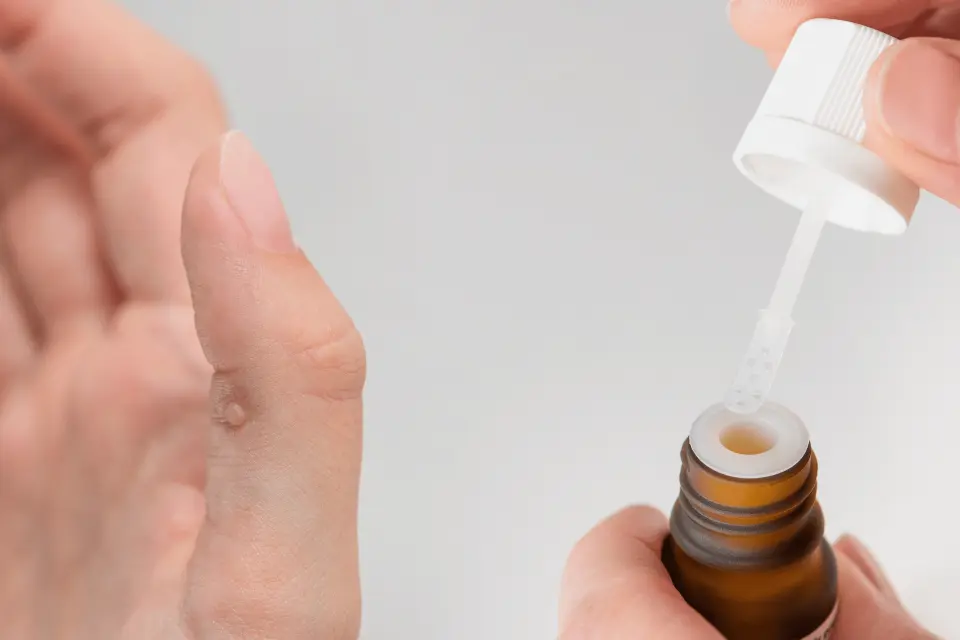
Salicylic acid is the most widely available and evidence-supported first-line treatment for hand warts. It works by chemically disrupting the wart tissue through keratolysis, the breakdown of the abnormal keratin cells making up the growth. Consistent application gradually removes the wart layer by layer while also potentially triggering an immune response that accelerates clearance. Products containing 17 percent salicylic acid are available as gels, liquids, and medicated pads at standard pharmacies.
Effective use requires preparation and consistency. Before application, soak the wart in warm water for five minutes to soften the tissue, file the dead surface with an emery board or pumice stone, then apply the solution and allow it to dry. Daily treatment over six to twelve weeks is typically necessary for complete resolution. Skipping applications interrupts the process and extends the timeline significantly.
Duct Tape Occlusion Therapy
Duct tape applied continuously over a wart and changed weekly has been used as a home remedy based on the premise that occlusion causes tissue maceration and may stimulate a local immune response. Evidence is mixed, with some studies showing modest benefit and others showing no significant advantage over placebo. When tried, the method involves cutting a piece of duct tape to cover the wart, leaving it in place for six days, soaking and filing the tissue on day seven, leaving the wart exposed overnight, then reapplying. This cycle is repeated for up to two months.
The low risk profile makes duct tape a reasonable option to attempt alongside or before salicylic acid for people who want to exhaust simple approaches first. It is generally less effective as a standalone treatment for warts that have been present for over a year or for periungual locations where consistent tape adhesion is difficult to maintain.
Over-the-Counter Freezing Kits
Consumer cryotherapy products use dimethyl ether and propane to deliver freezing temperatures to wart tissue, creating cellular damage that ideally triggers immune clearance. These products reach temperatures lower than zero degrees Celsius but substantially warmer than the liquid nitrogen used in clinical cryotherapy. Their effectiveness is correspondingly lower than professional treatment, particularly for thicker warts or periungual lesions where the wart tissue extends beneath accessible surface.
Proper use involves holding the applicator tip directly on the wart for ten to forty seconds depending on product instructions, then allowing a rest period of one to two weeks before repeating. Multiple treatments are usually needed. Freezing kits cause temporary stinging and may produce a blister at the treatment site as the damaged tissue responds. Persistent blistering or signs of spreading inflammation suggest discontinuing and consulting a provider.
Talk to a doctor about warts
Connect with a licensed doctor online to talk through your symptoms, understand your treatment options, and find out which medications may be available through telehealth.
- $39 video visit
- Insurance accepted
- 4.8 on Trustpilot
Professional Medical Procedures
Cryotherapy with Liquid Nitrogen
Clinical cryotherapy applies liquid nitrogen at approximately negative 196 degrees Celsius directly to the wart through a spray tip or cotton-tipped applicator. This creates a freeze-thaw cycle that destroys wart cells through ice crystal formation and induces an inflammatory immune response that contributes to clearance. The advantage over OTC freezing products is the depth and reliability of tissue destruction, which reaches the capillary loops feeding the wart rather than only surface layers.
Wart treatment methods including professional cryotherapy typically require two to four sessions spaced two to four weeks apart for complete clearance. Each session produces a blister that resolves over seven to ten days as the treated tissue separates. The procedure causes moderate stinging or burning during application and a throbbing sensation for several hours afterward. Scarring is uncommon when technique is appropriate.
Laser Treatment and Electrosurgery
Pulsed dye laser therapy targets the blood vessels supplying the wart rather than the wart tissue directly. By destroying the capillary loops that support the growth, laser treatment starves the wart of its blood supply and triggers immune clearance. Pulsed dye laser is particularly effective for warts that have not responded to cryotherapy or salicylic acid, and it causes less scarring than ablative techniques. Multiple sessions are generally required.
Electrosurgery involves burning wart tissue with an electric current through a probe or wire loop. It is more commonly used for resistant cases and carries a higher risk of scarring than cryotherapy or laser approaches. Both laser and electrosurgery are performed under local anesthesia in a dermatology office and produce a treated wound that requires standard wound care during healing.
Prescription-Strength Chemical Peels
Topical immunotherapy using agents such as topical 5-fluorouracil, imiquimod, or cantharidin is reserved for warts that have not responded to physical destruction methods. Cantharidin is applied in-office and causes blister formation under the wart, lifting it away from normal skin. Imiquimod stimulates local immune activity against HPV-infected cells. These approaches work through mechanisms distinct from freezing or burning and are most useful in people with immune-competent responses who have simply not cleared the virus with other treatments.
When to Consult a Healthcare Professional
Signs of Infection or Inflammation
A wart that becomes increasingly red, warm, swollen, or begins draining fluid is showing signs of secondary bacterial infection that require medical attention. The wart itself is a viral growth that does not typically produce purulent drainage; any drainage from or near a wart site suggests that the disrupted skin has become secondarily infected. Antibiotics may be needed alongside continued wart treatment, and the provider can assess whether the wart or a secondary problem is the primary issue.
Warts that bleed readily from minor contact, grow rapidly over days to weeks, or produce irregular pigmentation should be evaluated to confirm they are not representing a different type of lesion. Rapidly growing or pigmented growths on the hands occasionally represent conditions other than common warts, and clinical evaluation provides certainty.
Warts That Affect Daily Function
Warts on the palm, fingertip pads, or joint surfaces can interfere with grip, fine motor tasks, and handwriting. Children with warts in these locations may avoid using their hands normally for activities that involve pressure. Adults with manual labor jobs or musicians dealing with finger warts face practical limitations from pain during task performance. When a wart's location produces consistent functional impairment, professional treatment rather than watchful waiting is the appropriate course.
Periungual warts that have expanded beneath the nail plate also warrant professional management rather than home treatment. Their position limits OTC product penetration and increases the risk of nail damage if they are not cleared before further expansion. Doctronic.ai telehealth visits allow a provider to assess periungual warts remotely and determine whether in-person treatment is needed. Reviewing common skin bumps by type can help clarify whether a growth is a wart before seeking evaluation.
Distinguishing Warts from Other Skin Growths
Not every rough or raised growth on the hand is a wart. Seborrheic keratoses, actinic keratoses, corns, calluses, and in rare cases squamous cell carcinoma can present with surface features that superficially resemble warts. The presence of black capillary dots, the location pattern, and the history of the growth are useful distinguishing features, but clinical examination and occasionally biopsy provide definitive identification when uncertainty exists.
People who develop a single, rapidly enlarging growth on sun-exposed hand skin, or growths that bleed, crust, and fail to heal over weeks, should seek evaluation rather than treating empirically as warts. Squamous cell carcinoma can arise on the dorsal hand and may be mistaken for a persistent wart without clinical assessment.
Prevention and Long-Term Management
Hygiene Practices to Prevent Recurrence
Warts recur because HPV persists in the surrounding skin even after a visible wart is cleared. Minimizing opportunities for reinfection requires protecting skin integrity and avoiding direct contact with wart surfaces. Washing hands after touching your own wart and avoiding touching others' warts during the active phase of treatment reduces autoinoculation and transmission risk. Not sharing towels, nail clippers, or files that have contacted wart tissue prevents surface-mediated spread.
After successful wart clearance, maintaining the habits that protect skin integrity reduces the likelihood of new HPV infection establishing a second wart. Moisturizing hands to prevent cracking, trimming nails carefully to avoid creating raw cuticle tissue, and wearing gloves during work that involves repeated minor hand trauma all support a durable barrier against viral entry.
Protecting Broken Skin and Cuticles
Cuticle damage is the most consistent risk factor for periungual wart development. Biting fingernails, aggressively pushing back cuticles, and picking at loose skin around the nails all create HPV entry points that are difficult to avoid once the habit is established. Using cuticle oil, wearing gloves during prolonged water exposure, and treating hangnails by trimming rather than tearing reduces the frequency of breaks in periungual skin.
For people who develop warts repeatedly in the same location despite successful treatment, evaluating and addressing the underlying habit or skin condition driving repeated skin barrier disruption is the most effective long-term prevention strategy. Treating warts without addressing the entry mechanism that allowed them to develop often leads to recurrence within months.
Frequently Asked Questions
Yes. HPV is contagious through direct skin-to-skin contact with a wart and through contact with surfaces recently contaminated with the virus. Shaking hands with someone who has an active wart does not guarantee transmission, as intact skin provides protection. Risk increases substantially when the person has small cuts, abrasions, or skin softened by moisture. Covering warts with bandages during activities involving hand contact reduces, but does not eliminate, the risk of transmission.
Most common hand warts in people with normal immune function resolve spontaneously within one to two years. Some clear faster, particularly in children, whose immune systems mount vigorous responses to new HPV strains. Others persist for several years without treatment. Waiting is a reasonable approach for warts that are painless and not spreading, but treatment accelerates clearance and reduces the window during which the wart can spread to adjacent skin or other people.
Common hand warts are not dangerous. They are benign viral skin growths caused by HPV strains entirely unrelated to those associated with cervical or other cancers. They can cause discomfort depending on location, affect appearance, and spread to other areas if untreated. People with suppressed immune systems, including those on immunosuppressive medications or with certain medical conditions, may develop unusually widespread or persistent warts that warrant closer management.
Immune response variability accounts for much of the difference. Some people mount an immune reaction to HPV quickly after initial exposure and clear the virus before a visible wart forms. Others develop warts with each new exposure. Prior wart history is an imperfect predictor because each wart represents a specific HPV strain encounter, and immunity developed against one strain does not fully protect against others. Skin integrity differences, habits that affect barrier function, and frequency of exposure to contaminated surfaces all contribute to individual susceptibility variation.
The Bottom Line
Hand warts are caused by HPV entering through breaks in the skin and are treatable at home with salicylic acid or through professional procedures for persistent cases. Most resolve with time, but treatment accelerates clearance and reduces spread. For guidance on identifying a growth or finding the right treatment approach, Doctronic.ai offers free AI consultations and affordable telehealth visits with licensed doctors available 24/7.
Related articles
Explore treatment options
Chat Now