
Mole Removal: Methods, Costs, and What the Procedure Involves

Medically reviewed by Veronica Hackethal | MD, MSc, Harvard University | University of Oxford | Columbia Vagelos College of Physicians and Surgeons on May 25th, 2026.
Published on April 17th, 2026. Updated on July 24th, 2026.
Key takeaways
There are four main mole removal methods: shave excision, surgical excision, laser removal, and cryotherapy. The right choice depends on the mole's size, depth, and whether cancer is suspected.
Surgical excision is the standard approach for any mole that looks suspicious, because it provides a tissue sample for pathology testing.
Most mole removals take 15 to 30 minutes in a dermatologist's office, and the area is numbed with local anesthesia beforehand.
Recovery ranges from one to two weeks for shave excision to two to four weeks for sutured wounds.
Insurance typically covers removal when it is medically necessary. Cosmetic removal is paid out of pocket.
At-home mole removal products are not safe and risk infection, scarring, and missed cancer diagnoses.
If a removed mole grows back, contact your dermatologist promptly. Full removal rarely leads to regrowth.
Doctronic.ai connects you with licensed physicians who can evaluate your skin and answer questions about mole removal in a real-time online visit.
What Are Moles, and When Should You Have One Removed?
Most adults have somewhere between 10 and 40 moles on their bodies. The majority are harmless, but some warrant closer attention, and a few may need to be removed. Whether your dermatologist flagged a suspicious spot, you have a mole that catches on clothing, or you simply want one gone for cosmetic reasons, understanding the removal process makes the experience far less intimidating.
Moles form when melanocytes (pigment-producing cells) cluster together rather than spreading evenly through the skin. Most develop during childhood and adolescence, though new moles can appear in adulthood.
The majority of moles are common nevi: round or oval, a single shade of brown or tan, with defined borders and a diameter smaller than a pencil eraser. These are benign and require no treatment.
Atypical or dysplastic nevi look different. They tend to be larger, have irregular or notched borders, and may contain multiple colors within a single mole. These moles carry a higher risk of developing into melanoma compared to common moles, which is why dermatologists monitor them closely.
The ABCDE rule helps identify warning signs worth discussing with a doctor:
Asymmetry: one half does not match the other
Border: edges are ragged, notched, or blurred
Color: multiple shades of brown, black, red, white, or blue in one mole
Diameter: larger than 6 mm (about the size of a pencil eraser)
Evolving: any change in size, shape, color, or new symptoms like bleeding or itching
Any mole that meets one or more of these criteria should be evaluated. Beyond medical necessity, removal is also appropriate when a mole is in a location that causes repeated irritation, such as under a bra strap, collar, or waistband.
The Four Mole Removal Methods
Shave Excision
A dermatologist uses a thin surgical blade to shave the mole level with the surrounding skin. No deep incision is made, and no stitches are required. The wound heals on its own, typically within one to two weeks.
Shave excision is best suited for raised, benign moles. It is not appropriate when cancer is suspected, because the technique does not remove deep tissue and cannot provide a complete tissue sample for pathology.
Surgical Elliptical Excision
The mole is cut out with a scalpel in an oval (elliptical) shape, along with a margin of one to three millimeters of surrounding healthy tissue. The wound is closed with stitches and heals into a linear scar. The removed tissue is sent to a pathology lab for analysis.
This is the standard approach whenever a mole looks atypical or cancer is a concern, because it provides a full tissue sample and clear margins. Recovery is longer than shave excision, typically two to four weeks.
Laser Removal
A targeted laser beam breaks down the pigment in the mole. This method works only for flat, benign moles and typically requires multiple sessions to achieve complete fading. Because no tissue is removed, it cannot be used when cancer is a possibility. There is no tissue sample available for pathology.
Laser removal tends to cost more per session than other methods, and the total number of sessions needed varies by mole size and skin type.
Cryotherapy
Liquid nitrogen is applied to freeze and destroy the mole tissue. This is generally reserved for small, superficial, benign moles. Like laser removal, it does not produce a tissue sample, so it is not appropriate for suspicious lesions. Healing time is similar to shave excision.
What the Procedure Actually Involves
Before the Appointment
Your dermatologist will examine the mole and may perform skin mapping (a full-body check to document existing moles and identify any unusual findings). If the mole has any atypical features, they will discuss the appropriate removal method and whether a biopsy is needed.
For suspicious moles, a biopsy is often performed first to determine whether full excision is necessary.
During the Procedure
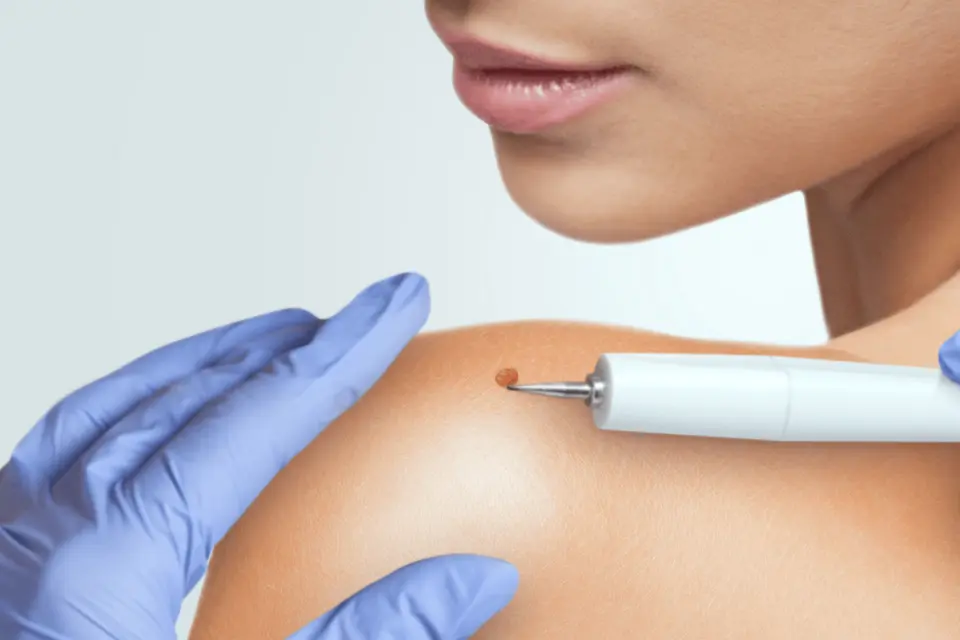
Mole removal is performed in the dermatologist's office. The area is cleaned and numbed with a local anesthetic injection. Most patients feel a brief sting from the injection, but the removal itself is painless. The entire procedure typically takes 15 to 30 minutes.
The dermatologist removes the mole using the appropriate technique, then covers the wound with a bandage. If stitches are placed, you will be scheduled for a follow-up appointment for removal.
For moles sent to pathology, results typically return within one to two weeks. Your dermatologist will contact you with findings and, if needed, discuss next steps.
After the Procedure
Wound care instructions are straightforward:
Keep the area clean, gently washing once or twice daily
Apply a thin layer of petroleum jelly and cover with a bandage
Avoid sun exposure on the healing area
Do not pick at scabs or crusting
For sutured wounds, activity restrictions may be necessary for the first week to prevent reopening the wound.
How Much Does Mole Removal Cost?
Costs range from $150 to $1,500 per mole, depending on the method, facility fees, location, and whether a biopsy and pathology analysis are included. Shave excision is generally the most affordable option, followed by surgical excision, with laser removal typically the most expensive (especially when multiple sessions are required).
Insurance covers mole removal when it is medically necessary, meaning the mole is suspicious or causing a documented medical problem. Cosmetic removal is not covered and must be paid out of pocket. If your dermatologist documents a medical indication for removal, submit the claim before assuming the cost is cosmetic.
A separate pathology fee applies if tissue is sent to a lab. Ask your dermatologist in advance whether pathology is included in the quoted cost.
Can Moles Grow Back After Removal?
A mole that is fully removed rarely grows back. When cells are left behind (which can happen with shave excision if the root extends deeper than the blade reaches), regrowth is possible. In that case, the area may appear lighter or slightly different in color from the original mole.
Any regrowth after removal should be evaluated promptly by your dermatologist, even if it looks benign. Regrowth can occasionally indicate residual abnormal cells.
Why At-Home Removal Is Risky
Mole removal products marketed for home use (including creams, salves, and cauterizing kits) carry significant risks. They can cause infection, permanent scarring, and unpredictable tissue damage. More importantly, they remove the visible portion of a mole without any pathology, which means a cancerous mole could be partially destroyed while leaving abnormal cells deeper in the skin, where they may continue to develop undetected.
If a mole concerns you, a visit to a dermatologist is the appropriate first step.
Frequently Asked Questions
Most mole removals take 15 to 30 minutes from start to finish, including preparation and dressing the wound. The removal itself takes only a few minutes once the anesthesia takes effect.
The local anesthetic injection causes a brief sting, but the removal is painless. Some mild soreness or tenderness is normal in the days following the procedure.
All mole removal methods leave some degree of change to the skin. Shave excision typically leaves a flat, slightly lighter area. Surgical excision leaves a linear scar that fades over time. Proper wound care and sun protection help minimize scarring.
Yes. Mole removal is a routine dermatology procedure. Your primary care physician may also perform simple shave excisions for clearly benign moles, but any suspicious or complex mole should go to a dermatologist.
Shave excision heals in one to two weeks. Sutured wounds from surgical excision take two to four weeks. Following wound care instructions consistently (keeping the area clean, moisturized, and protected from the sun) is the most important factor in recovery time.
Any mole with ABCDE warning signs should be evaluated by a dermatologist. Moles that bleed, itch, change in appearance, or cause physical irritation also warrant a visit.
The Bottom Line
Mole removal is a common, low-risk outpatient procedure with a short recovery. The method your dermatologist recommends depends on the mole's appearance, depth, and whether cancer needs to be ruled out. Surgical excision remains the gold standard for suspicious moles because it provides tissue for pathology. Shave excision, laser, and cryotherapy are appropriate for clearly benign lesions.
If you have a mole you are uncertain about, the safest step is getting it evaluated by a licensed physician before deciding on a course of action. Doctronic.ai lets you connect with a dermatology-trained provider in a real-time visit, so you can get a professional opinion without waiting for an in-person appointment.
Related articles
Get procedure guidance
Chat Now