Diseases and Conditions
Omeprazole Side Effects Timeline: Week by Week Guide
May 17, 2026
5 min read

Medically reviewed by Oghenefejiro Okifo | MD, Harvard Medical School | Henry Ford Hospital - Detroit, MI on April 11th, 2026.
Published on April 9th, 2026. Updated on July 23rd, 2026.
Pain when bending the knee often traces back to increased compressive load on cartilage, the patella, or the meniscus at specific flexion angles.
Patellofemoral pain syndrome, meniscus irritation, patellar tendinitis, bursitis, early osteoarthritis, and Baker's cysts each produce distinct pain patterns that help narrow the cause.
Most cases improve with activity modification, icing, and targeted strengthening, but locking, giving way, or significant swelling warrants prompt evaluation.
Avoid deep squats and high-impact activity until symptoms settle, and focus on quad and hip strengthening to reduce load on the joint.
If your knee pain after bending is not resolving, Doctronic.ai connects you with a licensed clinician for a telehealth knee assessment from home.
Questions about knee pain?
Free. Anonymous. Built by doctors.
Talk to our AI doctor for a clear, personalized read on your situation.
The knee is a hinge joint, but it functions under considerable compressive force the moment flexion begins. At full extension, the patella (kneecap) sits lightly above the femoral groove. As the knee bends past 30 degrees, the patella presses into the groove with increasing force. By 60 degrees of flexion, contact stress across the patellofemoral joint can reach several times a person's body weight. At 90 degrees and beyond, that force peaks.
The meniscus also bears significantly more load during flexion. These two crescent-shaped cartilage pads distribute weight across the tibia. When the knee bends, the menisci are compressed and pushed backward. Repetitive deep bending, sudden pivots, or degenerative changes over time can disrupt this load distribution and cause pain, clicking, or stiffness.
The iliotibial band, a thick connective tissue strip running along the outer thigh, compresses against the lateral femoral condyle at roughly 30 degrees of flexion. This is why people with IT band irritation often feel a sharp pinch at the same point with every bend, whether walking downstairs or rising from a chair.
Understanding these mechanics explains why some knee conditions produce pain only within a specific range of motion rather than throughout the entire movement.
Patellofemoral pain syndrome (PFPS) is one of the most frequent sources of knee pain that worsens with bending. Pain is concentrated at the front of the knee, around or behind the kneecap, and typically flares up during stair climbing, squatting, running, or prolonged sitting with the knee bent (sometimes called "theater sign").
The underlying problem is poor patellar tracking. When the quadriceps or hip stabilizers are weak or imbalanced, the kneecap drifts laterally during flexion rather than gliding cleanly in its groove. This creates uneven cartilage contact and irritation. PFPS often has a gradual onset and affects active people of all ages.
Meniscus problems produce a different pain pattern. Discomfort tends to sit along the inner or outer joint line rather than the front of the knee. A hallmark is a catching or clicking sensation when bending, particularly during transitions from sitting to standing or when rising from a deep squat.
Stiffness after prolonged sitting is also characteristic. Acute meniscus tears usually result from twisting under load, such as a quick change of direction in sport, while degenerative tears develop gradually in middle age and beyond. Both types are aggravated by deep knee flexion because that is when the posterior horns of the menisci are most compressed.
The patellar tendon connects the kneecap to the shinbone. When this tendon becomes inflamed from repetitive stress, pain appears just below the kneecap and worsens with activities that load the extensor mechanism, such as jumping, squatting, descending stairs, and deep lunges.
Patellar tendinitis is common among basketball players, volleyball players, and runners, though it can occur in anyone who repeatedly bends the knee under load. The tendon is often tender to direct palpation, and pain typically lessens with a brief warm-up, then returns after activity stops.
Small fluid-filled sacs called bursae cushion the knee at several locations. The prepatellar bursa sits in front of the kneecap, and the pes anserine bursa sits on the inner side below the joint. Repetitive kneeling, direct impact, or prolonged pressure can inflame either.
Bursitis presents with localized swelling, warmth, and tenderness directly over the bursa rather than deep inside the joint. Bending is painful because flexion compresses the swollen sac. Unlike meniscus pain, bursitis swelling is visible and soft rather than joint-line tenderness.
Osteoarthritis develops when articular cartilage, the smooth lining on bone surfaces inside the joint, wears down. Early knee osteoarthritis often causes stiffness after rest that loosens with gentle movement, a characteristic that helps distinguish it from other causes. Pain during bending is dull and diffuse rather than sharp, and it worsens with prolonged activity and improves with rest.
Knee pain from osteoarthritis is most common in adults over 50, but can appear earlier after prior injury or in people with high mechanical load on the joint. Crepitus, a grinding or crunching sensation during movement, is a frequent finding.
A Baker's cyst is a fluid-filled sac that forms at the back of the knee when excess synovial fluid accumulates, often as a result of another joint problem, such as arthritis or a meniscus tear. The cyst produces a feeling of tightness, pressure, or fullness behind the knee that intensifies when the knee is fully bent or fully extended. Back of knee pain from a Baker's cyst is usually manageable, but large cysts can occasionally rupture, causing sudden pain and swelling in the calf that can mimic a blood clot. If that happens, a medical evaluation is important to rule out deep vein thrombosis.
For most bending-related knee pain that is recent and not associated with red-flag symptoms, these steps address the majority of cases:
Ice after activity. Apply an ice pack wrapped in a thin cloth for 15 to 20 minutes after exercise or any activity that triggers pain. Icing helps limit inflammation and reduce soreness. Avoid applying ice directly to the skin.
Modify activity temporarily. Reduce or avoid deep squatting, kneeling, stair climbing under load, and high-impact activities until acute pain subsides. Shallow range-of-motion movements, like mini squats to 30 to 45 degrees, often remain comfortable and maintain quad activation without aggravating the joint.
Strengthen the quads and hips. Weakness in the quadriceps and hip abductors is a primary driver of patellofemoral stress and IT band irritation. Straight-leg raises, clamshells, side-lying hip abduction, and terminal knee extensions (using a resistance band) are low-load exercises that build the muscles that protect the knee during bending.
OTC anti-inflammatories. Ibuprofen or naproxen sodium, taken as directed, can reduce pain and swelling during flare-ups. These are short-term tools, not substitutes for addressing the underlying cause.
Compression and support. A basic compression sleeve or patellar tendon strap (for tendinitis) can reduce discomfort during activity by improving proprioception and limiting swelling. These are not corrective but can ease day-to-day function.
Most cases of bending-related knee pain improve within a few weeks with the measures above. Seek prompt evaluation if any of the following occur:
The knee locks or gets stuck in a bent position. This is a mechanical symptom suggesting loose tissue or a displaced meniscal fragment within the joint.
The knee gives way or buckles unexpectedly. Sudden instability indicates possible ligament involvement or significant cartilage damage.
Significant swelling appears quickly after an injury. Rapid swelling, especially within the first few hours, can indicate a torn ligament or fracture.
You cannot fully bend or straighten the knee. Loss of range of motion that does not improve within several days warrants imaging and clinical evaluation.
Pain persists beyond two to four weeks despite home care. Chronic or recurring pain that does not follow an expected recovery curve needs a specific diagnosis.
A healthcare provider can assess the knee through physical examination and may order imaging such as X-ray or MRI to identify meniscus tears, ligament damage, cartilage loss, or fluid collections. Understanding knee injuries and disorders can help you frame the right questions before your appointment.
Many bending-related knee problems can be assessed through a telehealth visit. A clinician can review your symptom history, mechanism of onset, pain location, and activity level to determine the most likely diagnosis and guide next steps. They can also determine whether imaging is needed and provide a referral if an in-person evaluation is appropriate.
Doctronic.ai offers on-demand access to licensed physicians who can evaluate knee pain, discuss treatment options, and order diagnostics when necessary.
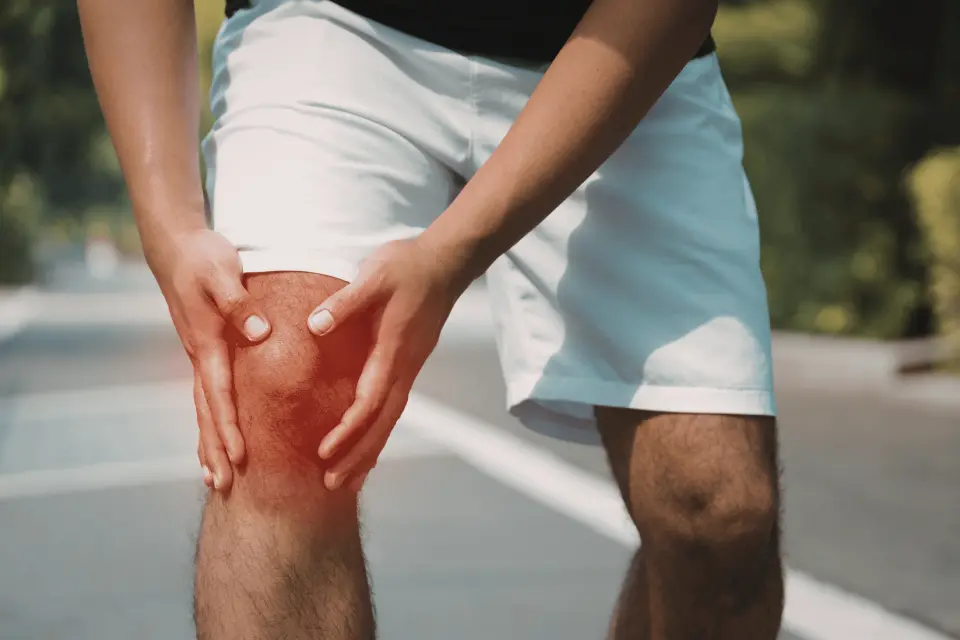
Pain at deeper flexion angles typically involves the posterior meniscal horns or the peak of patellofemoral contact pressure, both of which occur at higher bend angles. Activities like deep squats, kneeling, or sitting cross-legged load these structures the most. A shallow range of motion that avoids the painful arc often allows continued function while recovery proceeds.
Most people can continue low-impact activities such as walking, cycling (with seat height adjusted to limit deep flexion), and swimming. High-impact loading and deep flexion exercises should be avoided until pain settles. If exercise consistently reproduces pain that lasts more than an hour after stopping, reduce intensity or range of motion.
Not always. A soft thud or pop during bending can be gas releasing from joint fluid, which is harmless. A consistent mechanical click accompanied by catching, locking, or pain is more suggestive of a meniscal or cartilage problem and warrants evaluation. Painless clicking without any other symptoms usually does not require treatment.
Timeline varies by cause. Patellofemoral pain and mild bursitis often improve within four to six weeks with activity modification and strengthening. Meniscus irritation can take six to twelve weeks or longer. If symptoms are not progressing after four weeks of consistent home management, professional evaluation helps clarify the diagnosis and whether additional treatment is needed.
It can be, but arthritis is one of several causes and is more likely in people over 50 or with a history of prior knee injury. The distinguishing features of early osteoarthritis are morning stiffness that improves with gentle movement, diffuse aching that worsens with prolonged activity, and crepitus. Younger people with bending pain more commonly have PFPS, tendinitis, or meniscus issues.
Knee pain after bending results from how flexion concentrates force on specific structures: the patella against the femur, the menisci under compressive load, and soft tissue pressing against bony landmarks at predictable angles. Identifying the location and character of your pain helps distinguish patellofemoral syndrome, meniscus irritation, tendinitis, bursitis, arthritis, and Baker's cysts. Most cases respond to ice, targeted strengthening, and temporary activity modification. Locking, giving way, rapid swelling, or pain that does not improve within a few weeks all justify a clinical evaluation. Doctronic.ai provides telehealth access to licensed physicians who can assess your knee, order imaging when appropriate, and guide you toward the right treatment.
Get advice about knee hurts after bending
Chat Now