Diseases and Conditions
Omeprazole Side Effects Timeline: Week by Week Guide
May 17, 2026
5 min read

Medically reviewed by Oghenefejiro Okifo | MD, Harvard Medical School | Henry Ford Hospital - Detroit, MI on May 22nd, 2026.
Published on April 9th, 2026. Updated on July 23rd, 2026.
Inflammatory breast cancer accounts for 1 to 5% of all breast cancer cases in the United States, but it is disproportionately deadly because it is so often mistaken for a skin infection.
Unlike most breast cancers, IBC rarely forms a lump. Instead, it causes rapid changes to the breast skin, including redness, swelling, warmth, and a distinctive orange-peel texture.
The hallmark skin symptom, called peau d'orange, appears when cancer cells block lymph vessels just beneath the skin surface, causing fluid to build up and the skin to dimple.
Because IBC grows quickly and spreads to lymph nodes early, most cases are diagnosed at stage III or IV, making prompt recognition critical.
If breast skin changes do not improve within one to two weeks of antibiotic treatment, or if no infection is diagnosed but symptoms persist, a biopsy is the necessary next step.
Doctronic.ai offers telehealth consultations for an initial assessment of breast skin changes, helping you determine whether urgent evaluation is needed.
Inflammatory breast cancer, or IBC, is a rare but aggressive form of breast cancer that behaves very differently from the disease most people picture when they hear the words "breast cancer." It does not start as a small, localized tumor that grows slowly over the years. Instead, it spreads rapidly through the breast tissue and often reaches the lymph nodes before a diagnosis is made.
The name comes from how the breast looks and feels rather than from actual inflammation. Cancer cells infiltrate the lymphatic vessels that run through the breast skin, blocking the flow of lymph fluid. That blockage causes the overlying skin to become red, swollen, warm, and thickened, closely mimicking a breast infection. This is the central reason IBC is so frequently misdiagnosed.
IBC accounts for roughly 1 to 5% of all new breast cancer diagnoses each year, but it accounts for a much larger share of breast cancer deaths relative to its incidence. It tends to affect younger women than other breast cancers, and it occurs more frequently in Black women, though the reasons for that disparity are not fully understood.
Most breast cancers begin as a single cluster of abnormal cells that forms a palpable mass. Mammograms, ultrasounds, and self-exams are designed to find those masses. IBC spreads in sheets through the skin's lymphatic channels and often produces no distinct lump, making standard screening methods far less reliable.
Because lymphatic spread happens quickly, IBC is never staged as stage I or stage II. Every case is classified as at least stage III (locally advanced) at diagnosis, and stage IV when distant metastasis has already occurred. This late-stage presentation is a major reason IBC carries a worse prognosis than most other breast cancer types.
Symptoms often appear over weeks rather than months or years. A breast that looked and felt normal can develop visible, alarming changes within days. Women who notice these changes are sometimes reassured that it is mastitis and sent home with antibiotics. When those symptoms do not resolve, further workup reveals the underlying cancer. That delay, even of a few weeks, can matter meaningfully in a disease this aggressive.
The skin is where IBC manifests, and knowing what to look for is the most important tool for catching it early.
One of the defining criteria for an IBC diagnosis is erythema, or redness, covering at least one-third of the breast surface. The redness is often described as appearing suddenly and spreading quickly. It may look like a bruise, a rash, or a sunburn. Unlike a small localized rash, IBC-related redness tends to involve large sections of the breast and does not have a clear injury or skin reaction to explain it.
The term peau d'orange is French for "orange peel," and it describes the dimpled, thickened texture that develops when lymph fluid backs up beneath the skin. The skin takes on a pitted appearance, similar to the surface of an orange, because the hair follicles and sweat gland openings become tethered in place as the surrounding tissue swells. This texture is one of the most recognizable signs of IBC and should prompt immediate medical evaluation upon its appearance.
The affected breast often increases noticeably in size as lymph fluid accumulates. One breast becoming significantly larger than the other without a clear cause is worth reporting to a doctor, particularly when swelling develops over a short period.
The skin over the affected area typically feels warm or even hot to the touch. This warmth is a direct result of the inflammatory process triggered by lymphatic blockage and the underlying cancer, and it contributes to why IBC is so often confused with mastitis or cellulitis.
The breast may be tender, sensitive, or outright painful. Pain is not always present, but when it accompanies the other skin changes described here, it adds urgency to seeking evaluation.
Cancer cells invading the tissue beneath the nipple can cause the nipple to retract inward, pointing into the breast rather than outward. Nipple discharge may also occur. A newly inverted nipple in an adult who has not had prior changes in that breast is a symptom that warrants medical attention regardless of other findings.
Beyond the orange-peel texture, the skin itself may feel thickened and rigid, almost leathery in some cases. This change is a result of chronic lymphatic obstruction and tissue remodeling.
Because the symptoms of IBC overlap with those of breast infections, diagnosis requires clinical evaluation, imaging, and tissue sampling.
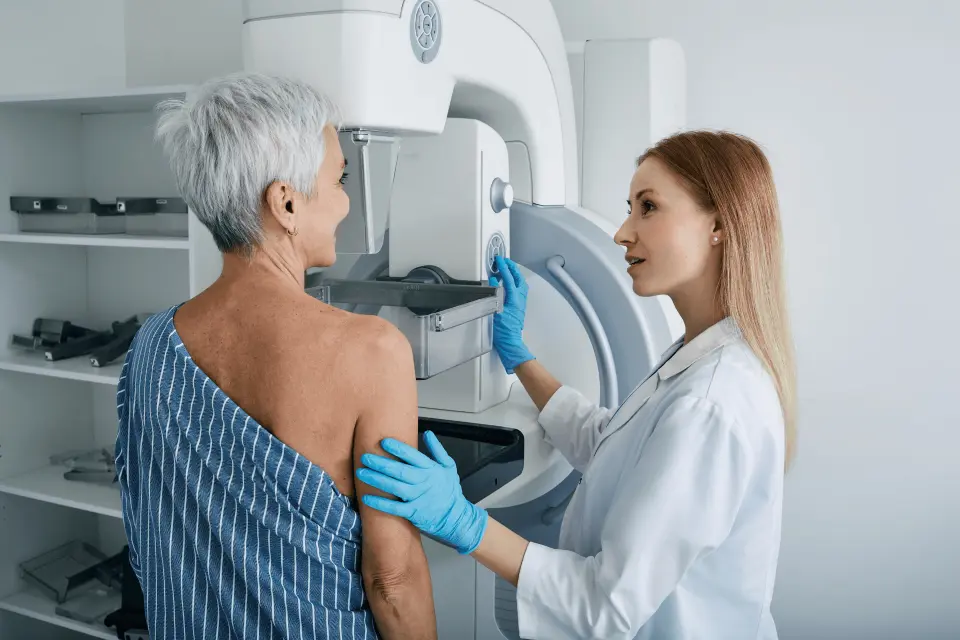
Mammography may show skin thickening, but the breast may appear relatively normal in IBC because there is often no discrete mass. Ultrasound is useful for assessing skin changes and lymph nodes. MRI provides the most detailed picture of how far the cancer has spread through the breast tissue.
The definitive diagnosis requires a biopsy. A small piece of skin and underlying tissue is examined under a microscope for cancer cells in the dermal lymphatic vessels. Blood tests and body imaging determine whether the cancer has spread beyond the breast. Because IBC is always diagnosed at stage III or higher, the staging workup is thorough from the start.
IBC is treated differently from most breast cancers, and the sequence of therapies matters.
Surgery is not the first step. Treatment begins with neoadjuvant chemotherapy (chemotherapy given before surgery) to shrink the disease in the breast and lymph nodes, kill circulating cancer cells, and assess how the cancer responds to treatment.
After chemotherapy, surgery follows. The standard procedure is a modified radical mastectomy, removing the entire breast along with the axillary lymph nodes. Breast-conserving surgery is generally not appropriate, given how diffusely IBC spreads.
Radiation therapy then targets the chest wall and nearby lymph nodes to reduce the risk of local recurrence. Depending on the molecular characteristics of the cancer, HER2-targeted agents or hormone-blocking therapies may be added to the regimen.
Five-year survival rates for IBC are lower than for most other breast cancer types, primarily because of the advanced stage at diagnosis. Outcomes have improved as treatment protocols have been refined, but IBC remains a serious diagnosis.
What makes a measurable difference is the speed of the process from symptom onset to diagnosis. Every week of delay can change outcomes. Women told their breast symptoms are an infection but whose symptoms do not improve need to push for further evaluation rather than waiting through multiple rounds of antibiotics.
Knowing that breast cancer can present as a skin change rather than a lump, and knowing which changes to watch for, is what allows people to seek care early enough to matter.
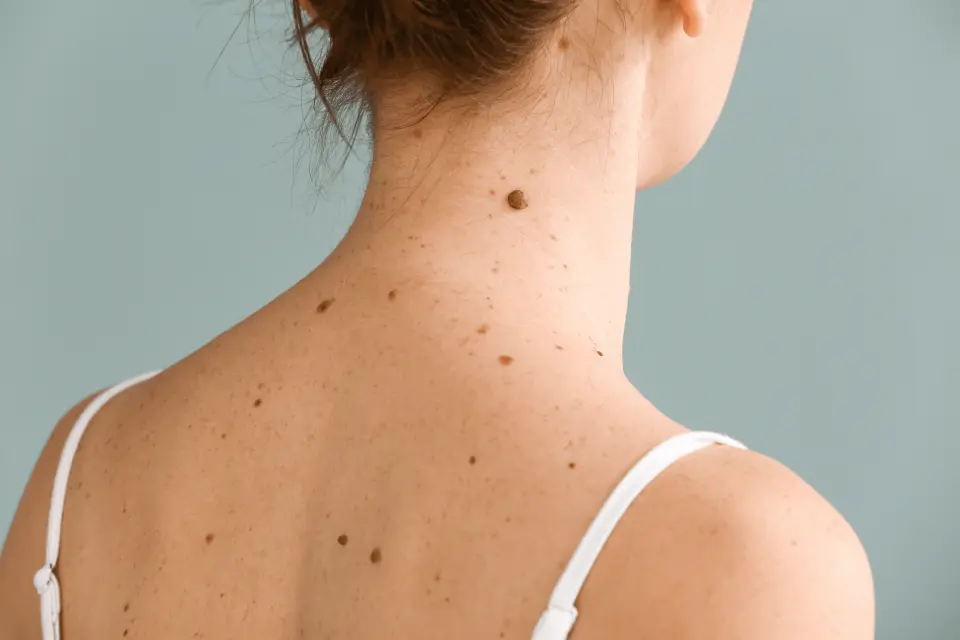
The same principle applies to other cancers: understanding early-stage melanoma shows how visible skin changes are often the first warning of a serious underlying condition.
Any of the following warrants a prompt medical appointment:
Redness covering a significant portion of one breast
Breast skin that develops a pitted, orange-peel texture
One breast becoming noticeably larger, heavier, or warmer without explanation
A nipple that inverts when it was not previously inverted
Breast skin that thickens and feels different to the touch
Breast symptoms that were diagnosed as mastitis or cellulitis but are not improving after one to two weeks of antibiotics
That last point deserves emphasis. A breast infection not responding to antibiotics within one to two weeks should trigger a reassessment, not a second round of the same treatment. Requesting a referral to a breast specialist at that point is entirely appropriate and could be lifesaving.
Yes, though it is rare. IBC is far more common in women, but men have breast tissue and can develop breast cancer, including IBC. Men with persistent breast skin changes or breast swelling should seek medical evaluation.
No. Some people develop only a few of the symptoms described above, particularly in the early days of disease progression. Redness and swelling may appear first, with skin texture changes developing over the following days or weeks. The absence of every symptom does not rule out IBC.
IBC does not appear to be strongly linked to BRCA1 and BRCA2 gene mutations the way some other breast cancers are. Research into genetic factors contributing to IBC is ongoing, but a family history of breast cancer still warrants discussion with a physician about screening.
Mammograms are less reliable for IBC because it often forms no distinct mass. Skin thickening may be visible, but a near-normal mammogram does not rule out IBC when symptoms are present. Ultrasound and MRI are typically more informative.
IBC is considered one of the fastest-progressing forms of breast cancer. Symptoms can appear and worsen over days to weeks. This speed is part of what makes it so dangerous and why the window for early intervention is narrow.
IBC is a subtype of breast cancer, but its behavior is distinct enough that it is classified and treated separately. Standard breast cancer screening recommendations were designed with more common forms of the disease in mind, which is part of why IBC so often goes unrecognized in its early stages.
Inflammatory breast cancer is rare, but the consequences of missing it are severe. Its most important symptoms are visible in the skin, appearing as redness, swelling, warmth, peau d'orange texture, and skin thickening, rather than as the lump most people associate with breast cancer. These changes can develop within days and are frequently mistaken for infections until a biopsy reveals the true cause.
Knowing the signs and acting on them quickly, especially when antibiotic treatment fails to resolve breast skin symptoms, is the most powerful thing anyone can do to improve outcomes with this disease.
If you are experiencing unexplained breast skin changes and want an initial assessment before your appointment, Doctronic.ai connects you with a clinician who can help you understand the next steps and whether urgent evaluation is warranted.
Explore treatment options
Chat Now
Join 50,000+ readers using Doctronic to understand symptoms, medications,
and next steps.
Add your phone number below to get health updates and exclusive VIP offers.
By providing your phone number, you agree to receive SMS updates from Company. Message and data rates may apply. Reply “STOP” to opt-out anytime. Read our Privacy Policy and Terms of Service for more details.
Save your consults. Talk with licensed doctors and manage your health history.