Skin Health
Sun Poisoning Symptoms: How to Tell If Your Sunburn Is Something Worse
March 25, 2026
6 min read

Medically reviewed by Alan Lucks | MD, Alan Lucks MDPC Private Practice - New York on May 23rd, 2026.
Published on April 9th, 2026. Updated on July 23rd, 2026.
Sun poisoning is not actual poisoning. It is a severe form of sunburn with systemic symptoms like nausea, fever, chills, and dehydration.
The most important home treatments are cooling the skin, staying hydrated, and protecting blisters from infection.
Never pop blisters, apply ice directly to skin, or cover burned areas with petroleum jelly.
See a doctor if your fever tops 101 degrees Fahrenheit, blisters cover a large area, or you experience confusion, rapid heartbeat, or signs of heat stroke.
Repeated bouts of severe sun damage raise your lifetime risk of skin cancer and accelerate premature aging.
Doctronic.ai can help you assess your symptoms and decide whether home care is enough or a doctor visit is the right next step.
The name sounds alarming, but sun poisoning is not caused by a toxin. It is what happens when intense ultraviolet (UV) radiation overwhelms your skin's defenses, triggering a full-body inflammatory response. Doctors sometimes call it polymorphic light eruption or severe photodermatitis, depending on the underlying mechanism, but in everyday language, it refers to a sunburn so severe that it affects more than just the surface of your skin.
A typical sunburn causes redness, tenderness, and peeling over one to two days. Sun poisoning goes further. The UV damage is extensive enough that your immune system mounts a systemic response, producing symptoms that feel more like a flu than a skin irritation. This level of sunburn can cause blisters, swelling, and widespread symptoms that may require careful home management or medical attention.
Anyone can develop sun poisoning, but some people are more vulnerable. Fair skin, certain medications (such as antibiotics, diuretics, or retinoids), lupus, and a history of sun damage all increase your risk. High altitudes and reflective surfaces such as water and snow intensify UV exposure, which is why skiers and beachgoers are disproportionately affected.
Sun poisoning shares some features with an ordinary sunburn but also includes systemic symptoms that make it distinct.
Skin symptoms typically include:
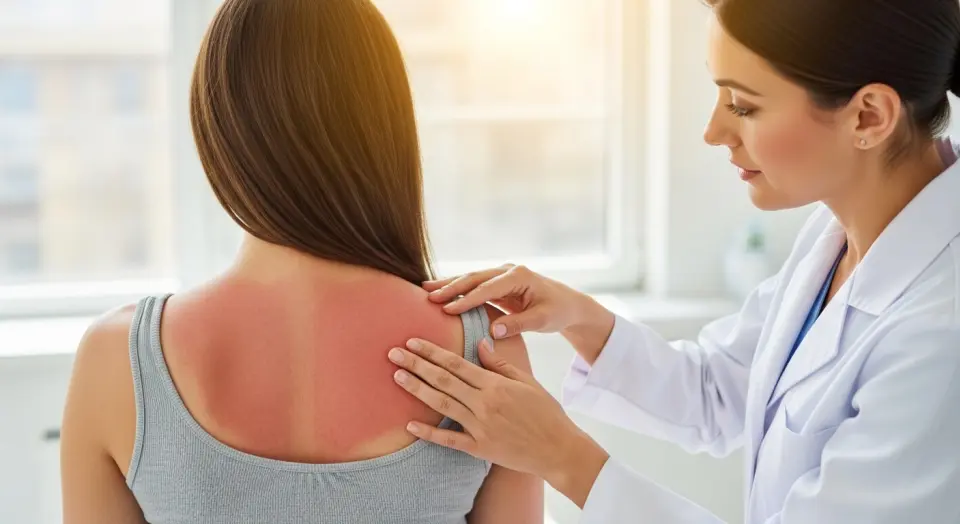
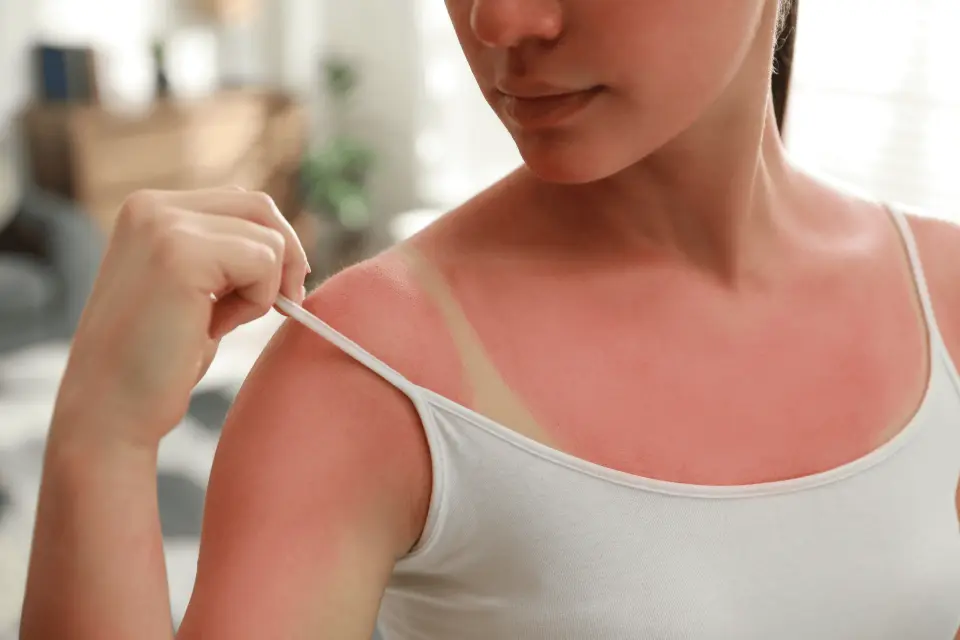
Intense redness covering a large surface area
Swelling, particularly on the face, hands, or feet
Blisters that may be small and clustered or large and fluid-filled
Skin that feels hot and tight to the touch
Peeling that begins within a day or two and can last for a week
Systemic symptoms that go beyond the skin include:
Nausea or vomiting
Fever, often mild but sometimes exceeding 101 degrees Fahrenheit
Chills and shivering even when the skin feels hot
Headache
Dizziness or lightheadedness
Fatigue and general weakness
Dehydration, which compounds every other symptom
If you develop confusion, rapid breathing, or a racing pulse alongside these symptoms, that points toward heat stroke, which is a medical emergency and requires immediate care.
Most cases of sun poisoning can be managed at home if symptoms are moderate and there is no fever above 101 degrees. The goal is to reduce inflammation, protect damaged skin, and restore hydration.
This sounds obvious, but continuing sun exposure when you already have sun poisoning will dramatically worsen the damage. Move to a cool, shaded area or go indoors. Stay out of direct sunlight until the skin has fully healed, which may take 7 to 10 days.
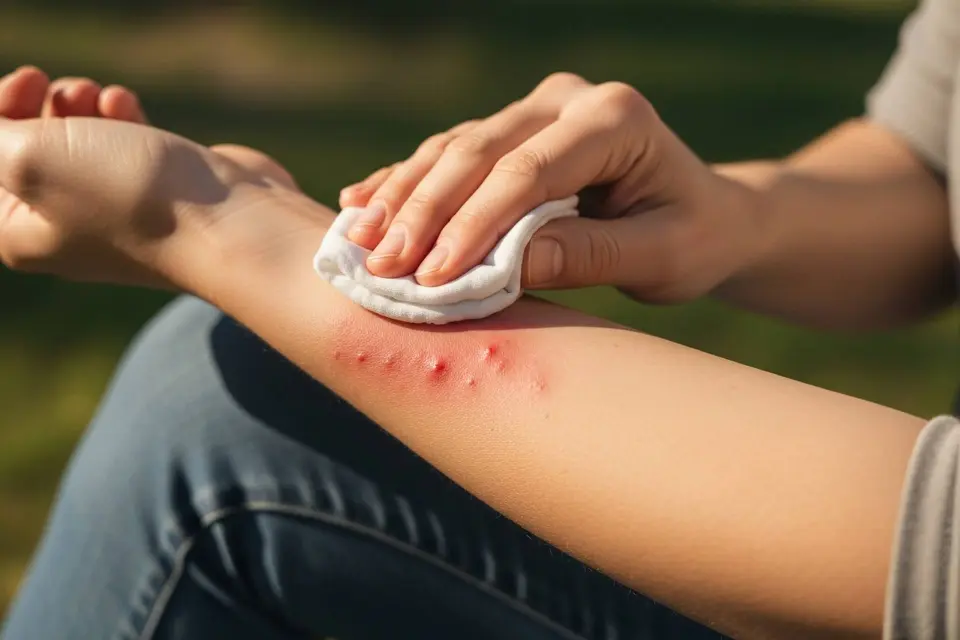
Cool (not cold) water is your best tool for reducing heat in the skin. Take a cool bath or shower for ten to twenty minutes. You can also apply cool, damp cloths to affected areas. Change them as they warm up.
Avoid ice packs or ice water applied directly to the skin. The temperature contrast can cause damage to blood vessels and worsen the inflammatory response.
Sun poisoning depletes fluid through sweating, skin barrier breakdown, and the body's inflammatory response. Water is the most important thing you can drink, but electrolyte drinks can help if you are nauseous or have been sweating heavily. Aim for more fluid intake than you would on a normal day. Avoid alcohol and caffeine, which act as diuretics and make dehydration worse.
Pure aloe vera gel (or a fragrance-free moisturizer containing aloe) helps reduce skin inflammation and provides a soothing barrier on damaged tissue. Apply it liberally to all affected areas as often as needed. Keep the gel in the refrigerator between applications for additional cooling relief.
Over-the-counter anti-inflammatories like ibuprofen or naproxen help reduce both pain and swelling. They are more effective for sun poisoning than acetaminophen because they address the underlying inflammation rather than just blocking pain signals. Start them as early as possible and take them consistently rather than waiting until pain peaks.
As the initial inflammation calms down and peeling begins, apply a gentle, fragrance-free moisturizer to keep the new skin hydrated. Products containing ceramides or hyaluronic acid help restore the skin barrier. Avoid anything with active ingredients like retinol, glycolic acid, or vitamin C until the skin is fully healed.
Several common instincts can worsen sun poisoning. Avoid these:
Popping blisters. Blisters are your skin's way of protecting the damaged tissue underneath from infection. Breaking them prematurely increases the risk of bacterial infection and scarring.
Applying petroleum jelly (Vaseline) to blistered or acutely inflamed skin. It traps heat and blocks the skin from breathing during the acute phase. Save occlusive moisturizers for the peeling phase, once inflammation has subsided.
Using ice or ice water directly on the skin. Sudden cold causes vasoconstriction that can deepen tissue damage.
Going back into the sun before the skin heals. Even incidental exposure through a car window can reactivate inflammation and slow recovery.
Wearing tight clothing over burned areas. Friction on inflamed skin prolongs healing and increases the chance of blistering.
Applying butter, toothpaste, or other home remedies. These are myths with no medical basis and can cause further irritation or infection.
Get sunburn treatment online today
A licensed doctor can review your symptoms and send a prescription to your pharmacy, often the same day.
Related medications we prescribe
Learn moreHome care is appropriate for mild to moderate sun poisoning, but certain symptoms warrant medical attention.
See a doctor promptly if you experience any of the following:
Fever above 101 degrees Fahrenheit that does not come down with OTC medication
Blistering that covers a large portion of your body (more than about 20 percent of your skin surface)
Blisters that appear infected (increased redness at the edges, pus, warmth, or red streaks spreading outward)
Signs of severe dehydration (inability to keep fluids down, dark urine, no urination for eight or more hours)
Confusion, slurred speech, or altered mental status
Rapid heartbeat or difficulty breathing
Fainting or extreme weakness
These symptoms suggest your body is not managing the inflammatory response on its own, or that heat stroke may be developing. Heat stroke is life-threatening and requires emergency care. Call 911 or go to an emergency room if someone becomes confused, loses consciousness, or stops sweating despite high body temperature.
Children, older adults, and people with compromised immune systems or chronic conditions like lupus or diabetes should have a lower threshold for seeking care, even with symptoms that might be manageable in a healthy adult.
A single serious episode of sun poisoning raises your lifetime risk of skin cancer. Repeated UV damage is directly linked to melanoma and non-melanoma skin cancers, as well as premature skin aging, as outlined in guidance on sun exposure risks.
Beyond cancer, severe UV exposure causes structural damage to collagen and elastin, leading to wrinkles, sagging, and uneven pigmentation over time. Each episode of blistering sunburn is cumulative and cannot be undone, which is why prevention matters as much as treatment.
Once you recover, rebuilding your habits around sun safety reduces the chance of a recurrence.
Choose the right sun protection. Mineral sunscreens containing zinc oxide or titanium dioxide provide broad-spectrum UV coverage with lower rates of skin irritation than some chemical formulations. If you have reactive or breakout-prone skin, an acne-safe sunscreen can protect against UV damage without triggering breakouts.
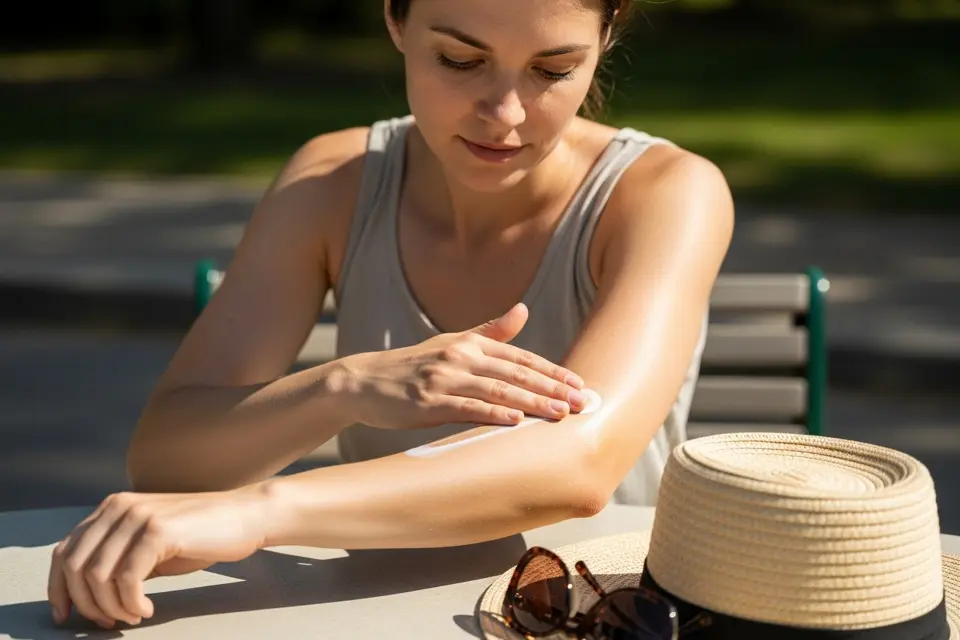
Apply sunscreen correctly. Use a generous amount (about one ounce for full-body coverage), apply it twenty minutes before going outside, and reapply every two hours or immediately after swimming or sweating. Most people apply far less sunscreen than needed to achieve the listed SPF.
Time your exposure carefully. UV radiation peaks between 10 a.m. and 4 p.m. Planning outdoor activities for the early morning or late afternoon significantly reduces your UV load.
Wear protective clothing. Long-sleeved shirts, wide-brimmed hats, and UV-blocking sunglasses provide physical protection that no sunscreen can fully replicate. UPF-rated clothing is specifically designed to block UV radiation.
Be aware of medications. Antibiotics, diuretics, and certain acne medications can increase photosensitivity. Check with your doctor or pharmacist if you take any of these regularly before spending extended time outdoors.
No, but the two conditions can occur together. Sun poisoning is primarily a severe inflammatory skin reaction caused by UV radiation. Heat stroke is a failure of the body’s temperature regulation system, typically involving a core body temperature above 104 degrees Fahrenheit and neurological symptoms like confusion. Both are serious, but they have different mechanisms. If someone with sun poisoning develops confusion, stops sweating, or has a very high fever, heat stroke may be occurring simultaneously and requires emergency care.
Mild to moderate sun poisoning typically resolves within three to five days, with peeling continuing for up to a week afterward. Severe cases with significant blistering or systemic symptoms can take ten to fourteen days to fully resolve. Fatigue and skin sensitivity may linger even after visible symptoms clear.
Yes. Clouds block some visible light but not most UV radiation. Up to 80 percent of UV rays pass through cloud cover, which is why burns on overcast days catch people off guard. Reflective surfaces like water, snow, and sand also amplify UV exposure regardless of cloud cover.
Urgent care is appropriate for a fever below 103 degrees Fahrenheit, moderate blistering, or worsening symptoms despite home treatment. The emergency room is the right choice if you suspect heat stroke, are unable to keep fluids down, have a very high fever, or experience confusion, rapid heartbeat, or fainting.
Over-the-counter hydrocortisone cream (1 percent) can help reduce itching and mild inflammation during recovery, but it should not be applied to open blisters or broken skin, where it increases infection risk. It is most useful during the peeling phase when itching tends to peak.
Sun poisoning is more serious than a typical sunburn, but most cases respond well to prompt, consistent home care. Cool the skin, stay hydrated, protect blisters, and give your body time to recover. Know the warning signs that call for a doctor, especially fever above 101 degrees Fahrenheit, widespread blistering, and any signs of heat stroke. And once you're healed, invest in better sun protection habits to prevent a repeat episode.
If you are unsure whether your symptoms need medical attention, Doctronic.ai can help you evaluate what you are experiencing and guide you toward the right level of care.
Get personalized health advice
Chat Now