
How to Treat Heat Rash: Quick Relief for Every Severity Level

Medically reviewed by Alan Lucks | MD, Alan Lucks MDPC Private Practice - New York on May 23rd, 2026.
Published on April 9th, 2026. Updated on July 23rd, 2026.
Key takeaways
Heat rash comes in three forms based on how deep the sweat duct blockage goes, and each type responds to a different level of treatment.
Mild heat rash (miliaria crystallina) usually clears on its own within hours once you cool down and remove tight clothing.
Moderate heat rash (miliaria rubra) benefits from calamine lotion, 1% hydrocortisone cream, and antihistamines to control itching.
Severe heat rash (miliaria profunda) requires a medical evaluation because it can interfere with your body's ability to regulate temperature.
Signs of infection, including pus-filled blisters, spreading redness, or fever, mean it's time to contact a doctor rather than continue home treatment.
Doctronic.ai gives you a private, on-demand way to describe your symptoms and get guidance on whether your heat rash needs a prescription or professional evaluation.
What Kind of Heat Rash Do You Have?
Not all heat rash is the same, and the right treatment depends on which type you have. Heat rash develops when sweat ducts become blocked, trapping perspiration beneath the skin. The depth of the blockage determines the appearance, the level of discomfort, and how aggressively it needs to be treated.
Miliaria Crystallina (Mild)
Miliaria crystallina is the most superficial form. The blockage sits in the outermost skin layer, producing tiny, clear, fluid-filled blisters that look like small dewdrops. They rarely itch and typically resolve within a day or two with no treatment beyond cooling down. This form is most common in newborns and people who are bedridden or who have recently moved to a hot climate.
Miliaria Rubra (Moderate)
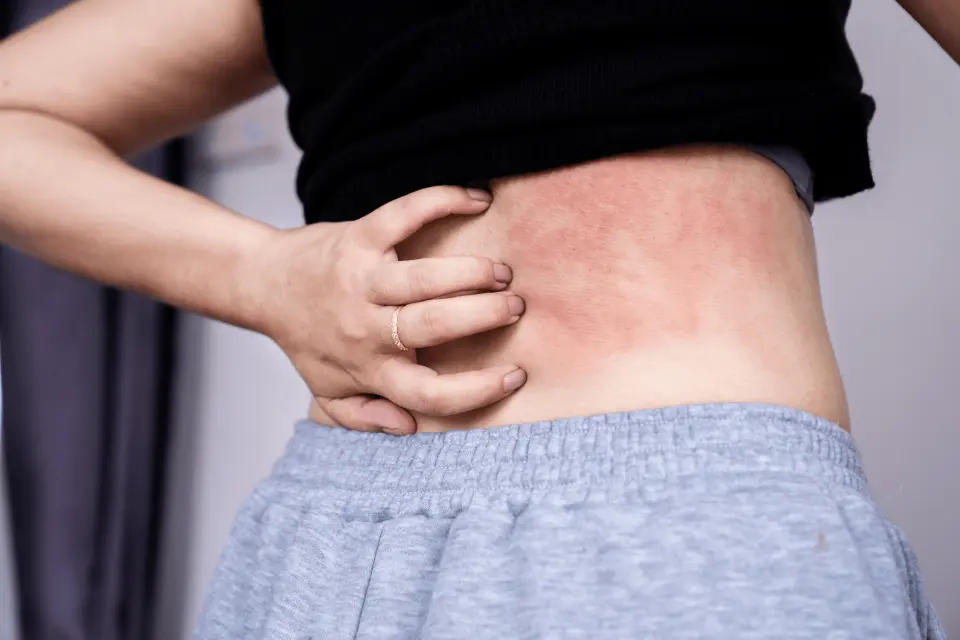
Miliaria rubra, often called prickly heat, is the most common form in adults. The blockage sits deeper in the outer layer of skin, producing red, itchy, sometimes stinging bumps without clear fluid. The prickling sensation can be intense, especially in continued heat. This is the type most people mean when they say they have heat rash.
Miliaria Profunda (Severe)
Miliaria profunda is less common but more serious. The blockage occurs in the deeper dermis, and the resulting bumps are flesh-colored, firm, and relatively large. They do not itch intensely, but the condition is dangerous because it blocks sweat production over a wide area, reducing your body's ability to cool itself. People who develop miliaria profunda have often had repeated episodes of miliaria rubra. This form requires a medical evaluation rather than home care.
Treating Mild Heat Rash (Miliaria Crystallina)
Mild heat rash generally needs nothing more than removing the conditions that caused it.
Get out of the heat and into an air-conditioned space or a cool, shaded area. If possible, take a cool (not cold) shower to lower your skin temperature. Gently pat dry rather than rubbing, since rubbing can rupture the blisters and introduce bacteria.
Switch to loose, lightweight, breathable clothing made from cotton or moisture-wicking fabric. Synthetic fabrics and tight waistbands trap heat and sweat against the skin, which is what caused the problem in the first place.
The blisters from miliaria crystallina usually disappear within a few hours to a day once the heat and friction are removed. No creams or medications are needed for this form unless symptoms persist beyond a couple of days.
Treating Moderate Heat Rash (Miliaria Rubra)
Miliaria rubra takes more effort to manage because of the inflammation and itching involved. A layered approach works best for heat rash treatment at this level.
Step 1: Cool the Skin
The same cooling steps apply here: get to a cooler environment, take a lukewarm shower, and switch to breathable clothing. Until you stop sweating in the affected area, the rash will not improve, regardless of what you apply to it.
A cool, damp cloth held against the rash for ten to fifteen minutes at a time can provide temporary relief from the prickling sensation. Repeat this several times a day as needed.
Step 2: Apply Calamine Lotion
Calamine lotion is a time-tested option for itchy skin conditions. It contains zinc oxide and ferric oxide, which create a mild astringent and cooling effect that reduces the urge to scratch. Apply a thin layer to the affected area after the skin is dry. It goes on pink and dries to a light coating that feels cool on the skin. You can reapply it three to four times a day.
Avoid thick, greasy moisturizers and heavy creams like petroleum jelly or cocoa butter. These feel soothing in the moment, but they trap heat and seal in sweat, which worsens the blockage that caused the rash.
Step 3: Use 1% Hydrocortisone Cream if Needed
Over-the-counter 1% hydrocortisone cream reduces inflammation when itching is intense, or the rash has not improved after a couple of days on calamine alone. Apply a thin layer once or twice daily and limit use to one week unless a doctor advises otherwise. Avoid applying it to the face unless a provider has recommended it.
Step 4: Consider an Oral Antihistamine for Nighttime Itching
If itching is disrupting sleep, a first-generation antihistamine like diphenhydramine (Benadryl) can help. Its drowsiness may be useful at night. Non-drowsy options like cetirizine or loratadine work better during the day. Antihistamines do not treat the rash itself, but they reduce the itch-scratch cycle that leads to broken skin and infection.
What to Avoid
Several things people try for heat rash actually make it worse.
Heavy, occlusive creams and oils prevent the skin from breathing and can extend the duration of the rash by keeping sweat ducts blocked. Rubbing the rash vigorously, whether with a washcloth or while applying lotion, can break the skin and introduce bacteria. Tight, synthetic clothing prolongs the heat and friction that drive the rash. Exercising in the heat before the rash has resolved keeps sweat production high and allows the blockage to continue.
Treating Severe Heat Rash (Miliaria Profunda)
Miliaria profunda cannot be managed at home the same way milder forms can.
The primary intervention is complete removal from heat. The person needs to be in a consistently cool environment until the condition resolves, which can take days to weeks. Returning to heat before the rash clears causes repeated episodes.
A doctor may prescribe a stronger topical corticosteroid to reduce inflammation, or an oral antibiotic if secondary infection is present. If sweating is substantially impaired across a large area, the risk of heat exhaustion rises, and medical monitoring may be needed.
If deeper flesh-colored bumps cover a significant portion of the body and symptoms like dizziness, headache, or reduced sweating are present, knowing when to go to urgent care for a burn or heat-related skin problem can help you make the right call quickly.
Home Remedies That Actually Help
Beyond the core treatments above, a few additional approaches are backed by dermatology practice.
Colloidal oatmeal baths work well for widespread or intensely itchy miliaria rubra. Add colloidal oatmeal to a cool bath and soak for fifteen to twenty minutes. The oatmeal forms a light film that reduces inflammation and soothes irritation without blocking pores.
Aloe vera gel from the plant or a pure gel without added alcohol or fragrance provides a cooling, anti-inflammatory effect and is gentle enough for repeat use. Make sure the product contains mostly aloe, since some labeled products contain more fragrance than active ingredient.
A light, non-comedogenic moisturizer with niacinamide can restore the skin barrier after the rash resolves. Look for products labeled oil-free or suitable for acne-prone skin.
When Heat Rash Becomes Infected
Heat rash is not an infection, but broken or inflamed skin makes infection more likely, especially in children and frequent scratchers. Signs include:
Blisters that fill with cloudy or yellow pus (pustules) instead of clear fluid
Redness that is spreading outward from the original rash area
Swelling, warmth, or tenderness around the rash
Fever or chills
Swollen lymph nodes in the nearby area (armpit, groin, or neck, depending on where the rash is)
If you notice any of these signs, home treatment is no longer enough. Infected heat rash typically requires a prescription antibiotic (topical or oral). Do not try to drain pustules at home, as this can push the infection deeper.
How to Prevent Heat Rash from Returning
Once heat rash clears, a few habits reduce the chance of recurrence.
Dress strategically in hot weather. Loose, light-colored, natural fabrics allow sweat to evaporate rather than pool against the skin. Change out of wet workout clothes promptly.
Keep sleeping areas cool. Many cases of miliaria rubra develop at night in warm, humid rooms without air circulation. A fan directed at the skin can make a meaningful difference.
Stay hydrated and keep heat-prone areas (neck folds, back, groin) clean and dry. For infants and young children, adjusting the environment before symptoms appear is more effective than treating them after.
Understanding skin rashes in children and adults more broadly can also help you recognize when heat rash is actually something else that needs different treatment.
Frequently Asked Questions
Miliaria crystallina usually resolves within hours to a day once you move to a cooler environment. Miliaria rubra typically improves within three to five days with proper treatment, though it can persist longer if heat exposure continues. Miliaria profunda may take days to weeks and often requires medical supervision.
Talc-based powder is not recommended due to respiratory risks, particularly for infants. Cornstarch-based powders can absorb moisture in a way that promotes yeast or bacterial growth. Cooling the skin and allowing airflow is more effective than powder.
They work differently. Calamine lotion primarily soothes and cools the surface, making it ideal for immediate relief of itching. Hydrocortisone reduces underlying inflammation, making it better for persistent or more intense cases. Many people use calamine first and add hydrocortisone if the rash has not improved within a day or two.
No. Heat rash is not contagious. It is caused by blocked sweat ducts, not by a virus or bacterium. If multiple people in the same environment develop it at the same time, the shared cause is the heat and humidity.
See a doctor if the rash does not improve after three to five days, if infection signs appear (pus, spreading redness, fever), if sweating seems reduced in the affected area, or if dizziness or nausea accompany the rash. A provider can confirm the diagnosis and prescribe treatment if needed.
The core approach is the same: cool the environment, remove tight clothing, and keep skin dry. Hydrocortisone and antihistamines in infants require pediatrician guidance for dosing. When in doubt with a baby, contact a pediatrician rather than self-treating.
The Bottom Line
Heat rash treatment follows a clear path based on severity. Mild cases need only cooling and loose clothing. Moderate cases respond well to calamine lotion, 1% hydrocortisone cream, and antihistamines. Severe cases require a cooler environment and medical evaluation. The biggest mistake most people make is applying heavy creams that trap heat, continuing to stay in warm environments, or ignoring signs of infection until the problem worsens.
If your heat rash is not improving or you are unsure which type you have, Doctronic.ai can help you review your symptoms and determine whether at-home care is enough or whether you need to be seen.
Related articles
Omeprazole Side Effects Timeline: Week by Week Guide
Metoprolol Side Effects Timeline: Week by Week Guide
Lupus Vs MS: Key Differences in Symptoms, Diagnosis, and Treatment
Hantavirus Symptoms: Signs, Stages, and When to Seek Care
Should I Be Worried About Hantavirus? A Realistic Look at the Risk
IBS Flare Ups: What Triggers Symptoms and How to Take Control
How to Calm an Anxiety Attack: Techniques That Work in the Moment


Stages of Depression: How It Progresses and When to Seek Help
Poison Ivy Rash: Identification, Treatment, and When to See a Doctor
What Triggers Eczema? Common Flare-Ups Including Sun and Seasonal Changes
Get personalized health advice
Chat Now