
How to Speed Up Muscle Strain Recovery: A Step-by-Step Guide

Medically reviewed by Alan Lucks | MD, Alan Lucks MDPC Private Practice - New York on May 23rd, 2026.
Published on April 9th, 2026. Updated on July 23rd, 2026.
Key takeaways
Muscle healing moves through three distinct phases: inflammatory (0 to 72 hours), repair (3 to 21 days), and remodeling (21 days and beyond), each requiring a different approach.
The POLICE framework (Protect, Optimal Loading, Ice, Compression, Elevation) has replaced RICE as the current standard for the first 72 hours, because complete rest actually delays healing.
Avoiding NSAIDs in the first 24 hours preserves the initial inflammatory response that kick-starts tissue repair.
Protein intake of at least 1.6 grams per kilogram of body weight daily significantly supports muscle fiber rebuilding during the repair phase.
Alcohol, chronic sleep deprivation, and returning to full activity too soon are the most common reasons muscle strains stall or re-injure.
Grade 2 and Grade 3 tears often need medical imaging to rule out partial or complete rupture before self-managed recovery begins.
If you are unsure whether your strain needs professional evaluation, Doctronic.ai can walk you through your symptoms and help you decide on the next steps.
Why Some Muscles Heal Faster Than Others
Three factors largely determine how quickly a strained muscle returns to full function.
Blood supply is first. Muscles with rich vascular networks, like the quadriceps and calf, receive a steady flow of oxygen and repair cells. Muscles with comparatively poor circulation, including tendons attached to the rotator cuff, take considerably longer.
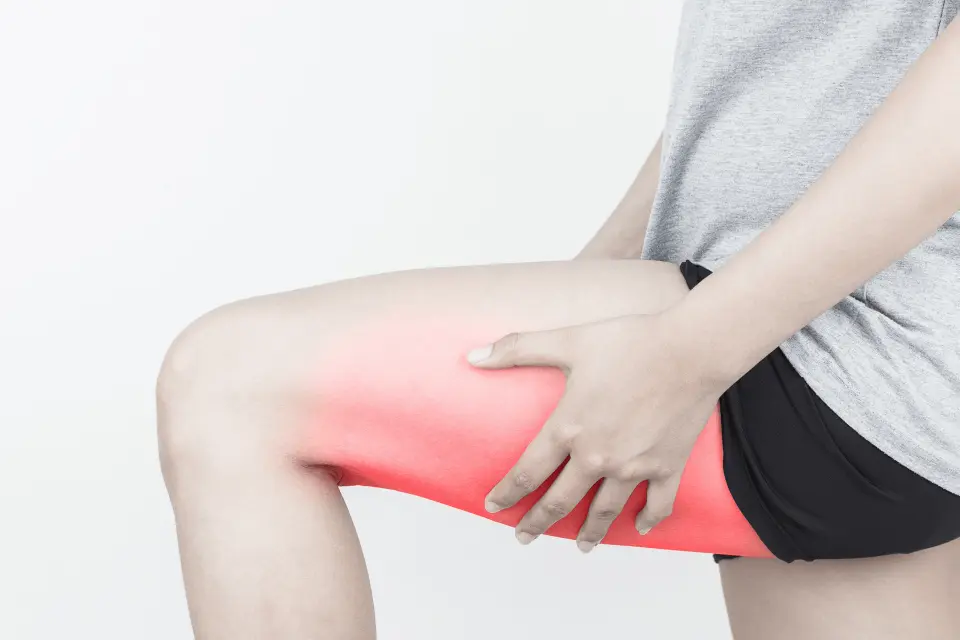
Injury severity is second. A Grade 1 strain involves microscopic tearing of less than five percent of muscle fibers. A Grade 2 strain disrupts a significant portion of the fiber bundle, causing visible bruising and weakness. A Grade 3 strain is a complete rupture and rarely resolves without surgery. Healing timelines differ from weeks to months, depending on grade.
Muscle location is third. Weight-bearing muscles in the back, hamstrings, and calves are difficult to fully unload during daily activity. Repeated low-level stress on an incompletely healed fiber slows repair and raises re-injury risk.
Phase 1: Inflammatory Phase (0 to 72 Hours)
Inflammation after a muscle strain is not the enemy. It is the mechanism the body uses to clear debris, deliver repair cells, and begin rebuilding fiber architecture. The goal in the first 72 hours is to control inflammation, not eliminate it.
Use POLICE, Not RICE
The older RICE protocol (Rest, Ice, Compress, Elevate) recommended complete rest, but research now favors POLICE:
Protect: Avoid activities that strain the injured tissue. A support wrap or brace is appropriate.
Optimal Loading: Gentle movement within a pain-free range stimulates healing more effectively than immobilization. This does not mean exercising the injured muscle, but short, controlled walks or light range-of-motion movements help.
Ice: Apply a cloth-wrapped ice pack for 15 to 20 minutes every two to three hours to reduce swelling and dull pain.
Compression: An elastic wrap controls fluid accumulation and provides mild stabilization.
Elevation: When resting, raise the injured area above heart level to reduce swelling.
Why to Delay NSAIDs in the First 24 Hours
NSAIDs like ibuprofen suppress prostaglandins that signal satellite cells (muscle stem cells) to begin dividing. Taking them within the first 24 hours may blunt this early repair signal. Acetaminophen is a reasonable alternative for pain control during this window. After the first day, NSAIDs are appropriate for managing swelling and discomfort.
Phase 2: Repair Phase (Days 3 to 21)
Between days three and 21, the body lays down new collagen and begins regenerating muscle fibers. Recovery interventions during this phase have the largest impact on healing quality.
Introduce Gentle Stretching
Starting around day three to five, gentle static stretching within a pain-free range prevents the new collagen from becoming dense and restrictive scar tissue. Hold each stretch 20 to 30 seconds and repeat two to three times. The sensation should be mild tension, never pain at the injury site. Progress slowly: if a movement causes a sharp or burning sensation, reduce the range.
Optimize Protein Intake
Research consistently shows that 1.6 grams of protein per kilogram of body weight per day supports muscle protein synthesis. For a 70-kilogram person, that is roughly 112 grams daily. Distribute intake across three to four meals rather than one sitting, since synthesis responds better to spaced doses. Good sources include eggs, poultry, fish, Greek yogurt, cottage cheese, and legumes.
Prioritize Sleep
Growth hormone, a primary driver of tissue repair, is secreted mainly during deep sleep. Even a single night of poor sleep measurably reduces muscle protein synthesis. Aim for seven to nine hours per night. Keeping the injured limb elevated or supported reduces discomfort that can interrupt sleep.
Vitamin C and Zinc for Tissue Repair
Collagen synthesis depends on vitamin C, and zinc is required for cell proliferation during healing. Both deficiencies are common and can silently slow recovery. Vitamin C is found in citrus, bell peppers, and broccoli; zinc is found in meat, shellfish, and pumpkin seeds. A standard multivitamin covers both if the diet is limited.
Stay Hydrated
Muscle tissue is roughly 75 percent water by weight. Dehydration reduces tissue elasticity and makes fibers more prone to additional tearing during the repair phase. Aim for pale yellow urine as a simple hydration check. Sports drinks are not necessary for a resting injured muscle; plain water is adequate.
Phase 3: Remodeling Phase (Day 21 Onward)
After three weeks, the muscle has rebuilt most of its fiber structure, but the new tissue is weaker and less organized than healthy muscle. The remodeling phase consolidates fiber architecture and restores strength, and can last three to six months for moderate strains.
Eccentric Strengthening
Eccentric exercises, where the muscle contracts while lengthening under load, are one of the most evidence-supported methods for rebuilding tissue strength during remodeling. A classic example of a hamstring strain is the slow, controlled lowering phase of a leg curl or a Nordic curl. The controlled stretch under tension stimulates the muscle to align new fibers along proper lines of force.
Begin with bodyweight eccentric movements and progress gradually. Pain at the injury site during an exercise means the load is too high. Step back and allow another week before retrying.
Progressive Loading
Returning to full activity too quickly is the most common cause of re-injury. A useful rule is to increase intensity by no more than ten percent per week. If baseline activity is a 30-minute walk, progress to 33 minutes the following week before adding jogging intervals.
A provider or physical therapist can design a structured return-to-sport protocol that matches the demands of a specific activity or sport, which reduces re-injury risk more effectively than a self-guided approach.
What Slows Recovery
Several behaviors reliably extend healing time:
Complete rest for longer than two to three days. Immobilization reduces blood flow, causes the surrounding muscles to atrophy, and promotes rigid scar formation.
Alcohol. It suppresses muscle protein synthesis, impairs growth hormone secretion, and promotes systemic inflammation. Even moderate drinking during the repair phase measurably delays healing.
Poor sleep. Less than six hours per night is associated with slower soft tissue recovery and higher re-injury rates.
Returning to full loading before remodeling is complete. The muscle may feel pain-free long before fibers can handle sport-specific demands. Functional strength testing is a better guide than pain alone.
Smoking. Nicotine reduces capillary blood flow and impairs collagen synthesis, slowing recovery at every phase.
When to Seek Medical Imaging
Most Grade 1 strains and uncomplicated Grade 2 strains can be safely managed without imaging. However, certain presentations suggest a more serious injury that warrants evaluation:
A popping or snapping sensation occurred at the moment of injury, which can indicate a complete rupture.
There is a visible gap, bulge, or deformity in the muscle belly.
The injured limb cannot bear weight or produce movement against even light resistance.
Severe bruising appears rapidly, especially if it spreads beyond the immediate injury site.
Pain is not improving after two weeks of consistent home management.
For Grade 2 and Grade 3 tears, an MRI or diagnostic ultrasound clarifies the extent of fiber disruption and guides whether surgical repair, physical therapy, or a modified rest protocol is appropriate. Imaging also rules out avulsion fractures, where the tendon pulls a fragment of bone away from its attachment. Understanding how sprains and strains differ can help you assess whether your injury falls into the self-managed category or needs urgent care evaluation.
Frequently Asked Questions
Grade 1 strains typically heal in one to two weeks. Grade 2 strains usually require three to six weeks. Grade 3 complete ruptures can take three to six months with rehabilitation and sometimes require surgery. Recovery length depends on injury grade, the specific muscle affected, treatment consistency, and individual factors like age, nutrition, and sleep.
Ice is appropriate in the first 72 hours to control swelling and pain. Heat becomes beneficial after swelling resolves, usually from day four onward, because it relaxes tissue and improves circulation before stretching. Using heat too early increases swelling. Using ice for too long delays the warm-blood-flow phase that supports fiber rebuilding.
Light activity that does not load the injured muscle is generally beneficial during recovery. Complete rest beyond the first 48 to 72 hours slows healing. Pain-free walking, range-of-motion movements, and upper-body or contralateral-limb training can continue during lower-extremity recovery. Any exercise that produces pain at the injury site should be stopped.
Yes. Muscle fibers are rebuilt from amino acids, and insufficient protein intake limits how quickly new tissue can form. Studies in exercise recovery consistently support a target of at least 1.6 grams of protein per kilogram of body weight daily during active healing phases. The effect is most significant during the repair phase between days three and 21.
Return-to-sport readiness should be based on functional strength testing, not pain absence alone. A common benchmark is achieving 90 to 95 percent of the strength and range of motion of the uninjured limb. Returning before this threshold is reached significantly raises re-injury risk, particularly for hamstring and calf strains.
Taking NSAIDs in the first 24 hours may blunt the initial inflammatory signal that activates muscle stem cells. After the first day, NSAIDs are generally considered safe for short-term pain and swelling management. Prolonged NSAID use beyond 10 to 14 days without medical guidance is not recommended.
The Bottom Line
Speeding up muscle strain recovery comes down to working with the biology of each healing phase rather than against it. Controlled early movement, strategic nutrition, adequate sleep, and a patient approach to progressive loading give the muscle what it needs to rebuild stronger tissue. Skipping steps, returning to activity too soon, or relying on complete rest too long all extend the timeline.
For help assessing whether your strain is healing on track or needs professional evaluation, Doctronic.ai offers AI-assisted symptom review available any time.
Related articles
Omeprazole Side Effects Timeline: Week by Week Guide
Metoprolol Side Effects Timeline: Week by Week Guide
Lupus Vs MS: Key Differences in Symptoms, Diagnosis, and Treatment
Hantavirus Symptoms: Signs, Stages, and When to Seek Care
Should I Be Worried About Hantavirus? A Realistic Look at the Risk
IBS Flare Ups: What Triggers Symptoms and How to Take Control
How to Calm an Anxiety Attack: Techniques That Work in the Moment


Stages of Depression: How It Progresses and When to Seek Help
Poison Ivy Rash: Identification, Treatment, and When to See a Doctor
What Triggers Eczema? Common Flare-Ups Including Sun and Seasonal Changes
Get pain relief advice
Chat Now