Mental Health
How to Calm an Anxiety Attack: Techniques That Work in the Moment
April 17, 2026
6 min read

Medically reviewed by Lauren Okafor | MD, The Frank H Netter MD School of Medicine, Loyola University Medical Center on April 19th, 2026.
Published on April 9th, 2026. Updated on July 23rd, 2026.
Stress does not stay in the mind. Cortisol and adrenaline trigger real physical changes including muscle tension, jaw clenching, shallow breathing, and digestive upset.
The stress-tension cycle is self-reinforcing: pain from tight muscles creates more stress, which creates more tension. Breaking the cycle requires targeting the body directly.
Progressive muscle relaxation, diaphragmatic breathing, heat therapy, and gentle stretching each interrupt the physical stress response through different biological pathways.
Physical symptoms like tight shoulders, tension headaches, and an upset stomach often ease when the nervous system shifts out of fight-or-flight mode.
Chest pain, persistent headaches, or ongoing digestive changes should always be evaluated by a clinician to rule out non-stress causes. Doctronic.ai connects you with a licensed provider without leaving home.
Questions about stress and physical tension?
Free. Anonymous. Built by doctors.
Talk to our AI doctor for a clear, personalized read on your situation.
Most people experience stress as a mental event: worry, racing thoughts, a sense of being overwhelmed. But the brain does not process stress in isolation. The moment the amygdala registers a threat, it triggers a cascade of hormonal and neurological changes that land directly in the body's tissues.
Cortisol and adrenaline prepare muscles for action by increasing tone, tightening fibers, and redirecting blood flow toward the limbs. In a short-term emergency, that tension is useful. Under chronic, low-grade stress, those muscles never fully release: shoulders that creep toward the ears, a jaw that aches by morning, a stomach that churns before a difficult conversation, a headache that arrives like clockwork.
Understanding how stress affects the body at the tissue level explains why mental strategies alone often fail to provide physical relief. The body needs its own intervention.
Physical stress symptoms are persistent because they feed on themselves. Tight muscles signal discomfort to the nervous system, which registers it as a threat, elevates cortisol, and maintains the tension. A stress-induced headache makes concentration harder, creating more stress, which keeps the headache going.
Muscle pain activates the same neural pathways as external stressors. The body does not distinguish between "my deadline is in two hours" and "my neck has been aching for six hours." Breaking the cycle requires a competing signal: one that tells the nervous system the threat has passed.
Knowing what to look for makes it easier to intervene before symptoms compound.
Muscle tension is typically first and most widespread. The trapezius muscles across the shoulders and upper back are particularly prone to stress-related holding, and many people carry tension in these areas so chronically that it feels like their baseline.
Jaw clenching (bruxism) is common during sleep and focused work. The masseter muscle is one of the strongest relative to its size, and chronic overuse can cause jaw soreness and facial pain, and can contribute to TMJ dysfunction over time.
Tension headaches originate in the scalp, neck, and shoulder muscles. They present as dull, band-like pressure across the forehead or at the base of the skull, distinct from migraines.
Shallow breathing is both a symptom and a cause. Stress switches people to fast, chest-led breathing, reducing CO2 slightly, which can cause lightheadedness and, paradoxically, more anxiety.
Digestive upset follows from the gut-brain axis. Stress diverts blood from the digestive system, slows motility, and can trigger nausea, bloating, or changes in bowel patterns.
Chest tightness from stress is typically muscular (intercostal muscles and chest wall) rather than cardiac, but any new, severe chest pain accompanied by shortness of breath or pain radiating to the arm or jaw warrants immediate evaluation.
Progressive muscle relaxation (PMR) is the most systematically studied body-based intervention for stress. Deliberately tensing and then releasing muscle groups trains the nervous system to recognize what relaxation actually feels like.
A complete session takes 15 to 20 minutes. Starting with the feet, work upward through calves, thighs, abdomen, hands, forearms, shoulders, and face. For each group: tense firmly for five seconds, then release completely and notice the contrast. The shoulders deserve two cycles: raise them toward your ears, hold, then drop them fully. For the face, scrunch everything inward, hold, then let your jaw drop slightly open.
End with three slow breaths, exhaling longer than you inhale.
Daily PMR over two to four weeks produces measurable reductions in baseline muscle tension, anxiety, and sleep onset time.
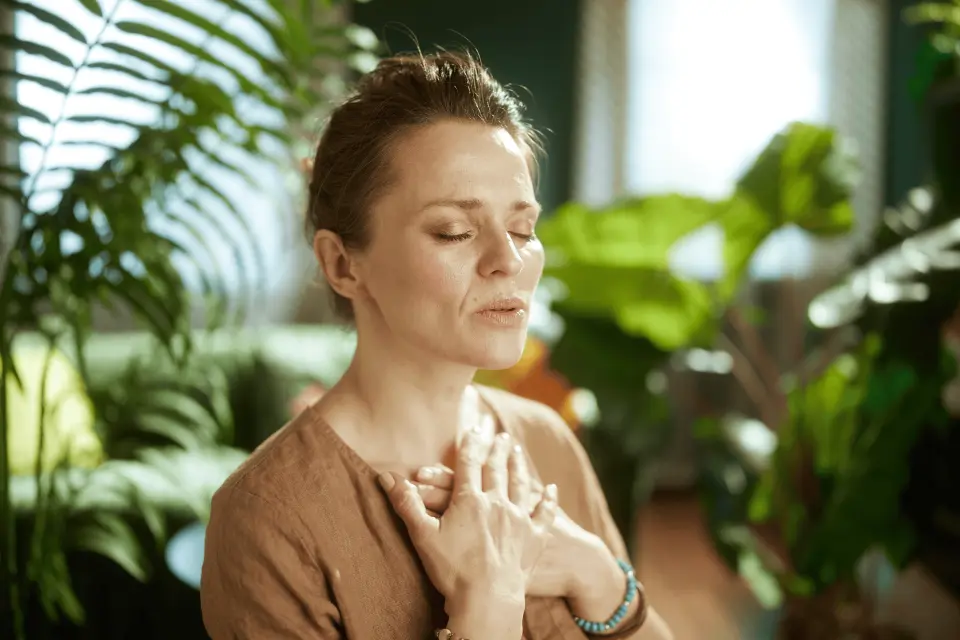
Shallow chest breathing maintains sympathetic activation. Switching to belly-led breathing sends an immediate parasympathetic signal through the vagus nerve.
To practice: place one hand on your chest and one on your belly. Breathe in slowly through the nose for four counts, directing the air down so your belly rises while your chest stays relatively still. Exhale through pursed lips for six to eight counts, letting the belly fall.
The extended exhale is what activates the parasympathetic response. The ratio matters more than the absolute count. Even five cycles of this breathing pattern produce a measurable drop in heart rate.
For jaw tension and TMJ symptoms, start by correcting the resting position: tongue on the roof of the mouth, jaw slightly open, teeth not touching. Most people default to clenching without realizing it.
To actively release, open slowly as wide as comfortable, hold five seconds, and close slowly. Repeat five times, then move the jaw gently side to side. Massaging the masseter muscle (the bulge just in front of the ear at the jawline) in slow circles can dissolve holding patterns that built up over the course of a stressful day.
The neck and upper trapezius hold more chronic stress tension than almost any other region. Four effective stretches, each held 20 to 30 seconds:
Neck tilt: drop one ear toward the same-side shoulder to stretch the opposite side. Chin tuck: draw the chin straight back (slight double chin) to release the suboccipital muscles at the base of the skull. Cross-body shoulder stretch: bring one arm across the chest and use the opposite forearm to press it gently closer. Upper trap stretch: place one hand on top of your head and let the arm's weight (not pressure) tilt your head to that side.
Move slowly and never force the range of motion. These stretches are most effective when applied after heat.
Applying heat to tense muscle groups is one of the fastest ways to interrupt the tension cycle. Heat increases blood flow to the tissue, reduces muscle spindle activity (the reflex that maintains holding tension), and activates thermoreceptors that compete with pain signals.
A warm bath, heating pad on the shoulders or lower back, or warm towel on the jaw and neck all work through this mechanism. Water at 104 to 108 degrees Fahrenheit produces the best muscle-relaxation response.
For tension headaches specifically, applying a warm compress to the base of the skull while lying down is often more effective than a cold compress, which is more effective for migraines.
Yin, restorative, or Hatha yoga combines slow movement, breath attention, and sustained holds that give the nervous system time to actually downregulate. Useful poses include child's pose for lower back and hip tension, legs-up-the-wall for abdominal release, reclined twist for thoracic and shoulder tension, and forward fold for the neck and upper back.
No class or equipment needed. Ten minutes of floor stretching before bed, combined with diaphragmatic breathing, produces meaningful results within a few weeks.
A body scan moves attention systematically through the body, noticing sensations without trying to change them. Unlike PMR, it does not involve deliberate tensing. Bringing conscious awareness to areas of holding often prompts the nervous system to release tension that was operating below the level of awareness.
Lie on your back, beginning at the soles of your feet and moving upward region by region, spending 20 to 30 seconds at each. When you notice tightness, breathe into it and exhale slowly, imagining the area softening. This is particularly effective for people who experience stress and digestive symptoms, as attention to the abdomen, paired with slow breathing, can directly reduce gut tension.
A 20-minute scan before sleep helps interrupt tension that would otherwise accumulate overnight.
Not every physical symptom that appears during a stressful period is caused by stress. Some require clinical evaluation regardless of context.
Seek care promptly for:
Chest pain, especially if it radiates to the left arm, jaw, or back, or is accompanied by shortness of breath, sweating, or nausea
A new or unusually severe headache, described as "the worst headache of my life"
Persistent headaches that do not improve with typical interventions or change in character
Digestive symptoms that include blood in stool, unexplained weight loss, or pain that wakes you from sleep
Jaw pain accompanied by clicking, locking, or difficulty opening the mouth fully
These may still have benign explanations, but a clinician needs to rule out non-stress causes.
Physical symptoms that have persisted for weeks or are affecting daily functioning are also worth discussing with a medical professional. A provider can evaluate whether anxiety, a musculoskeletal condition, or another issue is contributing and discuss options beyond self-care.
The trapezius and levator scapulae muscles contract as part of the fight-or-flight response, a protective posture that raises and draws the shoulders forward. This was adaptive for physical threats. Under psychological stress, the posture activates, but without physical action to discharge the tension, it accumulates and becomes chronic.
Stress is one of the primary drivers of bruxism (teeth clenching and grinding), which overworks the masseter muscle and places abnormal load on the temporomandibular joint. Persistent stress-related clenching can lead to TMJ dysfunction, including clicking, locking, and pain that extends into the ear and temple.
Tension headaches typically feel like a dull, band-like pressure across the forehead or at the base of the skull. They tend to build gradually and respond to relaxation techniques, heat, and over-the-counter pain relievers. A headache that is sudden and severe, accompanied by fever or stiff neck, follows a head injury, or is the worst you have ever experienced, warrants urgent evaluation.
Heat is generally more effective for muscle tension from stress. It increases blood flow, reduces muscle spindle activity, and competes with pain signals. Cold works better for acute injury inflammation. Reserve cold therapy for swollen joints or fresh injuries; use heat for the chronic tightness that accumulates from sustained stress.
Diaphragmatic breathing and heat therapy produce effects within a single session. Progressive muscle relaxation and body scan meditation typically require one to two weeks of daily practice before producing sustained reductions in resting tension. Consistent gentle stretching shows meaningful improvement in flexibility and baseline tension within two to three weeks.
Physical stress symptoms are real, measurable, and addressable through targeted body-based techniques. Progressive muscle relaxation, diaphragmatic breathing, heat therapy, gentle stretching, and body scan meditation each interrupt the stress-tension cycle at the tissue level, where mental strategies cannot reach.
When symptoms persist, worsen, or include warning signs, they deserve clinical attention. Doctronic.ai makes it easy to connect with a licensed provider who can evaluate what's driving your symptoms and help you put together a plan, without the wait.
Get personalized health advice
Chat Now