
How to Get Rid of Skin Tags Safely: Home vs. Professional Methods

Medically reviewed by Alan Lucks | MD, Alan Lucks MDPC Private Practice - New York on May 23rd, 2026.
Published on April 9th, 2026. Updated on July 24th, 2026.
Key takeaways
Skin tags are benign, painless growths that form where skin rubs against skin or clothing, and they pose no health risk on their own.
Home removal methods (OTC freezing kits, dental floss, tea tree oil) carry real risks of infection, scarring, and incomplete removal.
Professional removal by a dermatologist or physician is quick, minimally painful, and carries far fewer complications than DIY approaches.
Any growth that changes color, bleeds, or grows rapidly should be evaluated by a doctor before any removal attempt.
Multiple new skin tags appearing at once can sometimes indicate insulin resistance or other metabolic changes worth discussing with a provider.
Doctronic.ai lets you connect with a licensed clinician online to get a skin evaluation and removal guidance without leaving home.
Questions about skin tag removal?
Free. Anonymous. Built by doctors.
This article covers general information. Ask Doctronic about your symptoms, medications, side effects, or treatment options.
What Are Skin Tags?
Skin tags (the medical term is acrochordons) are small, soft growths that hang off the skin on a thin stalk of tissue. They are made of collagen fibers and blood vessels surrounded by skin, and they are almost always entirely harmless. Most people will develop at least one skin tag at some point in their life, and many people have several.
Unlike warts or moles, skin tags are not caused by a virus and are not precancerous. They do not spread to other areas, and they generally do not grow beyond a few millimeters in size. The main reason people seek removal is cosmetic: they can be annoying when located in high-friction areas, and some find them unsightly.
Why Do Skin Tags Form?
The most common cause is friction. Skin rubbing against skin or against fabric creates chronic irritation that can trigger this type of benign overgrowth. That is why skin tags cluster in predictable locations.
Several factors increase the likelihood of developing them:
Genetics: if a parent had many skin tags, you are more likely to develop them too.
Obesity: excess body fat creates more skin folds and friction zones.
Insulin resistance and type 2 diabetes: elevated insulin levels are associated with higher rates of skin tag development.
Pregnancy: hormonal fluctuations during pregnancy can accelerate their appearance.
Aging: skin loses elasticity and tone with age, making the friction-related process more likely.
Wearing tight clothing or jewelry regularly, particularly necklaces and bra straps.
The connection to insulin resistance is worth noting. People who suddenly develop multiple skin tags, or who develop them in unusual patterns, may benefit from a blood glucose evaluation alongside any skin assessment.
Where Do Skin Tags Appear?
The body locations most likely to develop skin tags are predictable based on where friction is greatest:
Neck (especially the nape and sides where collars rub)
Armpits
Groin and inner thighs
Under the breasts
Eyelids (a sensitive and easily irritated area)
Around the anus
Eyelid skin tags deserve special mention because the skin there is thin and delicate, and proximity to the eye makes any removal attempt higher-risk. These should only be removed by a medical professional.
Do Skin Tags Need to Be Removed?
No. Medically speaking, skin tags require no treatment unless they cause discomfort, become irritated or inflamed, or the person simply wants them removed for cosmetic reasons. They will not resolve on their own in most cases, but leaving them in place is entirely safe.
The decision to remove a skin tag is usually personal. Common reasons people choose removal include:
The skin tag catches on clothing or jewelry and causes pain
It sits in an area that gets irritated during shaving or exercise
It is in a visible location and affects self-confidence
A healthcare provider spots it during an exam and recommends evaluation
Home Removal Methods and Their Risks
Plenty of at-home options exist, and the internet is full of recommendations. However, all of them carry real risks, and none should be approached without understanding what can go wrong.
Over-the-Counter Freezing Kits
These products use a chemical (usually dimethyl ether or a similar compound) to freeze the skin tag, similar in concept to cryotherapy performed in a clinical setting. They are sold at pharmacies under brand names and are designed for home use.
The risk with OTC freezing kits is control. Without clinical training, it is difficult to apply the cold precisely enough to affect only the skin tag without damaging surrounding healthy skin. Overcooling can cause blistering, hypopigmentation (patches of lighter skin), and scarring.
Tying Off With Dental Floss or Thread (Ligation)
This approach involves tying a piece of dental floss, a thin thread, or a specialized rubber band kit tightly around the base of the skin tag to cut off its blood supply. The idea is that the tag will shrink and fall off within a few days.
When performed under sterile conditions by a trained provider, this method can work. At home, it is harder to execute safely. Risks include:
Incomplete ligation, leaving tissue behind that can become inflamed
Infection if the floss or thread is not sterile
Bleeding if the skin tag is larger or more vascular than expected
Significant irritation and pain in sensitive areas like the groin or eyelid
Tea Tree Oil and Other Natural Remedies
Tea tree oil has antimicrobial properties, and some proponents recommend applying it daily to shrink or dry out a skin tag. There is no reliable clinical evidence that tea tree oil or similar home remedies (apple cider vinegar is another common suggestion) reliably remove skin tags.
These approaches are unlikely to cause serious harm if used carefully, but they set up a scenario where people delay seeing a clinician for a growth that may actually warrant evaluation.
Cutting It Off at Home
Some people attempt to use scissors or a blade to remove a skin tag themselves. This is one of the higher-risk approaches due to the potential for infection, excessive bleeding, and incomplete removal (leaving a stump that can regrow or become infected). It should not be done at home.
Professional Removal: What to Expect
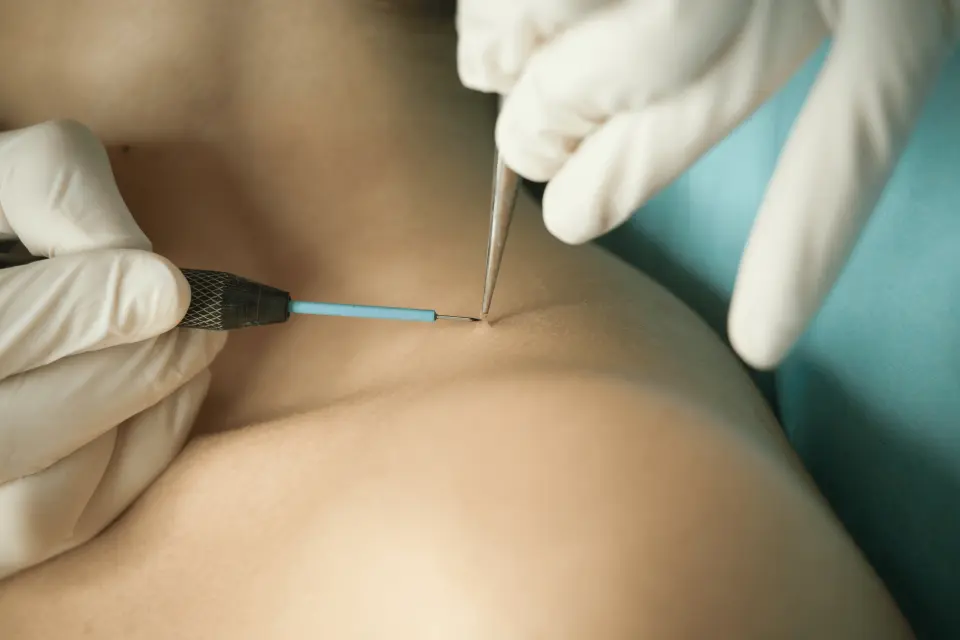
A dermatologist or trained clinician can remove a skin tag quickly, often in under five minutes per tag, with minimal discomfort and a low risk of complications. Skin tag removal methods vary depending on the location, size, and number of tags.
Cryotherapy
Liquid nitrogen is applied to the skin tag, freezing it precisely and causing the cells to die. The tag typically falls off within one to two weeks. This is the same principle as OTC kits, but with far better control over the freezing area.
Snip Excision
The physician numbs the area with a small injection of local anesthetic, then uses sterile medical scissors or a scalpel to remove the skin tag at its base. This method provides complete removal in a single visit. It may leave a small mark that fades over weeks but rarely causes significant scarring.
Cauterization
An electrocautery device uses heat to burn through the skin tag's base and seal the wound simultaneously. This approach is effective and minimizes bleeding. It is commonly used for slightly larger tags or those in areas prone to bleeding.
Laser Removal
Some dermatology offices offer laser removal for skin tags, which can be effective for multiple small tags. It is typically a cosmetic procedure and may not be covered by insurance.
Regardless of the method, professional removal offers the benefit of a trained eye confirming that what is being removed is actually a skin tag and not a mole, wart, or other growth that requires a different approach.
Why DIY Removal Can Be Dangerous
The most underappreciated risk of home removal is misidentification. Skin tags have a fairly recognizable profile (small, soft, flesh-colored, attached by a stalk), but so do several other growths that are not benign. Moles, seborrheic keratoses, dermatofibromas, and, in rare cases, early-stage melanoma can be mistaken for skin tags by someone without medical training.
Removing what you assume is a skin tag without professional evaluation means:
Potentially destroying tissue that should have been biopsied
Missing a diagnosis of a condition that requires treatment
Introducing infection through an unsterile removal attempt
Causing bleeding from a more vascular growth than expected
Infection after home removal is a real and common complication. The skin in areas like the groin, armpits, and under the breasts is warm and moist, creating ideal conditions for bacterial growth if the skin barrier is compromised.
When to See a Doctor
Most skin tags do not require urgent attention, but certain changes should prompt a visit to a healthcare provider:
The growth changes color, particularly if it becomes darker or multi-colored
It begins to bleed without being scraped or caught on clothing
It grows noticeably in size over a short period
It becomes painful without an obvious cause like friction
You are uncertain whether it is a skin tag or another type of growth
Multiple new skin tags appear at once, which can sometimes point to an underlying metabolic issue like insulin resistance
Skin tag removal is a routine and quick procedure in a clinical setting. There is rarely a reason to accept the additional risk that comes with home removal methods, particularly when telehealth options make professional guidance more accessible than ever.
If you want a dermatology evaluation without scheduling an in-person visit, learning how telehealth works for dermatology care can help you understand your options and connect you quickly with a licensed provider.
Frequently Asked Questions
No. Skin tags are not caused by a virus or bacteria and cannot be passed from person to person through contact. They form due to friction and individual factors like genetics and hormonal changes, not from any infectious process.
A properly removed skin tag, where the entire base is addressed, should not grow back in the same spot. New skin tags can develop elsewhere on the body over time, but successful removal is generally permanent for that specific tag.
In most cases, no. Insurance typically classifies skin tag removal as a cosmetic procedure unless a tag is causing significant medical symptoms like chronic irritation, bleeding, or pain. It is worth checking with your provider before scheduling removal.
Yes, though it is less common. Children can develop skin tags, particularly if they are overweight or if a parent has a history of them. A pediatrician should evaluate any unusual skin growth on a child before any removal attempt.
Pregnancy is not an ideal time for elective skin tag removal, particularly procedures using chemical agents or lasers. Some methods are considered safe, but the decision should be made with a healthcare provider who can assess the location, method, and individual circumstances.
The Bottom Line
Skin tags are common, harmless, and easy to treat with professional help. The home removal methods that get the most attention come with real risks, including infection, scarring, and the more serious problem of misidentifying a growth that needs medical attention. A quick clinical evaluation confirms what you are dealing with, and professional removal takes only minutes with minimal discomfort.
If you want to have a skin growth evaluated from home, Doctronic.ai connects you with licensed clinicians who can assess your symptoms, recommend the right approach, and help you get the care you need without an in-person visit.
Related articles
Omeprazole Side Effects Timeline: Week by Week Guide
Metoprolol Side Effects Timeline: Week by Week Guide
Lupus Vs MS: Key Differences in Symptoms, Diagnosis, and Treatment
Hantavirus Symptoms: Signs, Stages, and When to Seek Care
Should I Be Worried About Hantavirus? A Realistic Look at the Risk
IBS Flare Ups: What Triggers Symptoms and How to Take Control

How to Calm an Anxiety Attack: Techniques That Work in the Moment


Stages of Depression: How It Progresses and When to Seek Help
Poison Ivy Rash: Identification, Treatment, and When to See a Doctor
What Triggers Eczema? Common Flare-Ups Including Sun and Seasonal Changes
Compare your treatment options
Chat Now