Bone & Joint Health
What Is a Dangerously High Calcium Level and What Does It Mean?
July 21, 2026
6 min read

Medically reviewed by Lauren Okafor | MD, The Frank H Netter MD School of Medicine, Loyola University Medical Center on April 25th, 2026.
Published on April 17th, 2026. Updated on July 24th, 2026.
A twisted ankle is typically an ankle sprain, meaning one or more ligaments have been stretched or torn; healing time ranges from a few days for mild sprains to three months or more for severe ones
Grade 1 sprains (stretched ligament, no tearing) usually heal in one to two weeks; Grade 2 (partial tear) takes three to six weeks; Grade 3 (complete rupture) can take three to six months
Most ankle sprains heal well with home treatment: rest, ice, compression, and elevation in the first 48 to 72 hours, followed by gradual weight-bearing and rehabilitation exercises
Swelling and bruising are normal in the first days; persistent inability to bear weight, severe swelling, or pain directly over a bone warrants evaluation to rule out a fracture
Returning to full activity too quickly is the most common cause of re-injury; incomplete rehabilitation of strength and proprioception leaves the ankle vulnerable
For evaluation of an ankle injury or guidance on recovery, Doctronic.ai offers free AI consultations and affordable telehealth visits with licensed physicians available any time
A twisted ankle is almost always a sprain, which means the ligaments that stabilize the ankle joint were forced beyond their normal range of motion. Ligaments are the fibrous bands that connect bone to bone; when the ankle rolls or rotates suddenly, particularly inward (the most common direction), one or more of the lateral ligaments on the outside of the ankle are stretched or torn.
The anterior talofibular ligament is the most frequently injured, followed by the calcaneofibular ligament. In severe sprains, both ligaments are compromised, and the resulting instability significantly affects both pain and recovery timeline.
The injury produces immediate swelling, pain, and often bruising as blood vessels in and around the injured ligament rupture. The severity of these symptoms helps estimate the grade, but imaging is sometimes needed to rule out accompanying fractures, particularly when pain is localized directly over bone rather than over the ligament.
A Grade 1 sprain involves microscopic tearing of some ligament fibers without significant structural damage. The ligament is stretched but intact. Symptoms include mild swelling and tenderness, with the ankle remaining stable under load.
Healing time is typically one to two weeks. Most people can bear weight within a day or two, and return to light activity within a week. Sport or high-demand activity may require two weeks to ensure full ligament recovery.
A Grade 2 sprain is a partial tear of the ligament. There is more significant swelling, bruising, and pain, and the ankle may feel unstable, particularly on uneven surfaces. Bearing weight is painful initially.
Healing takes three to six weeks for most people. The first week involves managing swelling and protecting the ankle; the following weeks involve progressive rehabilitation to restore range of motion, strength, and balance before returning to activity.
A Grade 3 sprain is a complete ligament rupture. The ankle is markedly swollen, bruised, and unstable. Bearing weight is typically very difficult in the first days.
Recovery takes three to six months for full functional return. Some people with Grade 3 sprains benefit from a period of immobilization followed by formal physical therapy. Surgery is rarely required but may be considered when instability persists despite rehabilitation. People with persistent ankle instability should be evaluated for sprained ankle treatment to determine whether additional structural damage requires specific treatment.
Get ankle pain treatment online today
A licensed doctor can review your symptoms and send a prescription to your pharmacy, often the same day.
Related medications we prescribe
Learn moreSeveral factors influence how long recovery takes beyond the initial grade of the injury.
An ankle that has been sprained before has often not fully regained the sensory function (proprioception) and strength that protect it. Recurrent sprains tend to involve the same weakened structures and take longer to rehabilitate each time.
Recovery in older adults is generally slower, and conditions that affect circulation or tissue healing may extend timelines. Overall physical condition and fitness level also influence how quickly tissue repair proceeds.
Starting appropriate movement and strengthening exercises on time rather than resting passively for too long substantially shortens recovery and reduces re-injury risk. Rehabilitation compliance is one of the strongest predictors of recovery speed.
Severe swelling that does not begin to improve after several days of elevation and ice warrants reassessment. The degree of initial swelling reflects the extent of soft tissue damage and can help predict recovery duration.
The standard first-line approach for ankle injuries involves four components applied in the acute phase.
Rest means avoiding activities that stress the injured ankle, particularly those involving lateral movement or uneven surfaces. Complete non-weight-bearing is rarely necessary for Grade 1 or mild Grade 2 sprains and can actually slow recovery; protected weight-bearing as tolerated is generally preferred.
Ice should be applied for 15 to 20 minutes every two to three hours during the first 48 hours. A cloth barrier between the ice and skin prevents frostbite. Ice reduces swelling and provides pain relief; it should not be applied continuously.
Compression with an elastic bandage supports the ankle and limits swelling. The wrap should be snug but not tight enough to impair circulation. Numbness or increased pain indicates the wrap is too tight.
Elevation of the ankle above the level of the heart reduces swelling by improving venous drainage. Keeping the ankle elevated when sitting or lying reduces the fluid accumulation that slows healing.
Over-the-counter anti-inflammatory medications such as ibuprofen reduce pain and inflammation in the acute phase. They are most helpful in the first three to five days.
Not every twisted ankle needs immediate medical attention, but certain presentations warrant evaluation to rule out fracture.
See a physician if you cannot bear any weight at all within the first 24 hours, if pain is located directly over the bone rather than the soft tissue of the ligament, if there is significant bony deformity, if numbness or coldness develops in the foot, or if swelling and pain are severe out of proportion to the apparent mechanism of injury.
The Ottawa Ankle Rules, a validated clinical tool, identify patients who need imaging: bone tenderness at specific anatomical landmarks or inability to bear weight in the immediate post-injury period. Knowing the differences between a broken ankle vs sprain can help you decide how urgently to seek care, though a physician evaluation is needed to apply these criteria definitively.
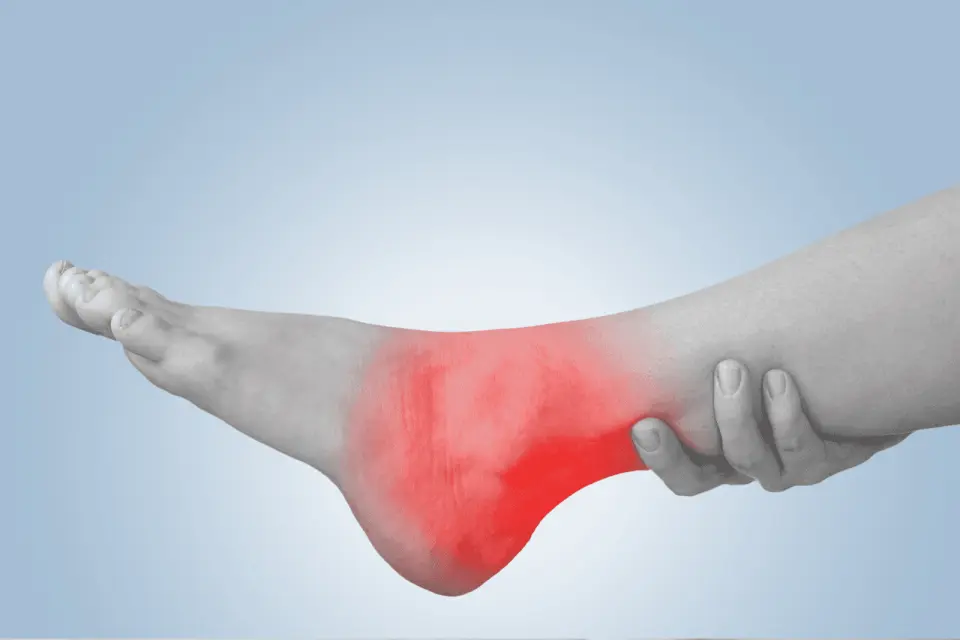
For Grade 1 and mild Grade 2 sprains, walking with some discomfort is generally acceptable and does not worsen the injury. Limping on a painful ankle for extended distances is not ideal, but protected weight-bearing as tolerated is encouraged over complete rest. If bearing weight is impossible due to severe pain, medical evaluation is appropriate.
Residual swelling two weeks after a sprain is common, particularly for Grade 2 and Grade 3 injuries. Ligament injuries can produce swelling that persists for four to six weeks. If swelling is not improving at all after two weeks, or if it is worsening with activity, a follow-up evaluation can assess whether rehabilitation is progressing appropriately or whether additional injury was missed.
An ankle brace during the rehabilitation phase and initial return to activity reduces re-injury risk. It supports the still-healing ligament during activities that involve lateral movement. Bracing is not typically needed for walking on flat surfaces but is commonly recommended for sport or uneven terrain until strength and proprioception are fully restored.
The location of pain is one of the most useful distinguishing features. Sprain pain is typically centered over the ligament on the outside of the ankle, away from the bone. Fracture pain is located directly over a bone. However, some fractures present similarly to sprains, and the distinction requires medical evaluation and often imaging. Inability to bear any weight is a sign that evaluation is warranted regardless of the presumed diagnosis.
Early range-of-motion exercises (ankle circles, alphabet writing with the toe) can begin within the first few days if tolerated. Strengthening exercises targeting the muscles around the ankle, along with balance and proprioception work such as single-leg standing, are introduced progressively as pain allows. A structured rehabilitation program, guided by a physical therapist or physician, produces better functional outcomes than rest alone.
A twisted ankle typically involves a ligament sprain that heals in one to two weeks for mild cases, three to six weeks for moderate partial tears, and up to three to six months for complete ruptures. Home treatment in the first 48 to 72 hours focuses on rest, ice, compression, and elevation. Gradual rehabilitation with progressive weight-bearing and strengthening exercises shortens recovery and prevents re-injury. Medical evaluation is appropriate when weight-bearing is impossible, when pain is located over a bone, or when swelling is disproportionate. Returning to full activity before the ankle has regained strength and stability is the most common cause of re-injury and chronic ankle instability. For evaluation of an ankle injury or guidance on recovery timelines, Doctronic.ai offers affordable telehealth visits with licensed physicians available any time.
Get pain relief advice
Chat Now