
Treatments and Prevention
Calamine Lotion: How It Works for Poison Ivy, Bug Bites, and Rashes
April 6, 2026
7 min read

Medically reviewed by Alan Lucks | MD, Alan Lucks MDPC Private Practice - New York on May 24th, 2026.
Published on April 17th, 2026. Updated on July 23rd, 2026.
No: poison ivy does not have thorns, spines, or prickles. It is a smooth-stemmed vine or shrub, which means thornless stems do not guarantee a plant is safe to touch
The most reliable identification feature is the three-leaflet pattern ("leaves of three, let it be"), combined with the alternating leaf arrangement on the stem
Poison ivy grows throughout most of North America in multiple forms: as a ground cover, shrub, and climbing vine that can reach the tops of tall trees
The rash is not caused by touching the leaves directly: it is caused by urushiol, an oily resin found in all plant parts, including roots, stems, berries, and dry leaves; urushiol can remain active for years on surfaces
Poison ivy does not cause a rash on everyone who contacts it; sensitivity varies and can develop or diminish over time
For evaluation and treatment of a severe or spreading poison ivy rash, Doctronic.ai connects you with licensed physicians through free AI consultations and affordable telehealth visits available any time
Questions about poison ivy?
Free. Anonymous. Built by doctors.
This article covers general information. Ask Doctronic about your symptoms, medications, side effects, or treatment options.
Poison ivy (Toxicodendron radicans) does not have thorns, spines, or prickles of any kind. Its stems are smooth. This is an important correction to a common assumption: many people believe they can identify poison ivy partly by the absence of thorns, or conversely, assume a smooth-stemmed plant is safe. Neither is reliable as a standalone identifier.
The absence of thorns only eliminates plants that do have thorns, such as roses, hawthorns, and blackberries. It does not confirm a plant is poison ivy, and it does not mean a thornless plant is harmless. Poison oak and poison sumac, close relatives that cause the same type of rash, are also thornless.
The most widely known and most useful identification cue is the three-leaflet grouping. Each leaf of poison ivy consists of three leaflets joined at a central stem point. The middle leaflet has a slightly longer stalk than the two side leaflets, and the side leaflets are offset rather than perfectly symmetric.
The rule "leaves of three, let it be" is not perfectly specific, as many harmless plants also grow leaves in three-leaflet groups, including Virginia creeper in its early growth and various raspberry or blackberry plants. But combined with other features, the rule is a reasonable first filter.
Individual leaflets are roughly oval with a pointed tip. Edges may be smooth, slightly toothed, or have a few lobes; the degree of leaflet edge variation is quite high across individual plants, making it an unreliable standalone feature. The leaf surface has a slightly glossy appearance, particularly in younger leaves. Older leaves may appear more matte.
In spring, new poison ivy growth often appears reddish and glossy before turning green. In fall, the leaves turn bright red, orange, or yellow before dropping.
Poison ivy leaves attach to the stem in an alternating pattern, not opposite each other. Each three-leaflet group comes off the stem on one side at a time, alternating up the stem. This alternating arrangement is consistent and distinguishes it from some three-leaflet lookalikes that may grow leaves in opposite pairs.
The plant's multiple growth forms complicate poison ivy identification. It grows as:
A low ground cover spreading across the soil surface
A shrub standing upright to about knee height
A climbing vine that attaches to trees and fences using masses of aerial rootlets, eventually reaching the tree canopy
The climbing vine form is particularly easy to overlook or misidentify. Older vines are thick and covered with dense, hairy-looking rootlets that give the vine a distinctive appearance. The saying "hairy vine, no friend of mine" captures this. Never handle vines on trees without identifying them first.
Poison ivy produces small, waxy white or pale yellow berries in clusters from late summer through winter, even after the leaves fall. These berries are a food source for many birds (birds are not sensitive to urushiol) but remain toxic to humans through skin contact. The presence of white berries in a three-leaflet plant strongly suggests poison ivy.
The rash is not caused by the plant's cells, leaves, or juice directly. It is caused by urushiol, an oil-like resin found in all parts of the plant including roots, stems, leaves, and berries. Urushiol causes a type IV hypersensitivity reaction: the immune system becomes sensitized to the substance on first contact, and subsequent contacts trigger an allergic rash within 12 to 72 hours.
Symptoms of the poison ivy rash include an itchy, red, streaky pattern with blisters, appearing where the plant contacted the skin. The streaked pattern reflects how the plant was dragged across the skin. Contrary to common belief, fluid from the blisters does not spread the rash. The rash appears where urushiol contacted the skin, and areas without contact are not affected.
Urushiol remains active for years on tools, clothing, pet fur, and dead plant material. Washing tools and clothing that contacted poison ivy and keeping pets out of areas where it grows are important preventive steps. Burning poison ivy releases urushiol particles in smoke, which can cause severe respiratory and systemic reactions.
Washing skin thoroughly with soap and water within the first 10 minutes of exposure can reduce urushiol absorption significantly. After the rash appears, the goal is managing symptoms while the immune reaction resolves. The rash typically clears in one to three weeks.
For mild rashes, best creams for poison ivy including calamine lotion, hydrocortisone cream, and antihistamines address itching and inflammation. For severe or spreading rashes, or rashes near the eyes, mouth, or genitals, prescription oral corticosteroids are often needed to reduce the immune response and should be evaluated by a physician.
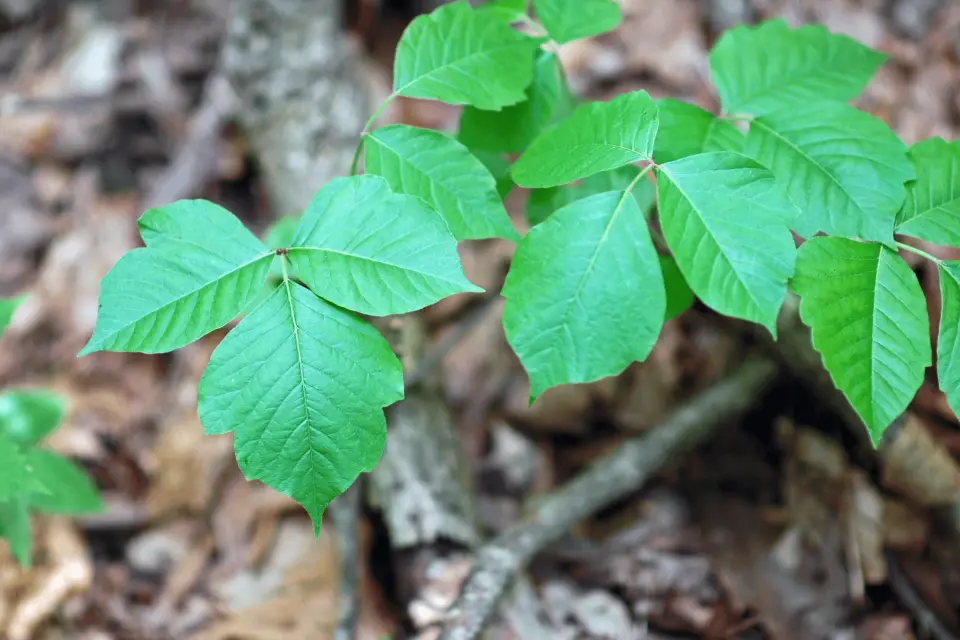
Virginia creeper, wild raspberry, and boxelder seedlings are among the most common poison ivy lookalikes. Virginia creeper usually has five leaflets, not three, but young plants may show three leaflets. Boxelder seedlings have opposite leaf arrangement and slightly different leaflet shape. When in doubt, avoid touching.
Yes, through indirect contact. Urushiol transfers from tools, gloves, pet fur, or clothing to skin. It can also become airborne if the plant is burned. This is why rashes sometimes appear in areas that did not visibly contact the plant, and why clearing tools of urushiol is important.
No. Sensitivity to urushiol varies among people. Some individuals show no reaction to initial contact and develop sensitivity only after repeated exposures. Others have high sensitivity from early life. Sensitivity can also appear or diminish over time; someone who showed no reaction for years may become reactive, or vice versa.
No. The rash itself is not contagious and cannot spread from person to person by touching the blisters. Rash appears only where urushiol contacted the skin. If new areas of rash seem to appear days later, it typically reflects lower urushiol exposure in those areas that takes longer to produce a reaction, not spreading from the original site.
Seek medical evaluation if the rash covers a large body area, involves the face or eyes, produces severe swelling, or shows signs of infection (increasing redness, warmth, pus). Prescription corticosteroids are typically needed for rashes that are severe or interfering with sleep due to intense itching.
Poison ivy does not have thorns. It is identified by three-leaflet groupings, slightly glossy leaves, alternating leaf arrangement, and multiple growth forms including climbing vines with hairy rootlets. All parts of the plant contain urushiol, the oil that causes the rash, including dead leaves, stems, and berries. The rash results from an immune reaction to urushiol, appears within 12 to 72 hours of contact, and typically clears in one to three weeks. Mild cases respond to OTC treatment; severe or widespread rashes require evaluation for prescription steroids. For quick access to a physician who can assess a severe or uncertain rash, Doctronic.ai offers affordable telehealth visits with licensed physicians available any time.
Get allergy care advice
Chat Now