
Get High Red Blood Cell Count Treatment Online
High Red Blood Cell Count (Erythrocytosis) can signal a range of underlying causes, from low oxygen levels to bone marrow conditions. Get an AI-powered evaluation of your erythrocytosis result and connect with a licensed physician who can guide your next steps.


What Is Erythrocytosis?
High Red Blood Cell Count (Erythrocytosis) is a lab finding marked by an elevated number of red blood cells circulating in the blood, which can thicken the blood and raise the risk of clotting. It can stem from causes as varied as chronic low oxygen levels, sleep apnea, kidney disease, or rare bone marrow disorders. With a thorough evaluation and the right follow-up care, most people can identify the underlying cause and take meaningful steps to protect their health.
- Review your erythrocytosis history in minutes and get clear next steps toward finding the underlying cause.
- Get personalized guidance from doctor-trained AI
- Explore treatment and prescription options

Is Online Erythrocytosis Treatment Right for You?
This service is designed for adults who have received a lab result showing a high red blood cell count and want to understand what it means and what to do next. Our evaluation covers primary and secondary causes of erythrocytosis, including lifestyle factors, chronic conditions, and medication effects.
A physician will review your cardiovascular and pulmonary history alongside your lab values. If your result suggests a serious underlying condition requiring in-person imaging, phlebotomy, or specialist referral, our physicians will guide you toward the appropriate next step.
- Received a high RBC lab result
- Get personalized guidance from AI and clinicians
- Explore care and next-step options
- Access care from home, often the same day

Medications That May Be Part of Erythrocytosis Care

Droxia
Hydroxyurea
A cytoreductive agent used to reduce red blood cell production in certain bone marrow conditions associated with elevated counts.
Inspra
Eplerenone
A mineralocorticoid antagonist used to manage high blood pressure that can accompany secondary erythrocytosis.
Micardis
Telmisartan
An angiotensin receptor blocker used to treat high blood pressure commonly seen alongside elevated red blood cell counts.
Bayer
Aspirin
An antiplatelet agent used to lower clotting risk in patients with elevated red blood cell counts.
How Erythrocytosis Care Works at Doctronic

Chat With The #1 AI Doctor
Doctronic answers your health questions with personalized medical insights and helps our doctors create a better treatment plan for you.

Meet With a Licensed Doctor For Treatment
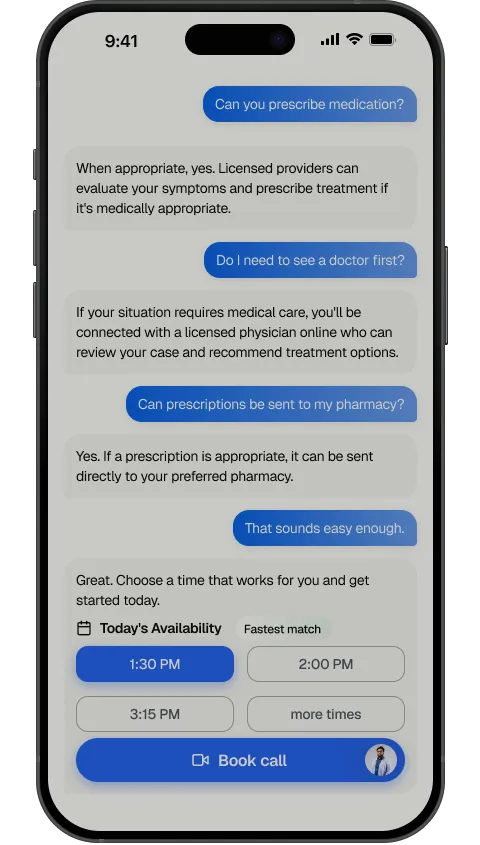
Book a $39 telehealth appointment (or copay) within 30 minutes. Our doctors create personalized treatment plans with prescriptions when needed.

Pick Up Your Prescription
Our doctors prescribe non-controlled medications in all 50 states and send prescriptions to your pharmacy for same-day pickup.
Pricing that won't make you sick
Chat for free, see an online doctor for $39/visit, or refill a prescription online for as low as $0
-
 Available in all 50 states + DC
-
 Insurance accepted

- 24/7 medical care Free
- Specialist referrals Free
- Lifelong health record Free
- Unlimited questions Free
- Prescription refills Starting as low as $0
- Video visit with real doctors $39/visit
These are stories from real users who turned to Doctronic for answers when it mattered most.
- Preparing for a doctor visit
- Finding peace of mind
- Understanding a diagnosis
- Managing chronic illness
- Navigating healthcare
- A second opinion
- Improving health






Frequently asked questions
The most common causes fall into two categories. Secondary erythrocytosis, the more frequent type, results from low oxygen levels due to conditions like sleep apnea, COPD, or living at high altitude, as well as kidney tumors that secrete erythropoietin. Primary erythrocytosis, such as polycythemia vera, involves a bone marrow abnormality that drives overproduction of red blood cells regardless of oxygen levels.
Yes, in many cases an initial evaluation can take place online. A licensed physician can review your lab values, health history, medications, and symptoms to help identify likely causes and recommend next steps. Some follow-up steps, such as bone marrow biopsy or phlebotomy, require an in-person visit, and our physicians will tell you if that applies to you.
Go to an emergency room immediately if you experience sudden severe headache, vision changes, chest pain, difficulty breathing, weakness on one side of the body, or signs of a blood clot such as leg swelling and pain. These can be signs of a stroke or thrombosis, which are serious complications of very high red blood cell counts that require immediate in-person care.
Treatment depends entirely on the cause. For polycythemia vera, hydroxyurea (Droxia) is often used to reduce blood cell production, and low-dose aspirin is used to lower clotting risk. For secondary causes, treatment focuses on the underlying condition, such as blood pressure medications like telmisartan (Micardis) or eplerenone (Inspra). Therapeutic phlebotomy, which involves removing blood, is also a common first-line approach regardless of cause.
This depends on the underlying cause and chosen treatment. After therapeutic phlebotomy, hematocrit levels typically decrease within days to weeks. Medications like hydroxyurea may take several weeks to show a meaningful reduction in blood counts. Treating an underlying cause such as sleep apnea or hypoxia can gradually normalize counts over weeks to months.
Staying well hydrated helps reduce blood viscosity. Avoiding smoking is important, as it worsens hypoxia and can drive secondary erythrocytosis. If sleep apnea is suspected, using CPAP therapy as prescribed can help normalize oxygen levels. Limiting time at very high altitudes and following any prescribed exercise guidance from your physician also supports overall management.
Doctronic uses an AI-powered evaluation to gather a detailed picture of your symptoms, lab results, and health history. That information is then reviewed by a licensed physician who develops a personalized assessment and treatment plan. The process is fully HIPAA-compliant and designed to get you answers quickly and safely.
Yes. All care at Doctronic is provided by licensed physicians, and every AI-assisted evaluation is doctor-reviewed and audited for quality. The platform is HIPAA-compliant, and services are available to adults 18 and older in any U.S. state.
Top Conditions We Can Help With
People turn to Doctronic and our licensed medical team for support with all types of conditions.