
Get Ascites Treatment Online
Ascites is the abnormal buildup of fluid in the abdomen, most often caused by liver disease, heart failure, or cancer. Doctronic connects you with licensed physicians who can evaluate your symptoms, review your history, and recommend a management plan designed for your situation.


What Is Ascites?
Ascites is a condition marked by the accumulation of fluid in the peritoneal cavity, causing abdominal swelling, discomfort, and shortness of breath. It can significantly limit daily activity and, when left unmanaged, raise the risk of serious complications such as spontaneous bacterial peritonitis and kidney dysfunction. With the right treatment and support, many people with ascites can reduce fluid burden, relieve symptoms, and maintain a better quality of life.
- Ascites most commonly results from portal hypertension due to cirrhosis, but can also stem from heart failure, kidney disease, or malignancy
- Get personalized guidance from doctor-trained AI
- Explore treatment and prescription options

Is Online Ascites Treatment Right for You?
Doctronic can evaluate patients who have a known or suspected diagnosis of ascites related to liver disease, heart failure, or other underlying conditions. Our physicians can assess your symptoms, review prior imaging or lab results, and recommend or adjust a medical management plan including diuretic therapy and dietary guidance.
Because ascites often reflects underlying liver, cardiac, or renal disease, your provider will review your relevant medical history, current medications, and any prior procedures such as paracentesis to ensure your treatment plan is safe and appropriate for your overall health status.
- Diagnosed with ascites or abdominal fluid buildup confirmed by imaging or exam
- Get personalized guidance from AI and clinicians
- Explore treatment and prescription refill options
- Access care from home, often the same day

Medications We Prescribe for Ascites

Aldactone
Spironolactone
A potassium-sparing diuretic that is the first-line treatment for ascites due to cirrhosis. It blocks aldosterone to promote sodium and water excretion while retaining potassium.
Lasix
Furosemide
A loop diuretic commonly combined with spironolactone to enhance fluid removal in ascites. Used to maintain sodium balance and reduce abdominal fluid accumulation.
Midamor
Amiloride
A potassium-sparing diuretic sometimes used as an alternative to spironolactone in patients who cannot tolerate it, helping to control fluid retention in ascites.
Enulose
Lactulose
An osmotic laxative used in patients with ascites related to cirrhosis to prevent or treat hepatic encephalopathy by reducing ammonia absorption in the gut.
How Ascites Treatment Works at Doctronic

Chat With The #1 AI Doctor
Doctronic answers your health questions with personalized medical insights and helps our doctors create a better treatment plan for you.

Meet With a Licensed Doctor For Treatment
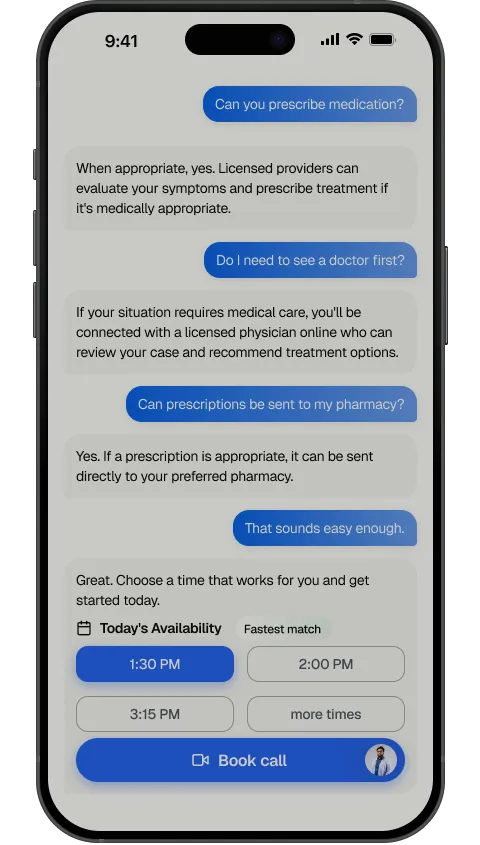
Book a $39 telehealth appointment (or copay) within 30 minutes. Our doctors create personalized treatment plans with prescriptions when needed.

Pick Up Your Prescription
Our doctors prescribe non-controlled medications in all 50 states and send prescriptions to your pharmacy for same-day pickup.
Pricing that won't make you sick
Chat for free, see an online doctor for $39/visit, or refill a prescription online for as low as $0
-
 Available in all 50 states + DC
-
 Insurance accepted

- 24/7 medical care Free
- Specialist referrals Free
- Lifelong health record Free
- Unlimited questions Free
- Prescription refills Starting as low as $0
- Video visit with real doctors $39/visit
These are stories from real users who turned to Doctronic for answers when it mattered most.
- Preparing for a doctor visit
- Finding peace of mind
- Understanding a diagnosis
- Managing chronic illness
- Navigating healthcare
- A second opinion
- Improving health











Frequently asked questions
Ascites is most commonly caused by cirrhosis of the liver, which leads to portal hypertension and low albumin levels that allow fluid to leak into the abdominal cavity. Other causes include heart failure, kidney disease, tuberculosis, and certain cancers affecting the abdomen.
The most common symptoms are progressive abdominal swelling and a feeling of fullness or heaviness in the belly. As fluid accumulates, patients may also experience shortness of breath, reduced appetite, ankle swelling, and significant unintended weight gain.
A physician typically diagnoses ascites through a physical examination, looking for a distended abdomen and signs such as shifting dullness or a fluid wave. Confirmation is usually made with an abdominal ultrasound, which can detect even small amounts of fluid. Diagnostic paracentesis (removing a small sample of fluid) is often performed to determine the cause.
Yes. Most cases of ascites are managed medically with a low-sodium diet and diuretic medications such as spironolactone and furosemide. For patients who do not respond to medications (refractory ascites), procedures such as therapeutic paracentesis or a transjugular intrahepatic portosystemic shunt (TIPS) may be needed. Surgery is rarely the first approach.
Restricting sodium intake to less than 2,000 mg per day is one of the most important steps in managing ascites. Reducing sodium helps limit fluid retention and improves the effectiveness of diuretic medications. Your physician may also advise limiting fluid intake depending on your specific situation.
Spontaneous bacterial peritonitis (SBP) is a serious infection of ascitic fluid that can occur in people with cirrhosis without any obvious source of infection. Symptoms include fever, abdominal pain, and worsening confusion. It is diagnosed by testing ascitic fluid and treated with intravenous antibiotics. Patients with a prior episode may need long-term antibiotic prophylaxis.
Doctronic uses an AI-powered evaluation to gather a thorough picture of your symptoms and health history. A licensed physician then reviews that information, confirms the assessment, and develops a personalized treatment plan, which may include prescriptions when clinically appropriate. The entire process is completed online for your convenience.
Yes. Doctronic's platform is HIPAA-aligned and all care is provided by licensed physicians whose work is doctor-reviewed and audited for quality. We serve adults 18 and older in any U.S. state, giving you access to professional medical care from wherever you are.
Top Conditions We Can Help With
People turn to Doctronic and our licensed medical team for support with all types of conditions.