Approximately 10–40% of people will experience sciatica at some point in their lives, making yoga-based relief strategies essential knowledge
Gentle poses like Child's Pose and Knees-to-Chest provide immediate decompression for irritated sciatic nerves
Piriformis-targeting stretches address one of the most common causes of sciatic pain
Core and posterior chain strengthening prevents recurring episodes
Props and modifications make yoga accessible regardless of current pain levels
Consulting resources like Doctronic.ai can help determine when professional medical intervention is necessary
What Sciatica Feels Like and Why Yoga Helps
That shooting pain traveling from your lower back down through your leg isn't something you have to accept as permanent. Sciatica affects a staggering number of people: between 10% and 40% will experience it at some point in their lives. The good news is that specific yoga poses can reduce nerve pain and restore mobility without medication or invasive procedures. Sciatica is actually a symptom, often caused by pinching of sciatic nerve roots in the lower back, usually due to disc herniation, spinal stenosis, or degenerative changes rather than excessive lumbar flexion. This understanding changes the approach entirely. Rather than simply masking pain, yoga addresses the mechanical issues creating nerve compression in the first place.
Common Causes of Sciatic Nerve Impingement
The sciatic nerve runs from the lower spine through the buttocks and down each leg. When something compresses this nerve, pain radiates along its path. Herniated discs push against nerve roots. Tight piriformis muscles squeeze the nerve where it passes through the hip. Spinal stenosis narrows the spaces where nerves exit the spine. Poor posture and prolonged sitting create chronic compression patterns that worsen over time.
How Mindful Movement Reduces Inflammation
Yoga works on multiple levels simultaneously. According to certified fitness experts, yoga can be highly effective for sciatica pain relief when practiced safely, helping to stretch tight muscles, strengthen the core and back, improve spinal alignment, and reduce inflammation through improved circulation and stress modulation. Breathing practices calm the nervous system, reducing the pain-tension cycle that worsens sciatica. Movement increases blood flow to damaged tissues, accelerating healing.
Essential Gentle Poses for Immediate Relief
When sciatic pain flares, aggressive stretching backfires. These three poses provide relief without aggravating inflamed nerves.
Child's Pose (Balasana) for Spinal Decompression
Kneel on a soft surface and sit back on your heels. Fold forward, extending arms overhead or alongside your body. This position creates gentle traction in the lumbar spine, opening space between vertebrae where nerve compression typically occurs. Hold for 1-3 minutes, breathing deeply into the lower back. The supported position allows muscles guarding the spine to release their protective tension.
Knees-to-Chest (Apanasana) for Lower Back Tension
Lie on your back and draw both knees toward your chest. Wrap your arms around your shins and gently rock side to side. This pose stretches the lower back muscles that often spasm around irritated nerves. The rocking motion provides a gentle massage to the lumbar region. Start with 30-second holds and gradually increase duration as comfort allows.
Cat-Cow Stretch to Improve Nerve Gliding
Position yourself on hands and knees with wrists under shoulders and knees under hips. Inhale while dropping your belly and lifting your gaze. Exhale while rounding your spine toward the ceiling. This alternating movement helps nerves glide through surrounding tissues rather than getting stuck. Perform 10-15 cycles, moving slowly and stopping if sharp pain occurs.
Targeted Asanas for Piriformis Syndrome
When the piriformis muscle compresses the sciatic nerve, specific hip-opening poses provide direct relief.
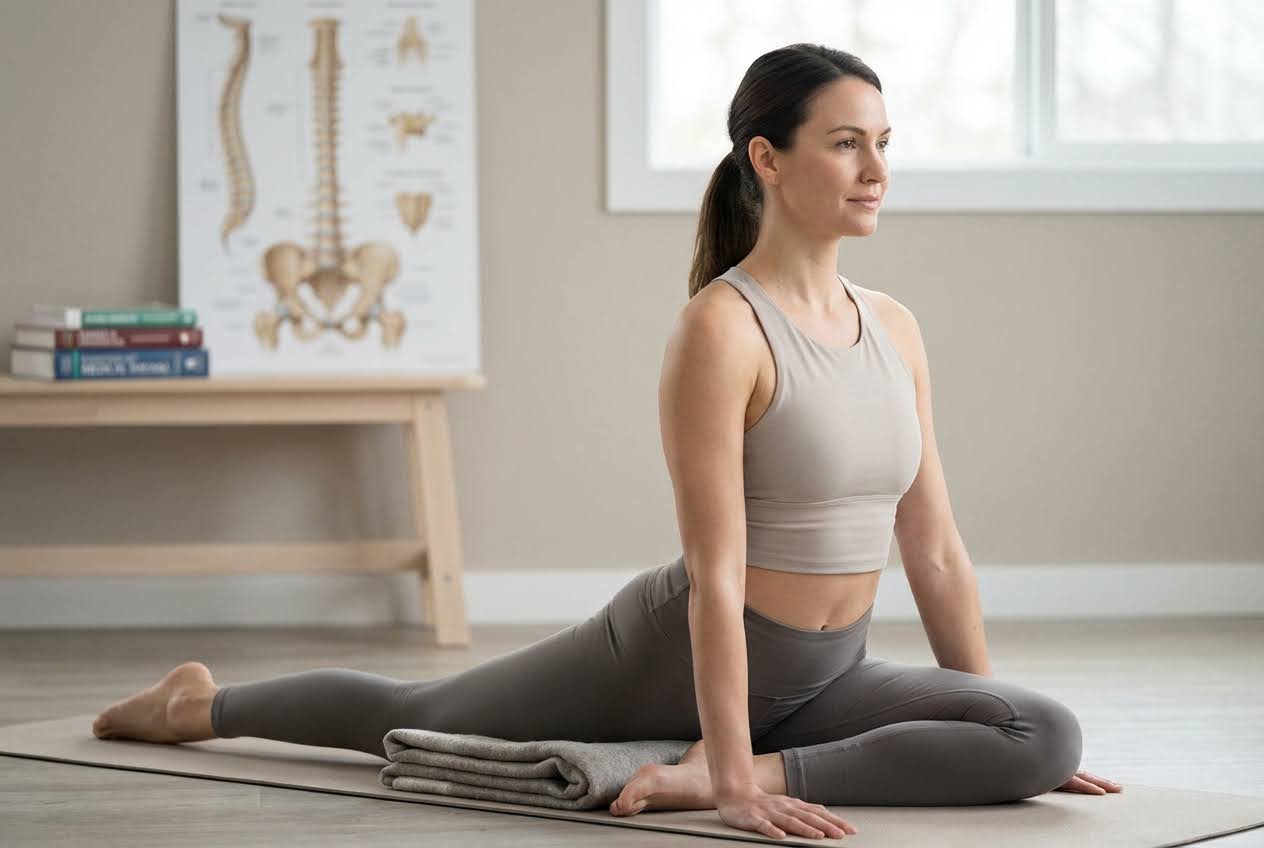
Pigeon Pose (Eka Pada Rajakapotasana) Variations
From hands and knees, bring your right knee forward toward your right wrist. Extend the left leg straight behind you. The intensity depends on how far forward you bring the right foot. Keep the front shin parallel to the mat for a deeper stretch, or angle it back toward the hip for a gentler version. Hold 1-2 minutes per side. Preliminary research indicates that yoga-based interventions may reduce perceived pain and improve function in those with chronic low back or sciatic pain, demonstrating significant relief potential.
Reclined Figure-Four Stretch
Lie on your back with knees bent and feet flat. Cross your right ankle over your left thigh. Thread your hands behind the left thigh and draw it toward your chest. This position isolates the piriformis without stressing the lower back. The reclined position makes it accessible even during acute pain episodes.
Seated Spinal Twists for Hip Mobility
Sit with legs extended. Bend your right knee and place the foot outside your left thigh. Twist toward the bent knee, using your left elbow against the outside of the right knee for leverage. Twisting mobilizes the entire hip complex and stretches muscles along the sciatic nerve pathway. Hold 30-60 seconds per side.
Strengthening the Core and Posterior Chain
Stretching provides temporary relief. Strengthening creates lasting change by supporting the spine and reducing future compression episodes.
Locust Pose (Salabhasana) for Lumbar Support
Lie face down with arms alongside your body. Lift your chest, arms, and legs off the floor simultaneously. This pose strengthens the erector spinae muscles that support the lumbar spine. Strong back muscles maintain proper spinal curves and prevent excessive spinal instability or poor posture that can contribute to nerve compression. Hold 5-10 seconds, repeating 3-5 times.
Bridge Pose (Setu Bandhasana) for Glute Activation
Lie on your back with knees bent and feet hip-width apart. Press through your feet to lift your hips toward the ceiling. Strong glutes reduce the workload on lower back muscles and maintain proper pelvic alignment. Weak glutes force the piriformis to compensate, increasing sciatic nerve compression risk. Hold 30 seconds or pulse up and down for 10-15 repetitions.
Safety Guidelines and Modification Strategies
Yoga should reduce pain, not increase it. These guidelines ensure safe practice.
Using Props: Blocks, Bolsters, and Straps
Blocks under the hands in standing poses reduce forward bending depth. Bolsters under the knees in reclined positions support the lower back. Straps extend reach without forcing flexibility. Props transform inaccessible poses into therapeutic ones. Using them isn't cheating: it's smart practice that prevents injury.
Red Flags: When to Stop and Consult a Doctor
Stop immediately if you experience sudden weakness in your leg, loss of bladder or bowel control, or numbness in the groin area. These symptoms indicate serious nerve compression requiring medical attention. Doctronic.ai offers AI-powered consultations to help determine whether your symptoms warrant immediate medical care or can be managed through continued home practice.
Building a Sustainable Daily Practice for Long-Term Recovery
Consistency matters more than intensity. A 10-minute daily practice produces better results than occasional hour-long sessions. Start with the gentlest poses and add strengthening exercises as pain decreases. Track which poses provide the most relief and prioritize them. Morning practice addresses overnight stiffness while evening sessions release daily tension accumulation.
Frequently Asked Questions
Some individuals notice improvement within a few weeks of consistent practice, though results vary depending on the underlying cause and severity of nerve irritation. Significant relief typically develops over 6-8 weeks as muscles strengthen and flexibility increases.
Yes, if performed incorrectly or too aggressively. Avoid deep forward folds and any pose that increases leg pain. Start gently and progress slowly.
Daily practice of 10-20 minutes produces the best results. Even 5 minutes of gentle stretching helps maintain progress between longer sessions.
Avoid deep forward folds, intense hamstring stretches, and any pose that rounds the lower back significantly. Skip seated forward bends until pain subsides.
The Bottom Line
Yoga offers a supportive and evidence-informed approach for reducing sciatic nerve pain through gentle stretching, targeted muscle release, and core strengthening. Consistent daily practice of appropriate poses can significantly decrease pain levels and prevent future episodes. For personalized guidance on managing sciatica symptoms, Doctronic.ai provides 24/7 AI-powered consultations and affordable telehealth visits with licensed physicians.
Understanding Emotional Wellness Through DBTEmotions feel overwhelming when they seem to control every decision. Dialectical Behavior Therapy offers practical techniques for [...]
Getting Skin Care Without the Insurance HeadachesThat suspicious mole has been bothering you for weeks. You want answers from a dermatologist, but a quick call to your [...]
Why Ankles Swell After Physical ActivityFinishing a workout with puffy, tight ankles can be alarming. Most people assume something is wrong, but bloated ankles after exercise [...]



 Strengthening the Core and Posterior Chain