
Women's Health
Menopause Joint Pain: Understanding and Managing This Common Challenge
February 20, 2026
6 min read

Medically reviewed by Alan Lucks | MD, Alan Lucks MDPC Private Practice - New York on April 16th, 2026.
Published on February 27th, 2026. Updated on July 23rd, 2026.
More than half of women experience joint pain during the menopausal transition, making it one of the most common symptoms of this life stage
Estrogen acts as a natural anti-inflammatory, and its decline directly affects bones, cartilage, tendons, and joint lubrication
Morning stiffness, reduced range of motion, and pain in hands, knees, and hips are the most frequently reported symptoms
Weight gain, muscle loss, and poor sleep during menopause can worsen joint discomfort
Evidence-based relief strategies include hormone therapy, anti-inflammatory nutrition, and low-impact exercise
Consulting a medical professional helps distinguish menopausal joint pain from conditions like rheumatoid arthritis
Questions about menopause and joint pain?
Free. Anonymous. Built by doctors.
This article covers general information. Ask Doctronic about your symptoms, medications, side effects, or treatment options.
Your joints ache. Your knees creak when you climb stairs. Your hands feel stiff every morning. If you're a woman in your 40s or 50s, these symptoms might not be random aging: they're likely connected to menopause. The relationship between declining estrogen and joint pain is well-documented, yet many women don't realize their hormones are the culprit. More than half of women experience joint pain during the menopausal transition. Understanding this estrogen connection is the first step toward finding real relief. Doctronic.ai can help you understand your symptoms and determine whether hormonal changes might be driving your discomfort.
Doctors now recognize a cluster of symptoms called menopausal arthralgia rather than a formally defined menopausal musculoskeletal syndrome. This includes joint pain, stiffness, muscle aches, and reduced mobility that appear or worsen during perimenopause and menopause. The syndrome affects millions of women, yet it remains underdiagnosed because many attribute their symptoms to normal aging.
The numbers are striking. Around 50–60% of perimenopausal and postmenopausal women report muscle or joint pain, consistent with recent epidemiological reviews. These aren't small numbers: they represent the majority of women going through this transition. Many women visit their doctors multiple times before anyone connects their joint symptoms to hormonal changes.
Menopausal joint pain differs from osteoarthritis in several ways. Osteoarthritis typically affects weight-bearing joints asymmetrically and worsens with activity. Menopause-related pain often appears in multiple joints simultaneously, improves with movement, and may fluctuate with hormonal cycles. A proper diagnosis matters because treatment approaches differ significantly.
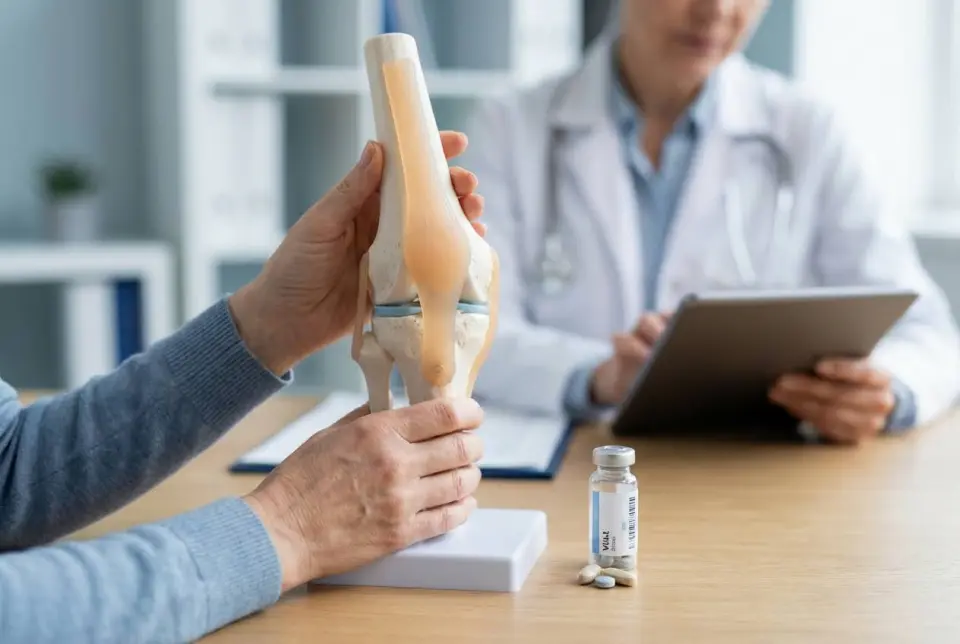 The Biological Link: Estrogen and Joint Health
Estrogen does far more than regulate reproduction. This hormone influences nearly every system in the body, including the musculoskeletal system. When estrogen levels drop during menopause, joints lose a powerful protector.
Estrogen is anti-inflammatory, and its receptors are all over the body, including your muscles, bones, joints, tendons, and ligaments. So, if its levels are going down, the bones and joints aren't seeing as much estrogen, and this withdrawal could increase joint pain in the hands, shoulders, and knees: really any joint. Without estrogen's anti-inflammatory effects, low-grade inflammation increases throughout the body. This chronic inflammation irritates joint tissues, leading to pain.
Estrogen helps maintain cartilage, the smooth tissue that covers the ends of bones in joints. It also supports collagen production, the protein that gives connective tissues their strength and flexibility. As estrogen declines, cartilage thins faster and collagen breaks down more quickly. Joints lose their cushioning and shock absorption abilities.
Synovial fluid acts like oil in a machine, lubricating joints and keeping them moving smoothly. Estrogen helps regulate the production of this lubricating fluid. Lower estrogen levels may alter synovial fluid composition rather than necessarily reducing its total amount. The result is joints that feel stiff, creaky, and painful during movement.
Joint pain during menopause follows predictable patterns. Knowing what to expect helps women identify hormonal causes and seek appropriate treatment.
Many women notice their worst symptoms upon waking. Joints feel locked up and resistant to movement. This morning stiffness typically improves within 30 minutes to an hour of activity. Reduced range of motion may make everyday tasks harder, from opening jars to reaching overhead shelves.
The hands, knees, and hips bear the brunt of menopausal joint pain. Finger joints may swell and ache, making fine motor tasks difficult. Knees often hurt when climbing stairs or rising from seated positions. Hip pain can disrupt sleep and limit walking distance. These joints contain high concentrations of estrogen-sensitive tissues, explaining their vulnerability during hormonal shifts.
Get menopause treatment online today
A licensed doctor can review your symptoms and send a prescription to your pharmacy, often the same day.
Hormonal changes don't act alone. Several secondary factors during menopause can amplify joint pain significantly.
Metabolic changes during menopause often lead to weight gain, particularly around the midsection. Every extra pound adds roughly four pounds of pressure on knee joints. This mechanical stress accelerates joint wear and intensifies pain. Maintaining a healthy weight becomes even more important during this transition.
Women lose muscle mass faster after menopause, a condition called sarcopenia. Weaker muscles provide less support for joints, forcing bones and cartilage to absorb more impact. Core instability affects posture and gait, creating uneven stress on hip and knee joints. Strength training becomes essential for joint protection.
Hot flashes and night sweats disrupt sleep quality during menopause. Poor sleep increases pain sensitivity and lowers pain tolerance. Women caught in this cycle experience more intense joint pain and have fewer resources to cope with it. Addressing sleep problems often improves pain perception.
Effective relief exists for menopause-related joint pain. The best approach combines multiple strategies tailored to individual needs.
Hormone replacement therapy (HRT) can significantly reduce joint pain for some women by restoring declining estrogen levels. Many report noticeable improvement within weeks of starting treatment. However, HRT is not appropriate for everyone, and risks vary based on personal and family medical history. Current guidelines recommend using the lowest effective dose for the shortest duration necessary to achieve your treatment goals. If you’re unsure whether HRT is right for you, Doctronic.ai offers convenient telehealth consultations to help you review your symptoms, medical history, and options with a licensed provider.
Diet directly influences inflammation levels. Focus on omega-3 fatty acids from fish, walnuts, and flaxseed. Eat colorful fruits and vegetables rich in antioxidants. Reduce processed foods, sugar, and refined carbohydrates that promote inflammation. Stay well-hydrated to support synovial fluid production and overall joint function.
Movement is medicine for menopausal joints. Swimming, cycling, and walking maintain joint mobility without excessive impact. Strength training builds muscle support around vulnerable joints. Yoga and stretching improve flexibility and reduce stiffness. The World Health Organization recommends at least 150–300 minutes of moderate aerobic activity per week, divided into manageable sessions.
Seek medical attention if joint pain limits daily activities or doesn't improve with self-care measures. Red flags include joint swelling, warmth, or redness that could indicate inflammatory arthritis. Sudden severe pain or joint deformity requires immediate evaluation. A healthcare provider can order appropriate tests and rule out conditions requiring different treatment.
Yes. Perimenopause, the transition phase before menopause, often triggers joint symptoms. Estrogen levels fluctuate dramatically during this time, sometimes causing more intense symptoms than after menopause when levels stabilize at a lower baseline.
Some women experience improvement as their bodies adjust to lower estrogen levels. Others find symptoms persist or worsen without intervention. Treatment options can provide relief regardless of where you are in the menopausal transition.
Not exactly. Menopausal joint pain results from hormonal changes affecting joint tissues. Arthritis involves actual joint damage or autoimmune processes. The two can coexist and share symptoms, making a proper diagnosis important for effective treatment.
Some women find relief with supplements like glucosamine, chondroitin, or omega-3 fatty acids. Evidence varies for different supplements. Discuss options with a healthcare provider before starting any new supplement regimen.
Menopause causes joint pain because declining estrogen removes a natural anti-inflammatory that protects cartilage, collagen, and joint lubrication. Relief is possible through hormone therapy, anti-inflammatory nutrition, exercise, and proper medical guidance. If joint pain is affecting your quality of life, Doctronic.ai offers 24/7 access to AI-powered consultations and affordable telehealth visits to help you find answers and treatment options.
Get medical advice
Chat Now