
Healthy Living
How Does Daylight Saving Time Work? The History and Health Science
April 6, 2026
7 min read

Medically reviewed by Alan Lucks | MD, Alan Lucks MDPC Private Practice - New York on May 23rd, 2026.
Published on April 17th, 2026. Updated on May 28th, 2026.
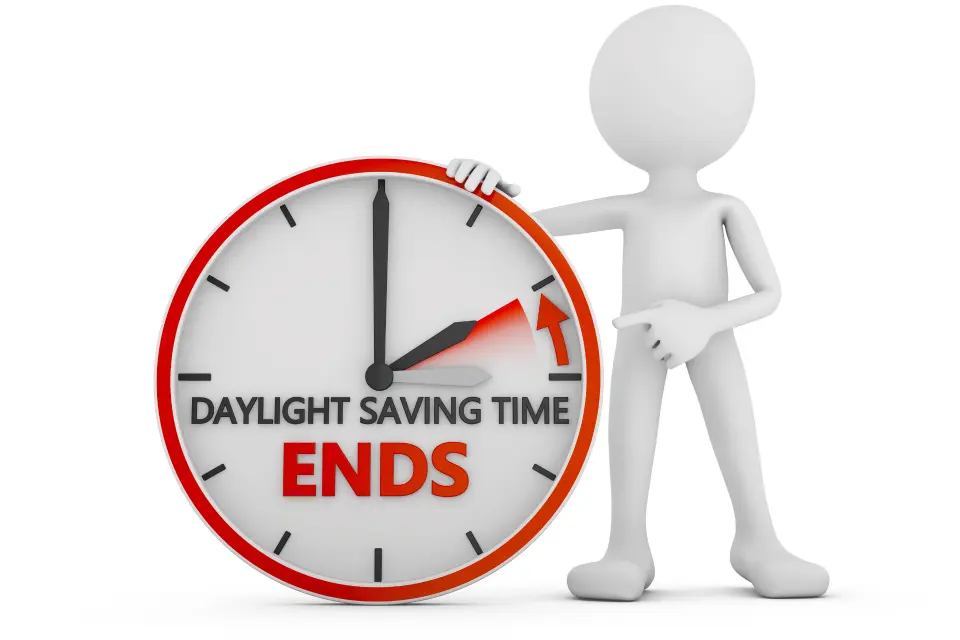
Daylight Saving Time ends on November 1, 2026, when clocks fall back one hour at 2:00 A.M.
The time change disrupts circadian rhythms, causing sleep disturbances, mood shifts, and fatigue for up to a week.
Starting sleep adjustments 15 minutes earlier each night for four nights before the change helps the body adapt smoothly.
Light exposure management and melatonin timing play important roles in resetting the internal clock.
Arizona and Hawaii do not observe Daylight Saving Time, along with several U.S. territories.
Doctronic.ai offers AI-powered health guidance for sleep concerns and circadian rhythm disruptions.
The clocks fall back, and millions of people will struggle with disrupted sleep patterns for days afterward. While gaining an extra hour sounds appealing, the reality is that this shift throws off the body's internal clock in ways most people underestimate. Understanding when Daylight Saving Time ends and preparing with proven sleep adjustment strategies makes the difference between a rough week and a smooth transition. The autumn time change affects energy levels, mood, and even road safety. Doctronic.ai helps users understand how circadian disruptions impact overall health through AI-powered consultations available around the clock.
The change in fall time marks the end of Daylight Saving Time and the return to Standard Time. This happens on the first Sunday of November each year in most of the United States. At 2:00 A.M. local time, clocks move back to 1:00 A.M., giving everyone an extra hour in bed that night.
In 2024, Daylight Saving Time ended on Sunday, November 3rd. In 2025, it ends on Sunday, November 2nd. In 2026, Daylight Saving Time ends on November 1st at 2:00 A.M. local time. Daylight Saving Time will be in effect for 240 days in 2026, covering the longer daylight months from March through early November.
Not everyone deals with this biannual clock adjustment. Arizona does not observe Daylight Saving Time, except for the Navajo Nation within its borders. Hawaii also stays on Standard Time year-round. U.S. territories including Puerto Rico, Guam, American Samoa, the U.S. Virgin Islands, and the Northern Mariana Islands skip the time change entirely. Residents in these areas avoid the sleep disruption that affects the rest of the country.
The body runs on a 24-hour internal clock called the circadian rhythm. This system controls sleep-wake cycles, hormone release, body temperature, and dozens of other biological processes. Good sleep health depends on keeping this system stable, and shifting the clock by even one hour forces it to recalibrate.
That bonus hour on fall-back night sounds like a gift, but the body does not simply absorb it without consequences. The circadian rhythm is tied to light exposure, not clock time. When sunset suddenly arrives an hour earlier by the clock, the brain receives darkness signals at unexpected times. This confuses the suprachiasmatic nucleus, the brain's master clock located in the hypothalamus. Melatonin release shifts, cortisol timing changes, and sleep architecture becomes temporarily disorganized.
Most people experience some degree of adjustment difficulty. Common symptoms include waking up too early for several days, feeling groggy in the late afternoon, increased irritability, and difficulty concentrating. Some individuals report mild seasonal depression symptoms as daylight hours decrease. Children and older adults often have the hardest time adjusting. The disruption typically lasts three to seven days, though some people feel off for up to two weeks. The transition can also affect sleep quality and mood in ways that extend well beyond the first few days.
Preparation makes the fall time change much easier on the body. Starting adjustments before the clock change prevents the sudden shock to the circadian system.
Sleep experts recommend a gradual approach rather than trying to adapt all at once. Starting four nights before the change, shift bedtime 15 minutes earlier each night. This gradual approach helps the brain and body adjust in small steps. By the time clocks fall back, the body has already shifted its internal timing. This method works especially well for children, whose sleep schedules are more rigid.
The bedroom setup matters more during transition periods. Keep the room cool, between 60 and 67 degrees Fahrenheit. Use blackout curtains to control light exposure, especially important as morning light arrives earlier on the clock after the change. Remove electronic devices that emit blue light. White noise machines help maintain consistent sleep despite schedule disruptions. Doctronic.ai can provide personalized recommendations for sleep environment optimization based on individual health profiles.
Light is the most powerful signal for resetting circadian rhythms. Get bright light exposure in the morning, ideally natural sunlight within 30 minutes of waking. This tells the brain that daytime has started. In the evening, dim lights two hours before bed to encourage natural melatonin production. Some people benefit from melatonin supplements during the transition week, typically 0.3 to 1 milligram taken 30 minutes before the target bedtime.
The end of Daylight Saving Time brings darker evenings that affect energy and mood. Proactive lifestyle changes help maintain well-being through the transition and the winter months ahead.
What and when a person eats influences sleep quality significantly. Avoid caffeine after noon during the adjustment period, as it stays in the system for up to 10 hours. Eat dinner at least three hours before bedtime to allow digestion to complete. Foods rich in tryptophan, magnesium, and B vitamins support natural sleep. These include turkey, nuts, leafy greens, and whole grains. Alcohol may seem relaxing but actually fragments sleep architecture and should be limited, especially in the week surrounding the time change.
When darkness falls at 5:00 P.M., afternoon energy often crashes. Counter this by establishing a strong morning routine that anchors the day. Exercise in the morning rather than evening to boost alertness when it matters most. Light therapy boxes can supplement natural light on cloudy days, providing 10,000 lux for 20 to 40 minutes each morning. Maintain consistent wake times even on weekends to keep the circadian rhythm stable.
The fall time change serves as a useful reminder for household safety tasks. Replace batteries in smoke detectors and carbon monoxide alarms. Check flashlight batteries and emergency supply kits before winter storms arrive. Test garage door sensors and outdoor lighting. Many fire departments recommend using the time change as a biannual safety check trigger. Driving requires extra caution in the days following the change, as drowsy driving incidents increase during the adjustment period.
Legislation to make Daylight Saving Time permanent has gained momentum in recent years. The Sunshine Protection Act passed the U.S. Senate in 2022 but stalled in the House. Several states have passed laws to adopt permanent DST if federal law changes. Supporters argue that eliminating the biannual clock change would reduce health risks, traffic accidents, and energy costs. Critics point out that permanent DST would mean very late sunrises in winter, particularly problematic for school children waiting for buses in darkness. As of 2026, no federal law has been enacted to make Daylight Saving Time permanent, and the biannual clock changes remain in effect nationwide.
Most adults adjust within three to seven days. Children and older adults may need up to two weeks. Using gradual adjustment techniques before the change significantly shortens this period.
Yes. Shift children's bedtimes 15 minutes earlier each night starting four days before the change. This prevents the sudden disruption that causes crankiness and sleep problems in kids.
The combination of clock change and reduced daylight can trigger or worsen seasonal depression symptoms. People with a history of mood disorders should monitor their mental health closely and seek support if symptoms appear.
For most adults, short-term melatonin use is considered safe. Start with the lowest effective dose, typically 0.3 to 1 milligram. Consult a healthcare provider before use, especially for children or those taking other medications.
Preparing for the end of Daylight Saving Time with gradual sleep adjustments and light exposure management prevents the fatigue and disruption that catches most people off guard. For personalized guidance on sleep health and circadian rhythm concerns, visit Doctronic.ai for free AI doctor consultations or convenient telehealth visits available 24/7.
Get sleep health advice
Chat Now
Join 50,000+ readers using Doctronic to understand symptoms, medications,
and next steps.
Add your phone number below to get health updates and exclusive VIP offers.
By providing your phone number, you agree to receive SMS updates from Company. Message and data rates may apply. Reply “STOP” to opt-out anytime. Read our Privacy Policy and Terms of Service for more details.
Save your consults. Talk with licensed doctors and manage your health history.