

Vaginal Dryness During Menopause
Meta Description: Understand why vaginal dryness during menopause occurs and explore effective treatments, from moisturizing therapies to low-dose estrogen and laser [...]
Read MoreMinimally invasive lumbar decompression (MILD) offers same-day relief with tiny incisions and quick recovery times
Interspinous process spacers like Vertiflex Superion preserve natural spinal movement without fusion
Regenerative treatments, including stem cell therapy and PRP injection,s show promise for disc regeneration
Robotic-assisted surgery provides surgeons with enhanced precision and real-time navigation
Most patients no longer need traditional open surgery thanks to these newer options
Doctronic.ai can help patients understand their symptoms and explore treatment options before seeing a specialist
Back pain that worsens when standing or walking but improves when sitting forward: this is the hallmark of spinal stenosis. Millions of people experience this narrowing of the spinal canal, which puts pressure on nerves and causes pain, numbness, and weakness. The good news? The newest treatments for spinal stenosis have changed dramatically over the past decade. Patients now have access to procedures that were science fiction just twenty years ago. Recent clinical evidence suggests that many patients who undergo lumbar spinal stenosis surgery experience meaningful improvement within the first year after their procedure. These outcomes reflect a broader shift toward less invasive, more precise surgical techniques designed to reduce recovery time and improve function.
A traditional laminectomy involves removing part of the vertebral bone to create more space for nerves. While effective, this approach requires large incisions, significant muscle disruption, and extended hospital stays. Recovery often takes months, and some patients develop instability at the surgical site. The procedure also carries higher risks of infection and blood loss compared to newer methods. Many patients simply cannot tolerate such an invasive approach, especially older adults with other health conditions.
Smaller incisions mean less tissue damage, reduced pain, and faster healing. Surgeons can now access the spine through openings smaller than a dime using specialized cameras and instruments. Endoscopic spine surgery is a relatively new approach, offering an ultra-minimally invasive option with prioritized patient safety, faster recovery, and long-term relief. Patients often go home the same day and return to normal activities within weeks rather than months.
The MILD procedure is among the most significant advances in treating lumbar spinal stenosis. This outpatient treatment takes about an hour and requires only a small incision about the size of a baby aspirin. Patients receive local anesthesia and mild sedation rather than general anesthesia, substantially reducing risk.
During MILD, the surgeon uses fluoroscopic guidance to remove small portions of bone and excess ligament tissue that crowd the spinal canal. Special tools allow the precise removal of only the tissue causing compression. The procedure does not require implants, screws, or stitches. By removing the thickened ligament and small bone spurs, the spinal canal opens up, giving nerves room to function normally again.
Most MILD patients walk within hours of the procedure and go home the same day. Pain relief often begins immediately, though full benefits may take several weeks to appear. Clinical studies show that patients experience significant improvements in standing and walking ability. The procedure works especially well for people with ligamentum flavum hypertrophy, a common cause of stenosis where the spinal ligament thickens with age.
Another modern approach involves placing small devices between the bony projections at the back of the vertebrae. These spacers hold the spine in a slightly flexed position, which naturally opens the spinal canal and reduces nerve compression.
The Vertiflex Superion is an FDA-approved spacer that surgeons implant through a tiny incision. The device sits between spinous processes and prevents the spine from extending into positions that pinch nerves. Patients with moderate stenosis who get relief when bending forward are ideal candidates. The implant requires no bone removal and preserves all spinal structures.
Unlike spinal fusion, which permanently joins vertebrae together, interspinous spacers maintain natural movement. This matters because fusion can accelerate wear on adjacent spinal segments over time. Spacers allow the spine to flex and extend within safe limits. Patients retain mobility while avoiding the positions that cause their symptoms. If needed, the device can be removed later without permanent changes to spinal anatomy.
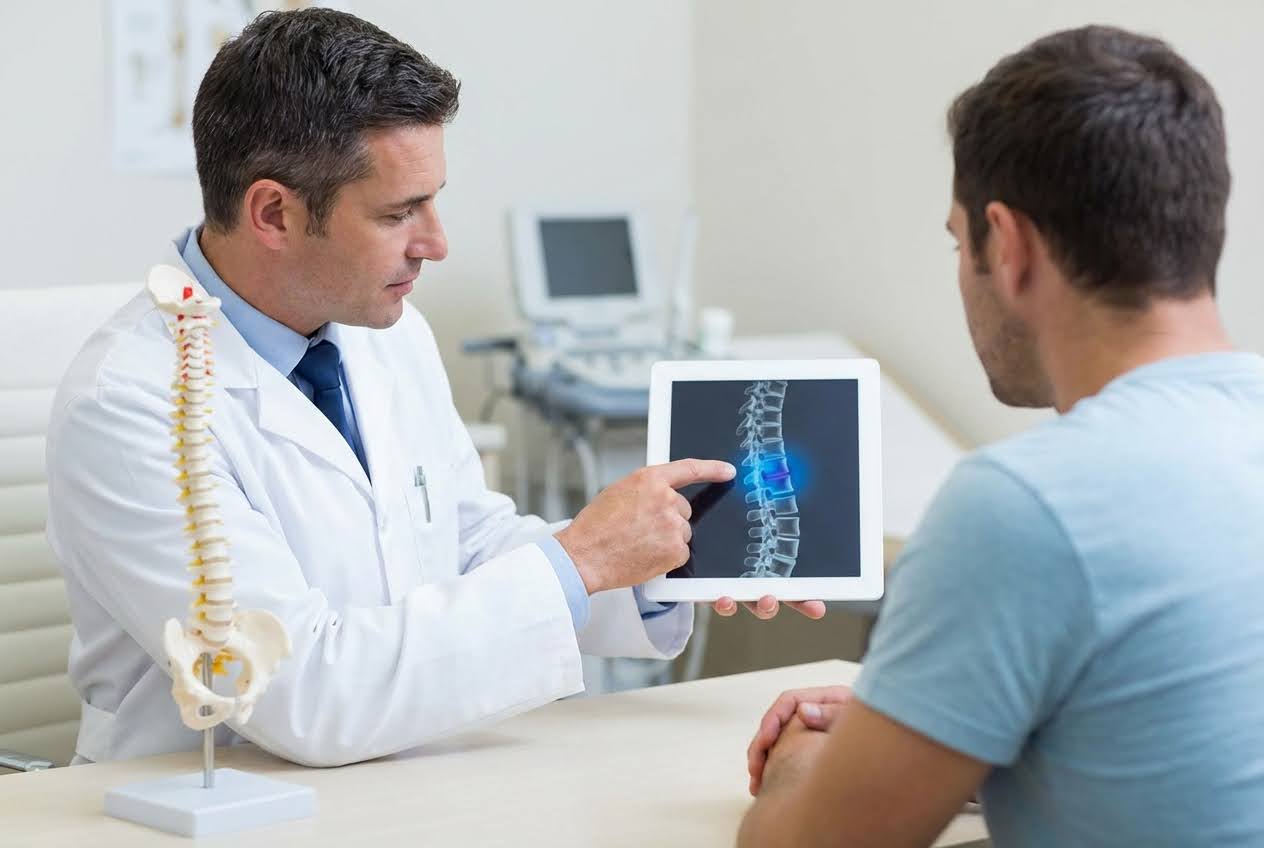 Advancements in Regenerative Medicine and Biologics
Regenerative treatments represent the frontier of spinal stenosis care. Rather than simply removing tissue or adding hardware, these approaches aim to heal and restore damaged structures.
Stem cell injections target degenerated discs that contribute to stenosis. These cells can develop into various tissue types and may help rebuild disc material. While still considered experimental for spinal stenosis, current evidence shows only preliminary benefits in small clinical studies, and the therapy remains under investigation by the FDA. Patients considering this option should seek providers with specific expertise in spinal applications. Doctronic.ai can help patients research the latest developments in regenerative spine treatments and understand whether they might be candidates.
PRP uses concentrated healing factors from the patient's own blood. After drawing blood, a centrifuge separates platelets and growth factors, which are then injected into the affected spinal area. PRP may reduce inflammation and promote tissue healing. Although PRP is widely used off-label for musculoskeletal conditions, clinical evidence for spinal stenosis remains limited, and it is not currently FDA-approved for this indication. While not a standalone cure for stenosis, PRP can complement other treatments and help manage symptoms without surgery.
When surgery becomes necessary, robotic systems now provide unprecedented precision. These machines do not operate independently: surgeons control every movement while robots provide enhanced accuracy and real-time feedback.
Robotic-assisted procedures allow surgeons to plan operations using 3D imaging before making any incisions. During surgery, navigation systems track instruments in real time, ensuring screws and implants go exactly where planned. This precision reduces the risk of nerve damage and improves outcomes. The technology also enables smaller incisions because surgeons can work more accurately in tight spaces. Patients benefit from shorter procedures, less blood loss, and faster recovery times.
Not every stenosis patient needs the same treatment. Mild cases often respond to physical therapy, anti-inflammatory medications, and activity modifications. When conservative care fails, the choice between procedures depends on several factors: the location and severity of narrowing, overall health, and specific symptoms.
Patients should ask their doctors about all available options, including the newest minimally invasive treatments. Getting a second opinion makes sense for any spinal procedure. Doctronic.ai offers free AI doctor visits where patients can discuss their symptoms, understand their diagnosis, and prepare questions for their specialists. This preparation leads to better conversations with surgeons and more informed decisions.
For those ready to explore their options, Doctronic provides 24/7 access to telehealth visits with licensed physicians. Over 10 million people have used the service to get personalized medical guidance. Start your free consultation to learn which stenosis treatments might work best for your situation.
Medicare and many private insurers cover the MILD procedure for eligible patients with lumbar spinal stenosis. Coverage depends on specific diagnosis criteria and documentation of failed conservative treatment.
Interspinous spacers like Vertiflex Superion are designed for long-term use. Clinical data demonstrate maintained symptom relief and function for up to five years in the most appropriately selected patients.
Stenosis can recur or develop at different spinal levels over time. Minimally invasive treatments preserve more spinal anatomy, which may reduce this risk compared to traditional surgery.
Patients with severe stenosis, significant spinal instability, or multiple compressed levels may require more extensive procedures. A spine specialist can determine candidacy after imaging studies.
Most patients return to desk work within one to two weeks. Jobs requiring heavy lifting may require four to six weeks of recovery.
The newest spinal stenosis treatments focus on minimally invasive options that reduce nerve pressure while preserving spinal stability and movement. Procedures like MILD and interspinous spacers may offer faster recovery than traditional surgery. Doctronic.ai can help you understand your symptoms and prepare for a specialist visit.
Meta Description: Understand why vaginal dryness during menopause occurs and explore effective treatments, from moisturizing therapies to low-dose estrogen and laser [...]
Read MoreMeta Description: Discover why perimenopause causes itching and explore effective relief strategies, from hormone therapy to skincare tips, to soothe dry and itchy skin.When [...]
Read MoreMeta Description: Understand why weight gain during perimenopause occurs and learn how to manage it through protein intake, resistance training, and better sleep habits.Why [...]
Read More