

Vaginal Dryness During Menopause
Meta Description: Understand why vaginal dryness during menopause occurs and explore effective treatments, from moisturizing therapies to low-dose estrogen and laser [...]
Read MoreScoliosis affects 2-4% of Americans, roughly 7-10 million people, making it one of the most common spinal conditions
The three main types are adolescent idiopathic scoliosis, degenerative scoliosis in adults, and congenital or neuromuscular scoliosis
Early detection through physical exams and X-rays, measuring the Cobb angle, determines the best treatment path
Non-surgical options include observation, bracing, and specialized physical therapy like the Schroth Method
Severe curves over 45-50 degrees often require surgical intervention, such as spinal fusion
Doctronic.ai offers free AI doctor visits to help identify symptoms and guide next steps
A curved spine sounds alarming, but scoliosis is more common than most people realize. Scoliosis affects 2-4% of Americans, equating to roughly 7-10 million people. The condition involves a sideways curve of the spine that can develop during childhood, adolescence, or adulthood. Understanding the symptoms and treatment options for scoliosis helps patients and families make informed decisions about care.
The spine normally has gentle front-to-back curves, but scoliosis creates an abnormal side-to-side curve that can resemble the letter "S" or "C" when viewed from behind. While mild cases may cause no problems, moderate-to-severe curves can lead to pain, respiratory difficulties, and visible changes in posture. Obtaining an accurate diagnosis early enables effective management.
The most common form of scoliosis appears during the growth spurt just before puberty, typically between ages 10 and 15. "Idiopathic" means doctors don't know the exact cause, though genetics plays a significant role. If a parent has scoliosis, their child faces a higher risk of developing it. Girls are more likely than boys to have curves that progress and require treatment.
Adults can develop scoliosis even if their spine was straight during childhood. Degenerative scoliosis results from wear and tear on the spinal discs and joints over time. Conditions like arthritis, osteoporosis, and disc degeneration contribute to this type. It typically affects people over 50 and often causes more pain than adolescent scoliosis because of the underlying joint damage.
Some babies are born with spinal abnormalities that cause congenital scoliosis. These defects occur during fetal development when vertebrae form incompletely or fail to separate properly. Neuromuscular scoliosis develops in people with conditions like cerebral palsy, muscular dystrophy, or spinal cord injuries. These underlying conditions affect the muscles and nerves that support the spine.
 Recognizing Common Symptoms and Physical Signs
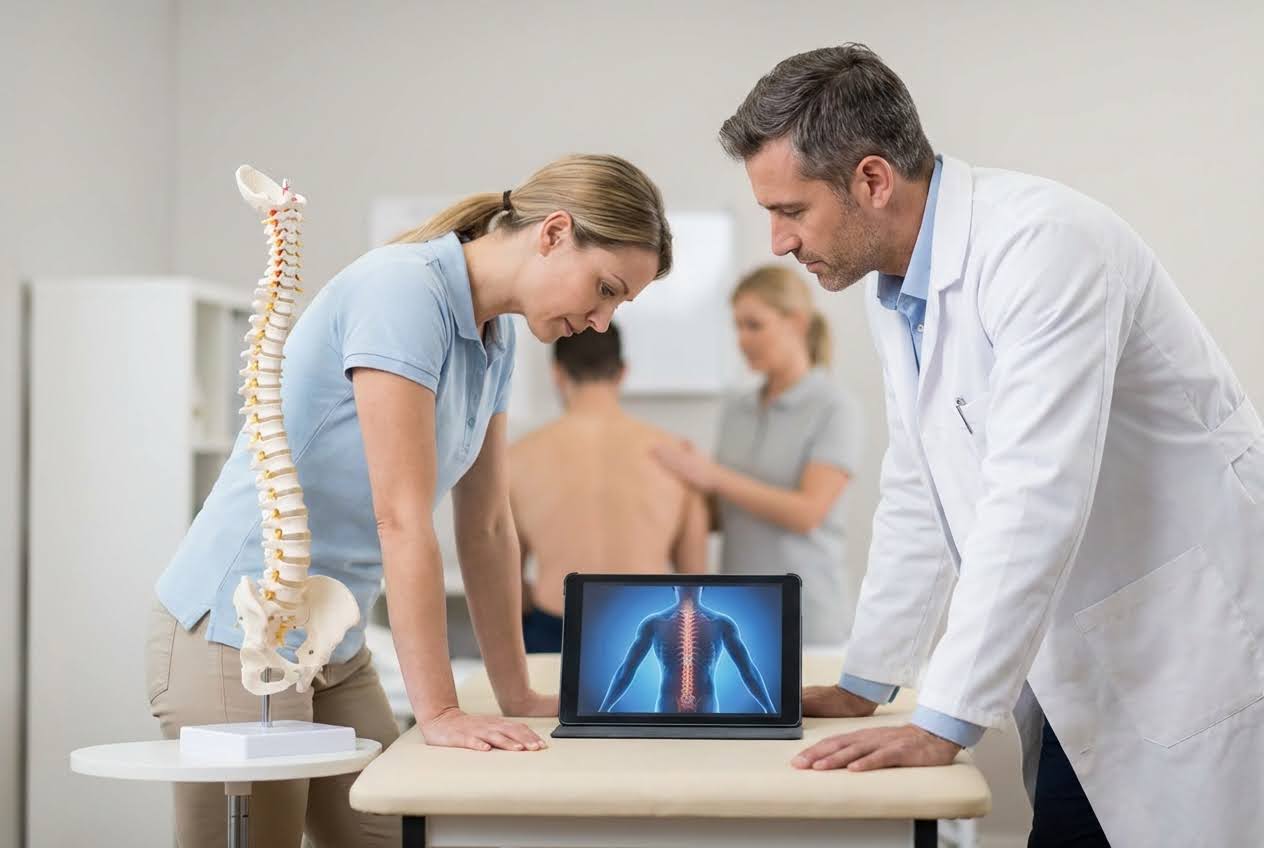
The first signs of scoliosis often present as asymmetric shoulders, with one appearing higher than the other. Parents might notice that one hip sticks out more prominently or that the waistline looks uneven. When a child bends forward, one side of the rib cage may appear higher than the other. Clothes may fit unevenly, with hemlines appearing crooked.
Contrary to popular belief, adolescent scoliosis doesn't always cause pain. Adults with scoliosis, though, frequently experience back pain as their primary symptom. The pain often worsens after standing or sitting for long periods. Muscle fatigue occurs because the back muscles work harder to compensate for the spinal curve. Strengthening the back muscles is critical to countering back pain and degeneration.
Severe scoliosis can compress the chest cavity and reduce lung capacity. Patients may feel short of breath during physical activity or even at rest. In extreme cases, the curve can put pressure on internal organs and affect digestion. These complications typically only occur with curves greater than 80 degrees.
Doctors start with a simple physical exam where the patient bends forward at the waist with arms hanging down. This position makes any rib hump or asymmetry more visible. A scoliometer measures the angle of trunk rotation. If the reading exceeds 5-7 degrees, the doctor will order imaging studies for a closer look.
X-rays provide the definitive diagnosis and allow doctors to measure the curve's severity using the Cobb angle. This measurement calculates the angle between the most tilted vertebrae at the top and bottom of the curve. Curves under 10 degrees are considered normal spinal variation. Curves between 10-25 degrees are mild, 25-40 degrees are moderate, and anything over 40 degrees is severe.
Mild curves often require nothing more than regular check-ups to monitor for progression. Children still growing need X-rays every 4-6 months to track any changes. Once skeletal maturity is reached, curves rarely progress significantly. Adults with mild scoliosis may only need yearly monitoring unless symptoms develop.
Bracing is most effective for growing children with curves between 25 and 40 degrees. The goal isn't to correct the curve but to prevent it from getting worse. The most common type is the thoracolumbosacral orthosis, worn 16-23 hours daily until growth stops. Some newer braces may also be used part-time under medical supervision, depending on the curve pattern and growth stage. Bracing has no benefit for adults since their bones have stopped growing.
Specialized physical therapy can help manage symptoms and potentially slow curve progression. The Schroth Method uses customized exercises based on the patient's specific curve pattern. These exercises focus on elongating the spine, rotating the torso toward a more neutral position, and strengthening core muscles. Doctronic.ai can help patients understand which exercises might benefit their particular situation.
When curves exceed 45-50 degrees or continue to progress despite bracing, surgery is recommended. Spinal fusion permanently connects two or more vertebrae using bone grafts, rods, and screws. The hardware keeps the spine straight while the bones heal. Most patients experience significant improvement in their curve and can return to normal activities within 6-12 months.
Young children with severe scoliosis present a unique challenge since fusion would limit spinal growth. Growing rods offer a solution by attaching to the spine above and below the curve without fusing it. Traditional growing rods require surgery every 6-8 months to lengthen them. Newer magnetic growing rods can be lengthened externally without additional surgeries.
Most people with scoliosis lead full, active lives with proper management. Mild curves rarely cause problems and may never need treatment beyond monitoring. Moderate curves managed with bracing during adolescence typically stabilize once growth ends. Even patients who undergo surgery can participate in most sports and activities after recovery.
Regular exercise, maintaining a healthy weight, and practicing good posture all support spinal health. Swimming and yoga are particularly beneficial because they strengthen back muscles without high impact. People with scoliosis should avoid carrying heavy bags on one shoulder and take breaks from prolonged sitting.
Scoliosis cannot be cured, but it can be effectively managed. Surgery can significantly reduce curve severity, though some curve typically remains. Non-surgical treatments focus on preventing progression and managing symptoms rather than eliminating the curve entirely.
Schools often screen children between the ages of 10 and 15, which coincides with the growth spurt when curves most commonly develop and progress. Parents should also watch for signs like uneven shoulders or a prominent rib hump.
Mild curves typically remain stable after skeletal maturity. Curves over 50 degrees at maturity may progress 1-2 degrees per year throughout adulthood. Degenerative changes can also cause new curves or worsen existing ones in older adults.
Exercise is encouraged for most people with scoliosis. Low-impact activities like swimming, walking, and yoga strengthen supporting muscles. Patients should consult their doctor before starting high-impact sports, especially after surgery.
Scoliosis affects millions of people but responds well to appropriate treatment when caught early. Whether managing symptoms through physical therapy or correcting severe curves with surgery, effective options exist for every patient. For personalized guidance on spinal symptoms, Doctronic.ai offers free AI doctor visits and affordable telehealth consultations with real physicians.
Meta Description: Understand why vaginal dryness during menopause occurs and explore effective treatments, from moisturizing therapies to low-dose estrogen and laser [...]
Read MoreMeta Description: Discover why perimenopause causes itching and explore effective relief strategies, from hormone therapy to skincare tips, to soothe dry and itchy skin.When [...]
Read MoreMeta Description: Understand why weight gain during perimenopause occurs and learn how to manage it through protein intake, resistance training, and better sleep habits.Why [...]
Read More