

Vaginal Dryness During Menopause
Meta Description: Understand why vaginal dryness during menopause occurs and explore effective treatments, from moisturizing therapies to low-dose estrogen and laser [...]
Read MoreApproximately 8 in 10 Americans experience back pain at some point, making targeted stretching essential for relief and prevention
Exercise alone reduces the risk of lower back pain episodes by roughly 25%
Flexion stretches like child's pose and knee-to-chest movements provide immediate relief by gently mobilizing the spine and relaxing surrounding muscles
Hip and glute stretches address the supporting muscles that often contribute to lumbar discomfort
A consistent daily routine of 10-15 minutes produces better results than occasional longer sessions
That nagging ache in the lower back is not just uncomfortable: it stops people from working, playing with their kids, and sleeping through the night. Approximately 8 in 10 Americans experience back pain at some point in their lives, with the lower back being the most commonly affected area. The good news is that simple stretching exercises for lower back pain relief can make a real difference. These movements do not require a gym membership or special equipment. They work by loosening tight muscles, improving blood flow, and restoring the natural mobility that prolonged sitting and phone use reduce. Doctronic.ai helps millions of people understand their pain and find the right exercises for their specific situation.
Most lower back pain comes from everyday habits rather than serious injuries. Sitting for hours tightens the hip flexors, which pulls the pelvis forward and strains the lumbar spine. Weak core muscles fail to support the spine properly, forcing the back muscles to work overtime. Weak or inflexible muscles, excess weight, and poor posture can cause back pain.
Stretching works because it lengthens muscles that have shortened from disuse or overwork. When hip flexors and hamstrings stay tight, they create a tug-of-war that the lower back loses. Staying mobile, even with pain, is important to prevent further tightening and worsening of the condition. Regular stretching breaks this cycle by restoring proper muscle length and reducing the constant pull on spinal structures.
Child's pose is the go-to stretch when the lower back feels compressed and achy. Kneel on a soft surface, sit back on the heels, and reach the arms forward while lowering the chest toward the floor. This position gently stretches and relaxes the muscles along the entire spine. Hold for 30-60 seconds and focus on breathing deeply into the lower back.
This stretch directly targets the lumbar region and feels good almost immediately. Lie flat on your back, bend one knee, and use both hands to pull it gently toward the chest. Keep the other leg straight or slightly bent for comfort. The stretch should feel like a gentle pull, never sharp pain. Switch sides after 20-30 seconds.
Cat-cow combines two movements that warm up the entire spine. Start on hands and knees with a flat back. For the cow position, drop the belly toward the floor while lifting the head and tailbone. For the cat position, round the spine toward the ceiling while tucking the chin and tailbone. Flow between these positions slowly for 10-15 repetitions.
 Targeting Supporting Muscles: Hips and Glutes
The piriformis muscle sits deep in the buttocks and can irritate the sciatic nerve when tight. Lie on your back with both knees bent. Cross one ankle over the opposite knee, then pull the bottom leg toward the chest. A deep stretch will be felt in the buttocks of the crossed leg. This stretch is especially helpful for people who sit for long periods.
Tight hip flexors are a hidden cause of lower back pain that many people overlook. Kneel on one knee with the other foot flat on the floor in front. Tuck the tailbone slightly and shift weight forward until a stretch is felt in the front of the hip. Keep the torso upright and avoid arching the back. Hold each side for 30 seconds. Users of Doctronic.ai can get personalized guidance on which stretches match their specific pain patterns.
The spine needs to rotate, and most daily activities ignore this movement completely. Sit on the floor with legs extended. Bend one knee and cross that foot over the opposite leg. Place the opposite elbow on the outside of the bent knee and twist gently toward that side. Keep the spine tall rather than rounding forward. This stretch improves flexibility in the small muscles between vertebrae.
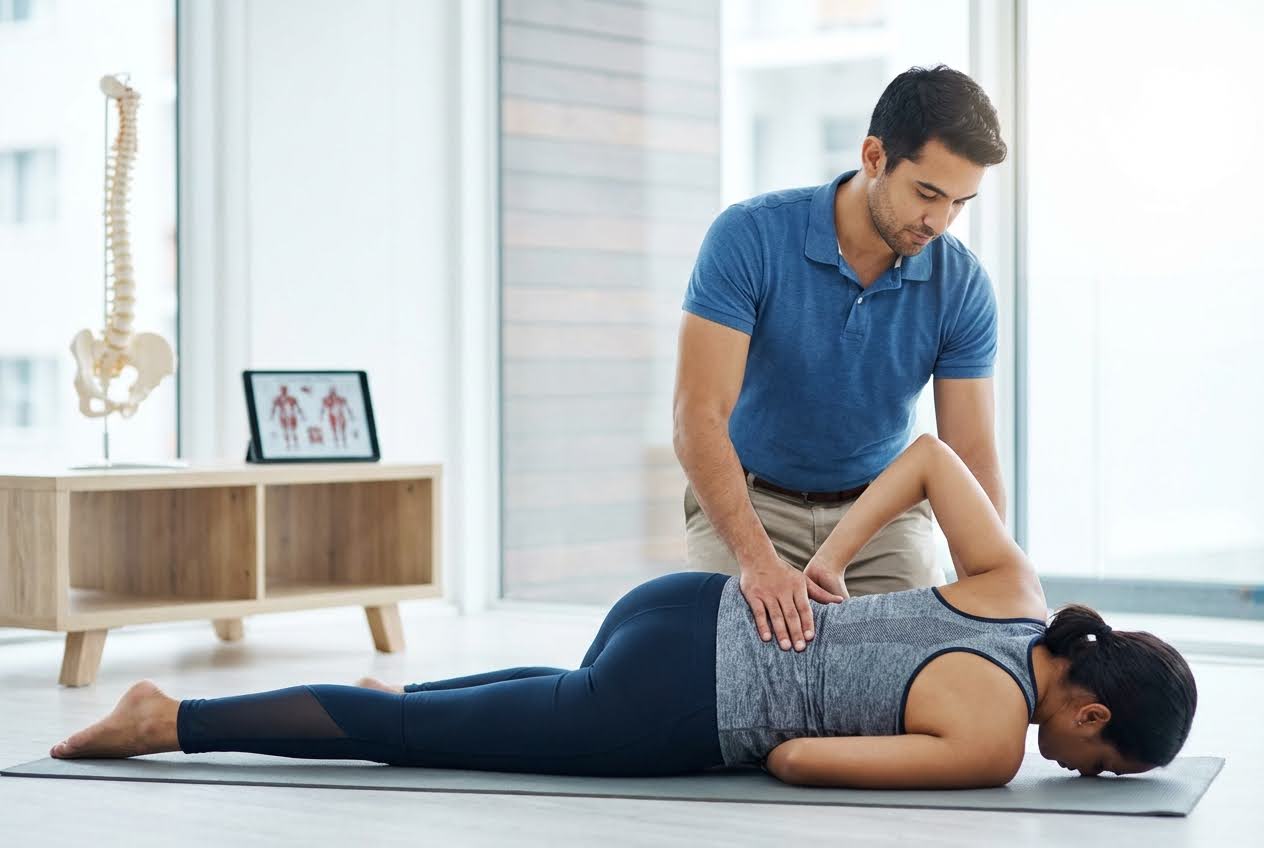
After lots of forward bending and sitting, the lower back benefits from gentle backward movement. Lie face down and prop up on the forearms with elbows directly under the shoulders. Let the lower back relax and sag slightly toward the floor. This mild extension counteracts the constant flexion that modern life demands. Hold for 30 seconds to 2 minutes.
Not all back pain should be stretched away. Stop immediately if any stretch causes shooting pain down the leg, numbness, or tingling. Pain that worsens with movement or does not improve after one to two weeks requires professional evaluation. Doctronic.ai offers 24/7 telehealth visits with real doctors who can determine if stretching is appropriate or if further testing is needed.
Breathing makes stretching more effective. Exhale while moving into a stretch and continue breathing slowly while holding. Never hold your breath, as this creates tension that works against the stretch. Most stretches should be held for 20-60 seconds. Bouncing or forcing a stretch past the point of mild discomfort increases injury risk.
The best stretching routine is one that actually gets done. Start with just 5 minutes in the morning and 5 minutes before bed. Pick three or four stretches that feel best and rotate them throughout the week. Consistency matters more than duration: ten minutes daily beats an hour once a week. Set a phone reminder or attach the routine to an existing habit like brushing teeth. Track progress by noticing how daily activities feel easier over time.
Most people notice some improvement within one to two weeks of daily stretching. Significant changes in flexibility and pain levels typically take four to six weeks of consistent practice.
Yes, if done incorrectly or with the wrong diagnosis. Sharp pain, numbness, or increased symptoms mean the stretch is not appropriate. Always start gently and progress slowly.
Two to three short sessions spread throughout the day work better than one long session. Morning stretches combat overnight stiffness, while evening stretches relieve the tension built up during the day.
Some stretches help herniated discs while others make them worse. Extension-based movements often relieve pressure on the disc, while deep forward flexion can sometimes aggravate symptoms. A healthcare provider should evaluate the specific situation before starting any routine.
Lower back stretching exercises offer real relief for the millions of people dealing with lumbar pain. A daily routine of just 10-15 minutes can reduce discomfort, improve mobility, and prevent future episodes when done correctly and consistently.
For personalized guidance on managing back pain, visit Doctronic.ai for free AI doctor consultations or affordable telehealth visits with licensed physicians available around the clock.
Meta Description: Understand why vaginal dryness during menopause occurs and explore effective treatments, from moisturizing therapies to low-dose estrogen and laser [...]
Read MoreMeta Description: Discover why perimenopause causes itching and explore effective relief strategies, from hormone therapy to skincare tips, to soothe dry and itchy skin.When [...]
Read MoreMeta Description: Understand why weight gain during perimenopause occurs and learn how to manage it through protein intake, resistance training, and better sleep habits.Why [...]
Read More