

Vaginal Dryness During Menopause
Meta Description: Understand why vaginal dryness during menopause occurs and explore effective treatments, from moisturizing therapies to low-dose estrogen and laser [...]
Read MoreLower back pain affects about 80% of adults at some point, but proper stretching can reduce discomfort by up to 20–25%
Always warm up before stretching and learn to tell the difference between good tension and actual pain
The cat-cow pose, child's pose, and knee-to-chest stretch offer quick relief for tight lower back muscles
Tight hip flexors, hamstrings, and glutes often cause lower back problems, so stretch these areas too
A daily routine of 10-15 minutes works better than occasional long sessions for lasting results
That nagging ache in your lower back isn't just annoying: it's your body sending a clear message. Lower back pain affects roughly 80% of adults at some point in their lives. Most people respond by either ignoring it or stretching incorrectly, which often makes things worse. Learning how to stretch the lower back properly changes everything. The difference between helpful stretching and harmful stretching comes down to technique, timing, and understanding what your body actually needs. Doctronic helps millions of people understand their pain better through AI-powered consultations, but the stretching work still falls on you. Regular stretching can reduce lower back pain by up to 20–25%. Those results only happen when you stretch correctly.
Your lower back contains five vertebrae called the lumbar spine. These bones stack on top of each other with cushioning discs between them. Muscles wrap around this area like a protective sleeve, including the erector spinae that run along your spine and the quadratus lumborum on each side. These muscles work constantly to keep you upright and stable. When they get tight or weak, pain follows quickly.
Sitting causes more lower back problems than almost anything else. Hours in a chair shorten your hip flexors, which then pull on your lower back. Poor posture compounds this problem by forcing muscles to work harder than they should. Weak core muscles leave your back without proper support. Stress also plays a role: tight muscles often reflect emotional tension. Identifying your specific cause helps you choose the right stretches for your situation.
Cold muscles don't stretch well. They resist and can tear when pushed too far. Five minutes of light movement before stretching makes a huge difference. Walk around, do some gentle twists, or march in place. Your muscles need blood flow before they can safely lengthen. Skipping this step is the most common mistake people make.
Proper stretching technique is crucial to avoid further injury. Focus on slow, controlled movements and listen to your body. Good tension feels like a gentle pull in the muscle. Pain feels sharp, shooting, or burning. If you feel anything traveling down your leg, stop immediately. Numbness or tingling indicates nerve involvement and requires professional attention. Doctronic can help you understand whether your symptoms need medical evaluation or just better stretching habits.
Holding your breath tightens muscles. Deep breathing relaxes them. Inhale slowly through your nose for four counts. Exhale through your mouth for six counts. Time your deepest stretch with your exhale. This simple technique can double the effectiveness of any stretch you do.
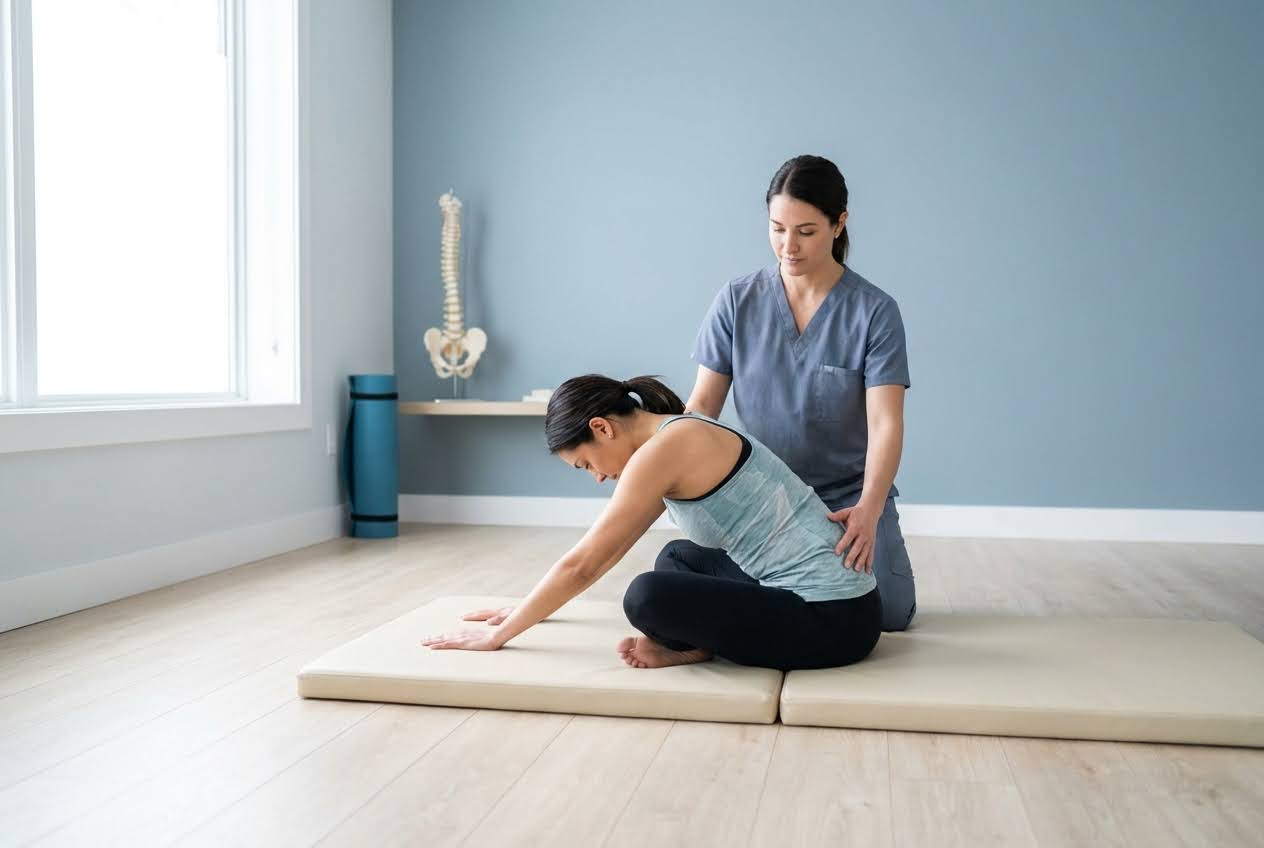 Top Stretches for Immediate Lower Back Relief
Start on your hands and knees with your wrists under your shoulders. For the cow position, drop your belly toward the floor and lift your head. For the cat position, round your back toward the ceiling and tuck your chin. Move slowly between these positions for 10-15 repetitions. This stretch warms up the entire spine and releases tension in the lower back muscles.
Kneel on the floor and sit back on your heels. Fold forward and reach your arms out in front of you. Let your forehead rest on the floor. Hold this position for 30-60 seconds while breathing deeply. This stretch gently elongates the spine and relaxes surrounding muscles. Most people feel relief within the first few breaths.
Lie on your back with both knees bent. Pull one knee toward your chest and hold it with both hands. Keep your other foot flat on the floor. Hold for 20-30 seconds, then switch sides. This stretch targets the lower back muscles directly and helps release tension in the hip area, too.
Tight hip flexors tilt your pelvis forward and strain your lower back. Kneel on one knee with your other foot flat in front of you. Push your hips forward gently until you feel a stretch in the front of your hip. Hold for 30 seconds on each side. People who sit all day need this stretch more than any other.
Tight hamstrings pull on your pelvis from below, creating lower back tension. Lie on your back and lift one leg straight up. Use a towel or strap around your foot to gently pull the leg toward you. Keep your knee straight and hold for 30 seconds. Flexible hamstrings reduce the load on your lower back significantly.
Your glutes support your lower back during every movement. When they're tight or weak, your back compensates. The figure-four stretch works well here: lie on your back, cross one ankle over the opposite knee, and pull both legs toward your chest. Hold for 30 seconds on each side. Strong, flexible glutes take pressure off your spine.
Ten to fifteen minutes daily beats an hour once a week. Consistency matters more than intensity. Morning stretches help combat overnight stiffness. Evening stretches release tension from the day. Pick a time that works for your schedule and protect it. About eight weeks of daily practice creates a habit that lasts.
Stretching helps most back pain, but not all of it. Pain lasting more than six weeks needs professional evaluation. Pain with fever, unexplained weight loss, or bladder problems requires immediate attention. Doctronic offers 24/7 telehealth visits with real doctors in all 50 states for under $50 when you need expert guidance. Don't wait months to address serious symptoms.
Hold each stretch for 20-60 seconds. Shorter holds don't give muscles enough time to relax and lengthen. Longer holds can cause fatigue without additional benefit. Breathe deeply throughout the entire stretch.
Yes, if done incorrectly. Bouncing, forcing, or stretching cold muscles can cause injury. Sharp pain during stretching means you should stop immediately. Proper technique prevents problems.
Daily stretching produces the best results. Even five minutes helps maintain flexibility. Skipping multiple days allows muscles to tighten again. Consistency beats intensity every time.
Morning stretches combat stiffness from sleep. Evening stretches release daily tension. Both work well. Choose the time you can maintain consistently rather than the "perfect" time you'll skip.
No. You should feel tension, not pain. A gentle pulling sensation is normal. Sharp, shooting, or burning sensations mean you've gone too far. Ease back until the stretch feels comfortable.
Stretching your lower back properly requires understanding your anatomy, following safety rules, and maintaining consistency in daily practice. Start with the basic stretches outlined here, pay attention to connected muscle groups, and seek professional help through telehealth services like Doctronic.ai if pain persists beyond six weeks.
Meta Description: Understand why vaginal dryness during menopause occurs and explore effective treatments, from moisturizing therapies to low-dose estrogen and laser [...]
Read MoreMeta Description: Discover why perimenopause causes itching and explore effective relief strategies, from hormone therapy to skincare tips, to soothe dry and itchy skin.When [...]
Read MoreMeta Description: Understand why weight gain during perimenopause occurs and learn how to manage it through protein intake, resistance training, and better sleep habits.Why [...]
Read More