Foam Rollers for Back Pain: Benefits and Techniques
Key Takeaways
Foam rolling can reduce tissue stiffness by approximately 5%-15%, with effects most noticeable immediately after rolling and lasting up to 10 minutes
Never roll directly on the lumbar spine: target surrounding muscles like glutes, hip flexors, and quads instead
A consistent routine of three times weekly for four weeks shows positive results for back pain relief
Medium-density rollers work best for most people starting out with myofascial release
Consulting Doctronic.ai can help determine when professional medical advice is needed
How to Use Foam Rollers Safely for Best Results
Back pain affects millions of people, and many turn to foam rollers for relief. These simple tools provide self-massage that targets tight muscles and fascia throughout the body. Using foam rollers for back pain offers real benefits when done correctly, but technique matters as much as the tool itself. Foam rolling may temporarily reduce muscle stiffness by about 10%, with improvements lasting up to 10 minutes post-rolling rather than a fixed 15%-24% reduction. This guide covers everything needed to use foam rollers safely and effectively for back pain relief.
Understanding Myofascial Release for Back Relief
Myofascial release is a technique that loosens tight connective tissue called fascia. Fascia wraps around muscles like a thin layer of plastic wrap. When it gets tight or stuck, it causes pain and limits movement.
How Foam Rolling Targets Trigger Points
Trigger points are small knots in muscles that cause pain. These knots form when muscle fibers stay contracted and cannot relax. Foam rolling applies pressure to these spots, which helps the muscle fibers release. Foam rolling can help relieve back pain by targeting specific areas of tension, alleviating muscle tightness and soreness, improving short-term circulation, and increasing joint range of motion.
Improving Blood Flow and Muscle Elasticity
When pressure is applied to muscles, blood flow increases to that area. Fresh blood delivers oxygen and nutrients that support muscle healing. The pressure also warms up the tissue, making muscles more stretchy and flexible. This improved elasticity helps prevent future injuries and reduces stiffness.
Choosing the Right Foam Roller for Your Needs
Not all foam rollers work the same way. The right choice depends on experience level, pain sensitivity, and specific goals.
Density Levels: Soft vs. Firm Rollers
Soft rollers feel gentler and work best for beginners or people with sensitive muscles. Firm rollers apply greater pressure and are better suited to experienced users. Moderate-density foam rollers used at a controlled pace provide greater comfort and similar benefits compared with rapid one-stroke-per-second techniques.
Textured vs. Smooth Surfaces
Smooth rollers provide even pressure across muscles. Textured rollers have bumps or ridges that dig into specific spots. Beginners should start with smooth surfaces to learn proper technique before moving to textured options.
Size and Shape Considerations for Portability
Standard rollers measure about 36 inches long and 6 inches wide. Shorter rollers of 12-18 inches travel more easily. Half-round rollers sit flat on one side and work well for balance exercises. The best size depends on whether the roller stays at home or needs to fit in a gym bag.
Effective Techniques for Upper and Mid-Back Pain
The upper and mid-back respond well to foam rolling when done with proper form.
Thoracic Spine Extension Drills
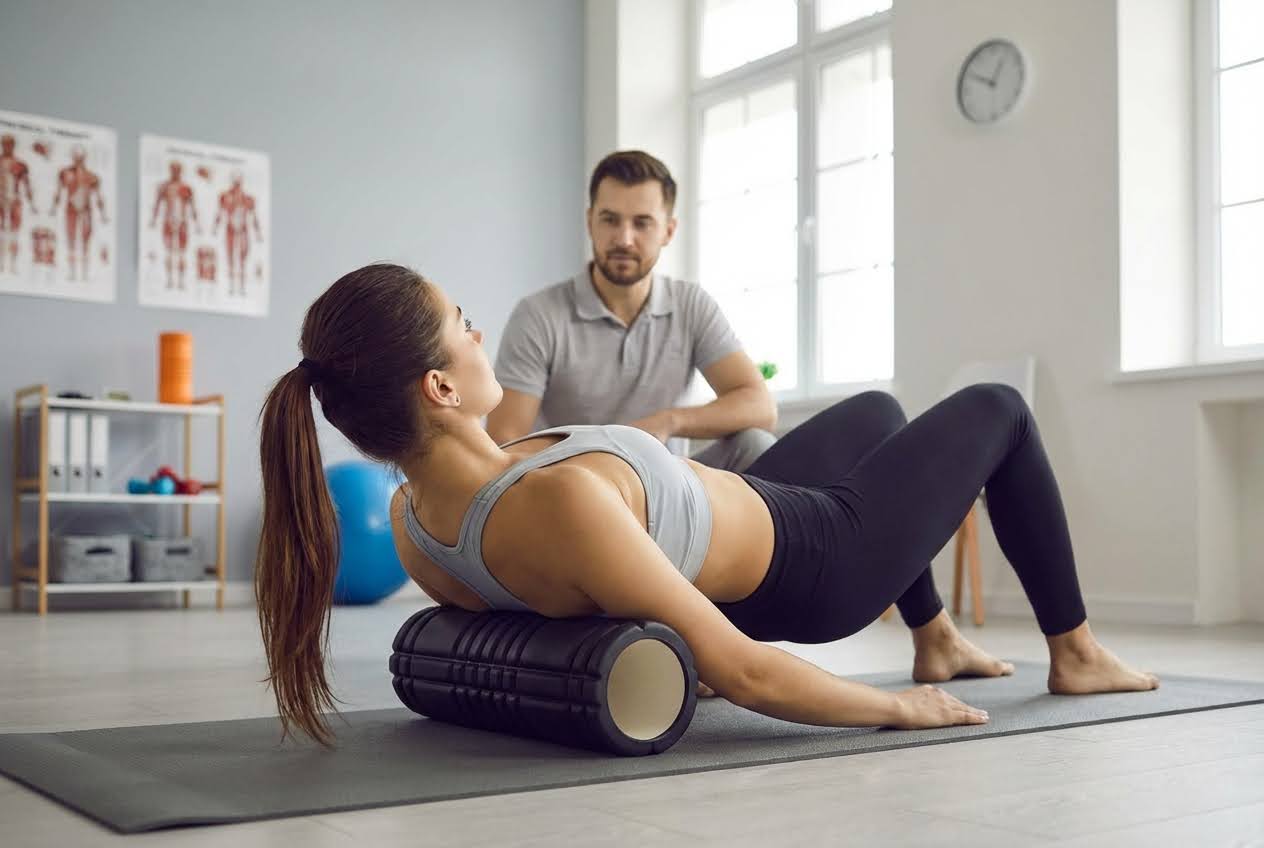
Place the roller under the upper back, just below the shoulder blades. Keep knees bent and feet flat on the floor. Cross arms over the chest or place hands behind the head. Slowly roll from the mid-back up to the shoulders, pausing on tight spots for 20-30 seconds. This movement helps improve posture and reduce tension from sitting.
Releasing Tension in the Rhomboids and Traps
The rhomboids sit between the shoulder blades. The traps run from the neck down to the mid-back. To target these muscles, angle the body slightly to one side as you roll. This shifts pressure to the muscles along the spine rather than directly on the vertebrae. Users of Doctronic.ai can get personalized guidance on which areas might need the most attention based on their symptoms.
Addressing Lower Back Discomfort Indirectly
Lower back pain often comes from tight muscles in the hips and legs rather than the back itself.
Rolling the Glutes and Piriformis
Sit on the roller with one ankle crossed over the opposite knee. Lean toward the crossed leg and roll slowly over the glute muscle. The piriformis sits deep in the buttocks and can cause sciatic-type pain when tight. Spending 60-90 seconds on each side helps release these muscles.
Hip Flexor and Quad Release
Tight hip flexors pull the pelvis forward and strain the lower back. Lie face down with the roller under the front of one thigh. Roll from just below the hip to just above the knee. This releases the quadriceps and hip flexor muscles that connect to the lower back.
The Dangers of Rolling the Lumbar Spine Directly
Advises against direct pressure on the lumbar spine with a foam roller, as it can worsen mechanical issues or underlying conditions. The lower back lacks the rib cage protection that the upper back has. Rolling directly on this area can hyperextend the spine and cause further problems. Focus on the surrounding muscles instead.
Safety Guidelines and Common Mistakes to Avoid
Safe foam rolling requires attention to body position and pain levels.
Proper Posture and Core Engagement
Keep the core muscles tight while rolling to protect the spine. Avoid holding your breath, which increases tension. Move slowly and with control rather than bouncing or jerking. Good posture during rolling prevents strain on joints and muscles.
Managing Pressure and Pain Thresholds
Foam rolling should feel like a deep massage, not sharp pain. Discomfort is normal, but pain that makes breathing difficult indicates excessive pressure. Start with lighter pressure and increase gradually over several weeks. Roll for 30-60 seconds per muscle group, not longer.
When to Consult a Professional
Stop rolling and seek medical advice if pain worsens after rolling, numbness or tingling develops, or symptoms do not improve after 2 weeks. Doctronic.ai provides AI-assisted symptom triage and access to licensed clinicians, but it does not currently offer “free AI doctor visits.”
Creating a Sustainable Recovery Routine
Consistency matters more than intensity. Start with 5-10 minutes of rolling three times per week. Morning sessions help loosen muscles stiff from sleep. Evening sessions can reduce tension built up during the day. Track which areas feel tightest and spend extra time on those spots. Combine foam rolling with gentle stretching for the best results.
Frequently Asked Questions
Three times per week provides good results for most people. Research shows that maintaining this frequency for at least four weeks leads to noticeable improvements in muscle stiffness and pain levels.
Foam rolling works as a supplement to professional treatment, not a replacement. People with chronic pain or injuries should work with a physical therapist who can create a complete treatment plan.
Spend 30-60 seconds on each muscle group, with total sessions lasting 5-15 minutes. Longer is not always better, as over-rolling can cause bruising or increased soreness.
Mild soreness similar to post-workout muscle aches is normal and should fade within 24-48 hours. Sharp pain or soreness lasting longer than two days suggests excessive pressure was applied.
The Bottom Line
Foam rolling can be a practical, low-cost addition to a back pain routine, helping reduce short-term muscle stiffness and improve mobility when used with proper technique. Focus on surrounding muscles rather than the lumbar spine and stay consistent for best results. For personalized guidance and symptom triage, Doctronic.ai can help determine when additional care is needed.
Understanding Emotional Wellness Through DBTEmotions feel overwhelming when they seem to control every decision. Dialectical Behavior Therapy offers practical techniques for [...]
Getting Skin Care Without the Insurance HeadachesThat suspicious mole has been bothering you for weeks. You want answers from a dermatologist, but a quick call to your [...]
Why Ankles Swell After Physical ActivityFinishing a workout with puffy, tight ankles can be alarming. Most people assume something is wrong, but bloated ankles after exercise [...]


 Choosing the Right Foam Roller for Your Needs