

Vaginal Dryness During Menopause
Meta Description: Understand why vaginal dryness during menopause occurs and explore effective treatments, from moisturizing therapies to low-dose estrogen and laser [...]
Read MoreThe ICD-10 code S16.1XXA is a valid billable code for cervical strain initial encounters, requiring documentation of acute injury mechanism, muscle tenderness, and limited range of motion
Seventh character extensions (A, D, S) are mandatory and determine reimbursement based on encounter type
Strains affect muscles and tendons, while sprains involve ligaments: this distinction directly impacts code selection
Thorough documentation linking diagnosis to treatment plans prevents claim denials and audit flags
Doctronic can help patients understand their diagnosis and prepare questions for follow-up care
Neck pain sends millions of patients to clinics each year, and cervical strain ranks among the most common diagnoses. Getting the ICD-10 coding right matters for reimbursement, compliance, and patient care continuity. The wrong code triggers denials. Missing seventh characters cause rejections. Incomplete documentation invites audits. This cervical strain ICD-10 code guide breaks down exactly what coders and providers need to know. The codes seem straightforward until they're not, and the details make all the difference between clean claims and costly corrections.
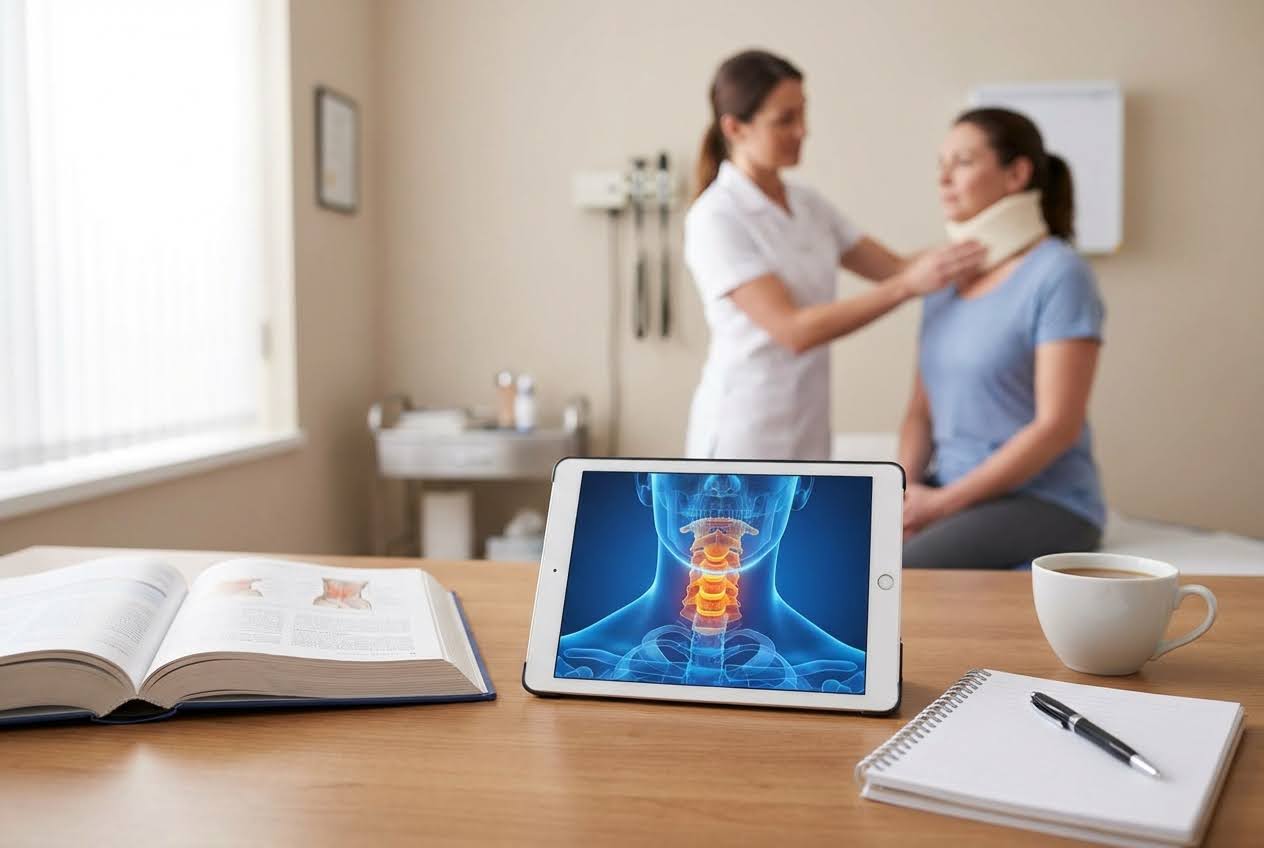
Cervical strain refers to injury of the muscles, fascia, or tendons in the neck region. Patients typically present after sudden movements, poor posture over time, or trauma. Clinical validation for proper coding includes an acute injury mechanism, palpable muscle tenderness, and a limited range of motion. Without these documented findings, codes may not be supported during review.
Coders must understand the anatomical difference. Strains involve muscles and tendons. Sprains involve ligaments. The cervical spine contains both, so providers must specify which tissues are injured. A patient with ligament damage after a car accident needs a sprain code from the S13 category. A patient with a muscle injury from sleeping incorrectly needs an S16 strain code. Mixing these up creates compliance issues and can affect treatment authorization.
 Primary ICD-10 Codes for Cervical Strain
The S13.4 codes cover cervical spine sprains and strains together, which causes confusion. S13.4XXA applies to sprains and strains of the cervical spine, including unspecified soft tissue injuries when documentation does not clearly indicate the affected structure. Many coders default to this category for all neck soft tissue injuries, but this approach is incorrect for isolated muscle strains. Use S13.4 codes when documentation supports ligamentous involvement or when the provider uses terminology indicating joint or ligament injury.
The ICD-10 code S16.1XXA is a billable code used for initial encounters of cervical strain with active treatment. This is the go-to code for neck-level muscle and tendon strains. When documentation clearly indicates muscular injury without ligament involvement, S16.1 is the appropriate choice.
The seventh character A indicates active treatment for the injury. This applies to the first visit and any subsequent visits where the provider is actively treating the acute injury. Physical therapy sessions are considered subsequent encounters (D) unless the provider is initiating or modifying active treatment for the acute phase.
Character D applies when the patient receives routine care during the healing phase. The injury is recovering as expected, and treatment is maintenance-focused rather than active intervention. Switching from A to D too early can reduce reimbursement, while staying on A too long raises audit flags.
Character S codes complications or conditions that result from the healed injury. A patient who develops chronic neck pain or nerve issues months after the original strain would receive sequela coding. The original injury code with S extension links the current problem to the past trauma.
Whiplash from car accidents requires additional external cause codes. The V codes identify the type of accident and patient status. Documentation must support the mechanism of injury. When physicians document cervical strain cases using ICD-10 codes, they must consider any additional symptoms or complications the patient presents. This thoroughness helps stratify patients effectively in Electronic Medical Records.
Occupational injuries need Y93 activity codes and Y99 external cause status codes. Workers' compensation claims require precise coding for proper processing. The place of occurrence code (Y92) may also be necessary depending on payer requirements.
Unlike many musculoskeletal codes, cervical strain codes do not require laterality specification since the neck is a midline structure. Severity documentation still matters for medical necessity. Providers should document pain levels, functional limitations, and objective findings like spasm or decreased range of motion.
Every treatment must connect logically to the diagnosis. Six weeks of physical therapy needs documentation showing why that duration is medically necessary. Imaging orders require clinical justification. Doctronic helps patients understand their diagnosis so they can discuss treatment options with their providers. Clear documentation protects against denials and supports appeals when needed.
The most frequent mistakes include using unspecified codes when documentation supports specific ones, omitting the seventh-character extension entirely, and failing to update the encounter status appropriately. Auditors look for patterns like extended use of initial encounter codes or diagnosis codes that don't match the documented treatment.
Other red flags include billing for cervical strain alongside cervical sprain without documentation supporting both injuries, missing external cause codes for trauma cases, and inconsistent diagnosis codes across multiple visits. Regular chart reviews catch these issues before auditors do.
S13.4 codes apply to ligament injuries and sprains of the cervical spine. S16.1 codes apply specifically to muscle and tendon strains at the neck level. The documented tissue type determines the correct code selection.
Initial encounter codes remain appropriate only during the period of active treatment for the acute injury, generally encompassing evaluation, active medical intervention, or surgical management. Once treatment transitions to routine healing or rehabilitation, the code should change to a subsequent encounter (D).
No. The cervical spine is a midline structure, so laterality is not specified in cervical strain ICD-10 codes. This differs from many other musculoskeletal injury codes.
Sequela codes apply when a new condition develops as a direct result of a healed cervical strain. The original injury must be documented as healed, and the new condition must be causally linked to it.
Yes. Doctronic offers free AI doctor visits that help patients understand medical diagnoses and prepare informed questions for their healthcare providers.
Accurate cervical strain coding hinges on identifying whether the injury involves muscle, tendon, or ligament, selecting the correct S13 or S16 category, and applying the proper seventh character for encounter type. Clear, detailed documentation protects reimbursement and reduces audit risk. Patients can use Doctronic.ai to better understand their diagnosis and prepare for follow-up care.
Meta Description: Understand why vaginal dryness during menopause occurs and explore effective treatments, from moisturizing therapies to low-dose estrogen and laser [...]
Read MoreMeta Description: Discover why perimenopause causes itching and explore effective relief strategies, from hormone therapy to skincare tips, to soothe dry and itchy skin.When [...]
Read MoreMeta Description: Understand why weight gain during perimenopause occurs and learn how to manage it through protein intake, resistance training, and better sleep habits.Why [...]
Read More